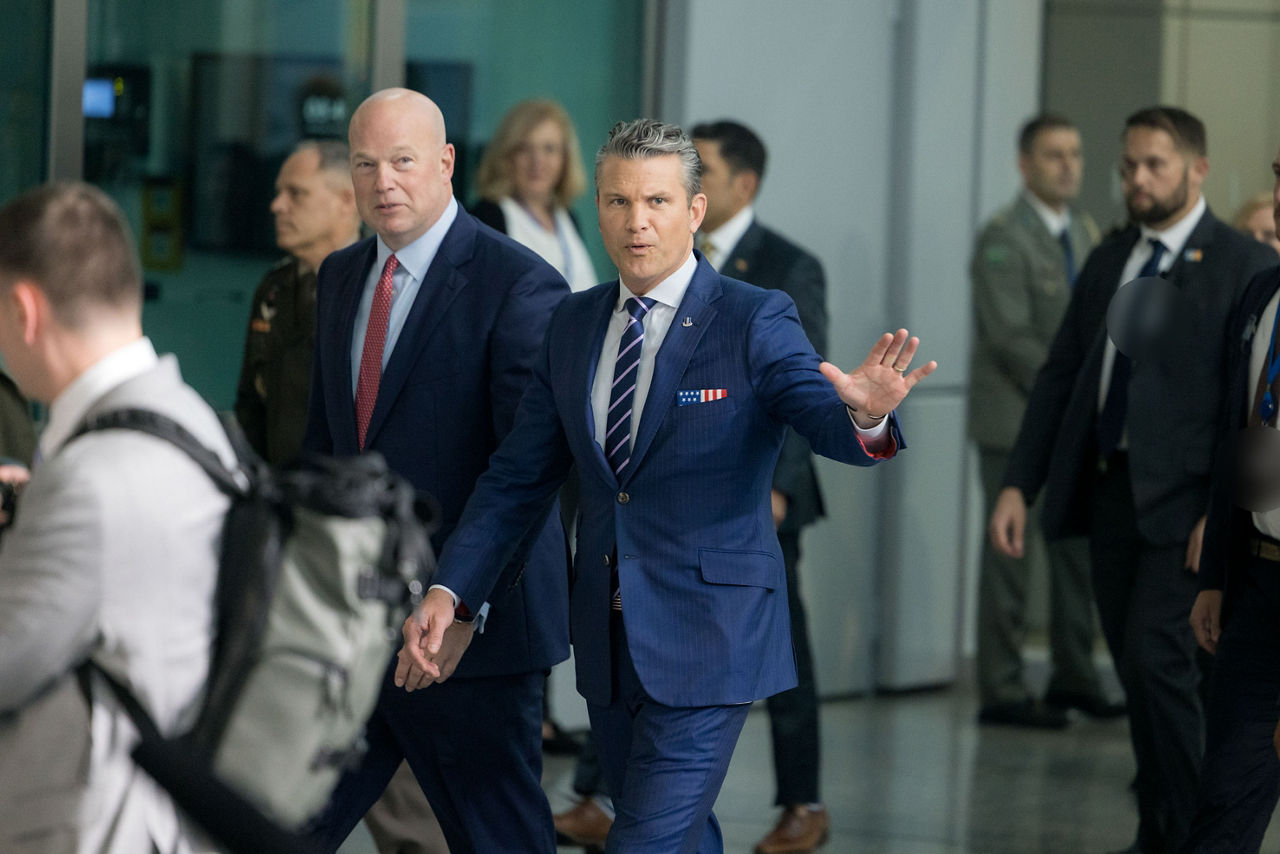

BRUSSELS — The man delivering Washington’s latest ultimatum to Tehran on Wednesday was not the secretary of state, not the secretary of defense. It was the United States ambassador to NATO, speaking from Brussels, the alliance’s headquarters, on Fox News. The geography was not incidental.
Matthew Whitaker, Trump’s envoy to the Atlantic alliance, told Fox News that the president would bring the full force of American military power to bear against Iran if Tehran failed to reach a deal within what he described as a “prudent amount of time.” The formulation was blunt: “He’s going to use all of the incredible armed forces in the military that the United States has,” Whitaker said, “to get a situation where Iran will make a deal.”
The statement arrived as the Iran-US standoff, now well past its hundredth day, remained locked in what the White House has itself described as stalled negotiations. Iran’s latest response to a US ceasefire proposal, transmitted through Pakistani mediators in May, was rejected by Trump on Truth Social as “TOTALLY UNACCEPTABLE” — a response that Iranian state media framed as Tehran refusing terms it characterized as surrender. Since then, the two sides have continued to exchange fire in the Persian Gulf even as a fragile, partial ceasefire technically remains in place.
What makes Whitaker’s remarks worth more than a footnote is the platform from which they were delivered. The NATO ambassador speaks to an audience of 32 allied governments, not merely to Tehran. When Washington’s representative in Brussels ties the full American military posture directly to the Iran file, it injects the alliance’s political context into a conflict that NATO has officially avoided adopting as a collective concern. It also reassures European allies, several of whom have been rattled by Trump’s on-again, off-again messaging about NATO commitments, that the same military deterrent they depend on is still being actively wielded — just pointed elsewhere at the moment.
Iran’s demands, as reported through Pakistani mediators, have not changed materially since the opening of ceasefire negotiations: full sovereignty over the Strait of Hormuz, an end to the US naval blockade, return of seized assets, and war reparations. Washington has refused each in succession. The American position, as Trump has stated it repeatedly, centers on one absolute: Iran cannot possess a nuclear weapon, and its enriched uranium stockpile must be removed from the country. The IAEA has had no access to Iran’s key nuclear sites for more than a year, according to director general Rafael Grossi, leaving independent verification of any eventual agreement in doubt.
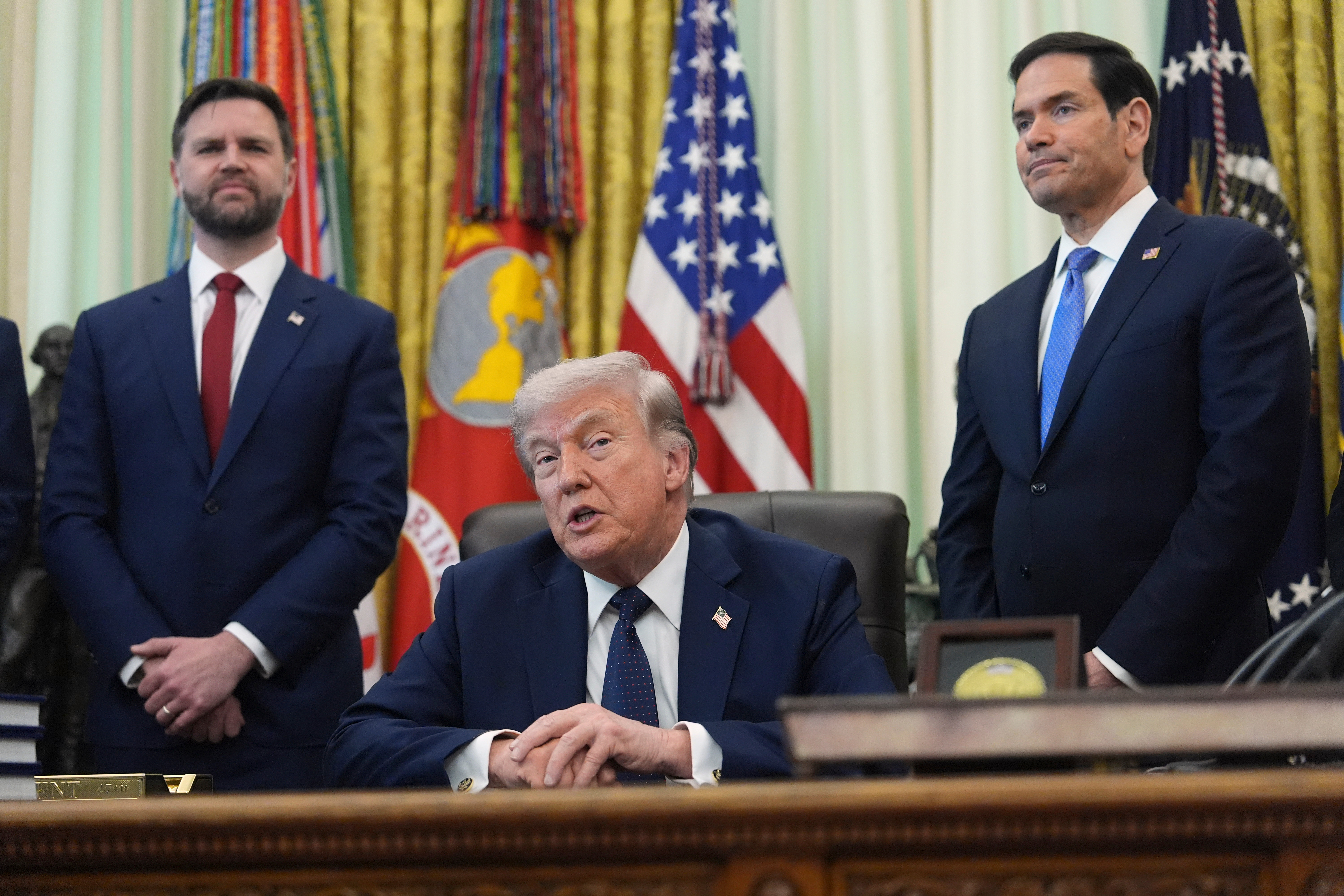
Whitaker’s remarks also carry an implicit criticism of Tehran’s internal coherence as a negotiating partner. Trump has grown visibly frustrated not just with Iran’s demands but with what multiple sources described to CNN as “division within Iranian leadership” preventing substantive concessions. That dynamic — whether the figures Tehran sends to the table actually speak for those who control its military and nuclear infrastructure — is precisely what Whitaker appeared to be addressing when he acknowledged that Trump was “giving peace and diplomacy a chance” while simultaneously making it clear the window was finite.
The phrase “prudent amount of time” does the most work in Whitaker’s statement, and it was not defined. In February, Trump set a deadline of 10 to 15 days for Iran to reach a framework agreement; that deadline passed without consequence. In April, a ceasefire was announced. By May, the ceasefire was trading fire. The pattern — deadline, collapse, renewed talks, renewed collapse — has become sufficiently familiar that Tehran may have concluded the deadlines themselves carry limited credibility. Whitaker’s invocation of the full US military arsenal may be an attempt to re-attach meaning to language that has frayed.
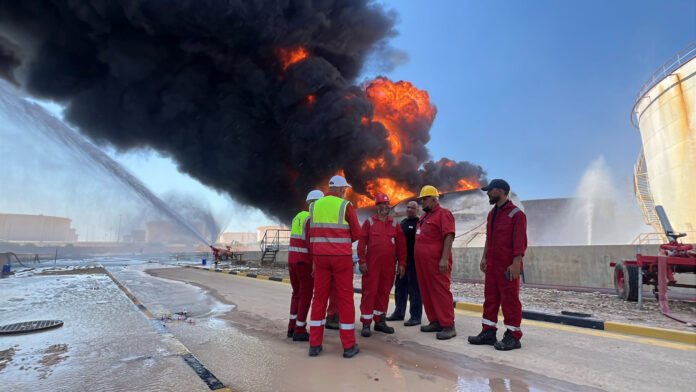
The Strait of Hormuz remains the fulcrum of the standoff. Through it, in peacetime, flows roughly one-fifth of the world’s oil and liquefied natural gas exports. Iran’s blockade — imposed in response to US and Israeli strikes in late February — has kept energy prices elevated and complicated the diplomatic calculus for Gulf states that host American military assets. As Eastern Herald reported last week, the US naval blockade of Iranian ports remains the administration’s primary coercive tool — and lifting it is the first concession Iran demands at every round of talks.
The ceasefire, such as it is, has been tested repeatedly in recent days. On Tuesday, Iranian forces and US assets exchanged fire in the Persian Gulf following what Trump called the downing of a US Apache helicopter near the strait. Washington launched retaliatory strikes. Tehran answered with missiles and drones. Iran claimed, according to state media, a 70 percent success rate in hitting US targets; US Central Command said nearly everything was intercepted. Neither account was independently verifiable, which is itself part of the problem: Iran’s parliament has warned that continued US strikes push Tehran further from any negotiating table, while hardliners inside the Islamic Republic use each exchange as evidence that no deal with Washington is durable.
Whitaker did not suggest what “all of the incredible armed forces” would be directed to accomplish that 100 days of strikes have not. Iran’s nuclear facilities have been struck once already — in Operation Midnight Hammer, which Trump has repeatedly cited as proof of his willingness to act. The program, according to US assessments, was significantly degraded but not eliminated. A second round of strikes capable of destroying the remaining infrastructure, including hardened underground sites, would require a different scale of operation — and the kind of sustained air campaign that would make the question of a deal moot, at least in the short term. Whether that is what Trump has authorized, or whether Whitaker was reaching for the sharpest available phrasing on cable television, is not something the NATO ambassador’s Fox News appearance resolved.
Iran has heard the rhetoric before. It has also watched Trump pull back from the brink repeatedly. What Tehran cannot yet calculate is whether the pattern holds, or whether the man in Brussels — speaking not as a war planner but as an alliance manager — was delivering a message his boss actually means to keep.
Among America’s Gulf partners, the question is already being asked. Jordan, Kuwait, and Bahrain have all come under fire during the conflict. Their governments are watching the clock on Washington’s “prudent amount of time” with a mixture of relief and dread — relieved that the US is still in the room, dreading what filling the room with more firepower would mean for their populations, their infrastructure, and a strait through which their own economic survival partly flows.