
WASHINGTON – For four decades, Lebanese-Americans have reached Beirut only through layovers in Paris, connections through Amman, or long transits in Dubai. President Donald Trump announced Monday that the United States would lift its 41-year ban on direct airline service to Lebanon, a move that followed weeks of diplomatic engagement with Beirut and signals a broad American re-engagement with a country long left to the margins of regional policy.
The ban traces to June 1985, when Hezbollah operatives seized TWA Flight 847, holding 153 passengers and crew hostage for 17 days. During the standoff, US Navy diver Robert Stethem was beaten and shot, his body thrown onto the tarmac in Beirut. Washington suspended direct air service in the aftermath; successive administrations never restored it. By the time Trump’s announcement came Monday afternoon, the prohibition had outlasted the Cold War, Lebanon’s civil war, and three Israeli military incursions.
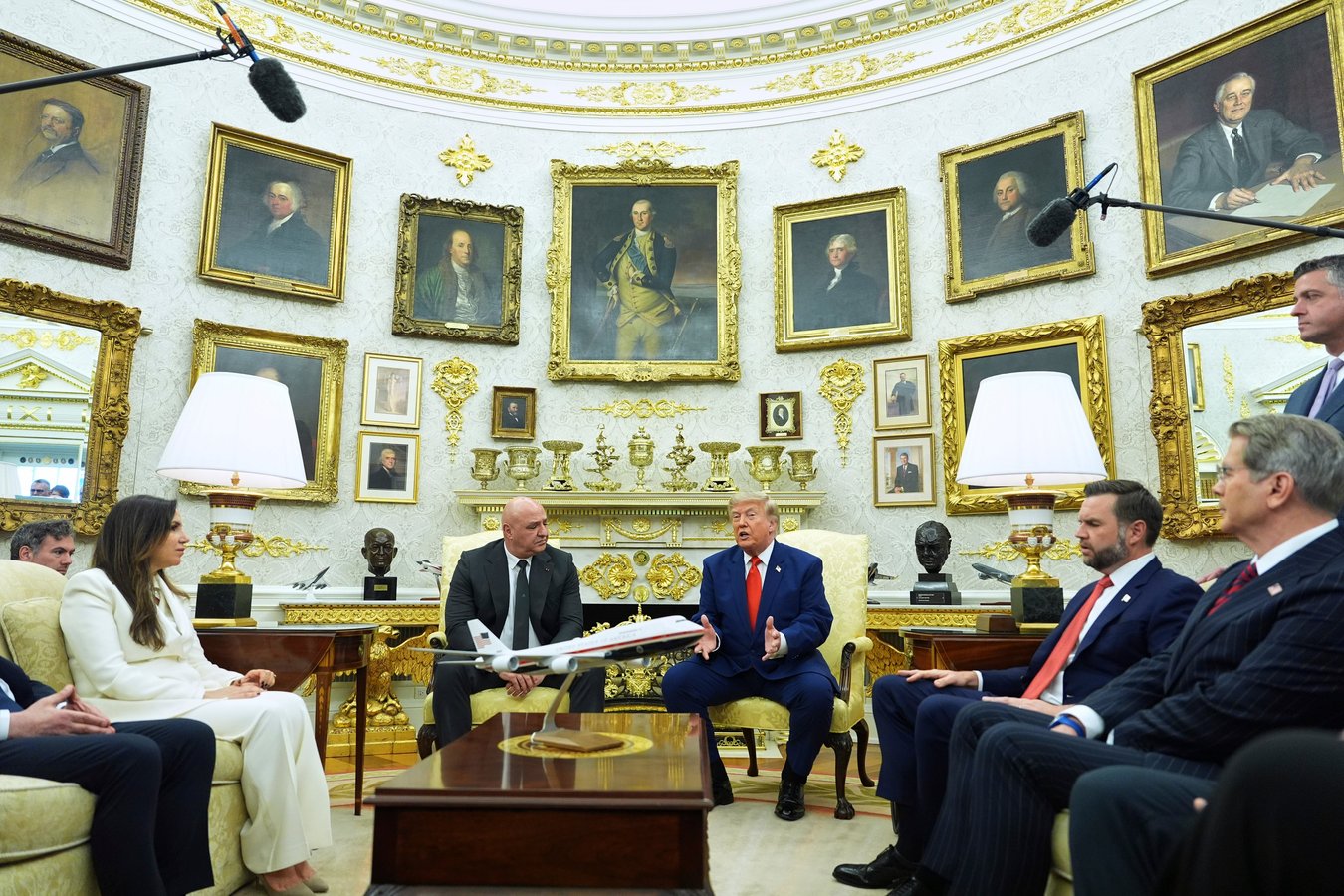
Lebanese President Joseph Aoun was at the White House for meetings that reflect how much has changed since his election in January, the first Lebanese president to form a government in more than two years. It was also the first Lebanese presidential visit to Washington since 2009. Secretary of State Marco Rubio had laid the groundwork two days earlier, meeting Aoun at the State Department to discuss Hezbollah disarmament, Israeli withdrawal from southern Lebanon, and Lebanon’s broader political recovery.
Trump said he had authorized “all US airline carriers” to resume service. The phrase is deliberately broad. It removes the regulatory barrier without specifying routes or carriers. No major US airline has announced plans, and the timeline for any actual service remains open.
The State Department has not altered its Level 4 Do Not Travel advisory for Lebanon, the highest warning category. That advisory reflects conditions that Trump’s announcement does not change: Israeli forces remain deployed across southern Lebanese villages more than seven months after the November 2024 ceasefire, and the US-Israel-Lebanon trilateral framework agreed in June has not produced a full Israeli withdrawal. Civilians returning under the ceasefire pilot zone have found that Israeli forces never occupied some of the listed villages, exposing a gap between diplomatic text and ground reality.
For the Lebanese diaspora in the United States, roughly 686,000 people, the announcement carries meaning beyond the logistical question of whether any US carrier will actually add a Beirut route. It signals that Washington no longer treats Lebanon as a problem to be managed from a distance. Aoun’s election has coincided with a regional recalibration: Saudi Arabia returned its ambassador to Beirut earlier this year, and Gulf states that had warned citizens against Lebanon travel have quietly eased those advisories.
The June trilateral framework, brokered by American envoys with both Israeli and Lebanese participation, was the most serious diplomatic effort in years to stabilize the Lebanon-Israel border. Aoun arrived in Washington carrying a Hezbollah disarmament-for-Israeli-withdrawal proposal that his government hopes can break the deadlock on full ceasefire implementation.
The framework’s execution remains contested. Lebanese officials say Israel has failed to vacate territories required under the November ceasefire. Hezbollah retains its weapons, and Aoun’s government has limited leverage over areas the group considers its security zone.
Karim Emile Bitar, a Lebanese political analyst and professor at Sciences Po in Paris, has noted that the optics of the moment may be outrunning the reality on the ground. The symbolic weight of a direct flight matters for a country whose identity has long been shaped by its diaspora, but the structural conditions that kept Lebanon outside American diplomatic engagement for four decades have not disappeared overnight.
According to NOTUS, White House officials framed the decision as part of a sustained effort to stabilize Lebanon and reduce Iranian influence by drawing Beirut back into the regional mainstream. Whether that framing holds depends on conditions that no Rose Garden announcement can produce on its own: an Israeli withdrawal from the south, Hezbollah disarmament, and a revised State Department travel warning.
Whether any carrier will move quickly to add routes depends on airline economics, insurance coverage, and a security environment that US aviation regulators must assess independently. Lebanon has not had direct commercial service from a US carrier in a generation. Building that route takes more than a presidential statement.
But the legal barrier is gone. For a diaspora community that has spent four decades asking why, the answer is finally here.