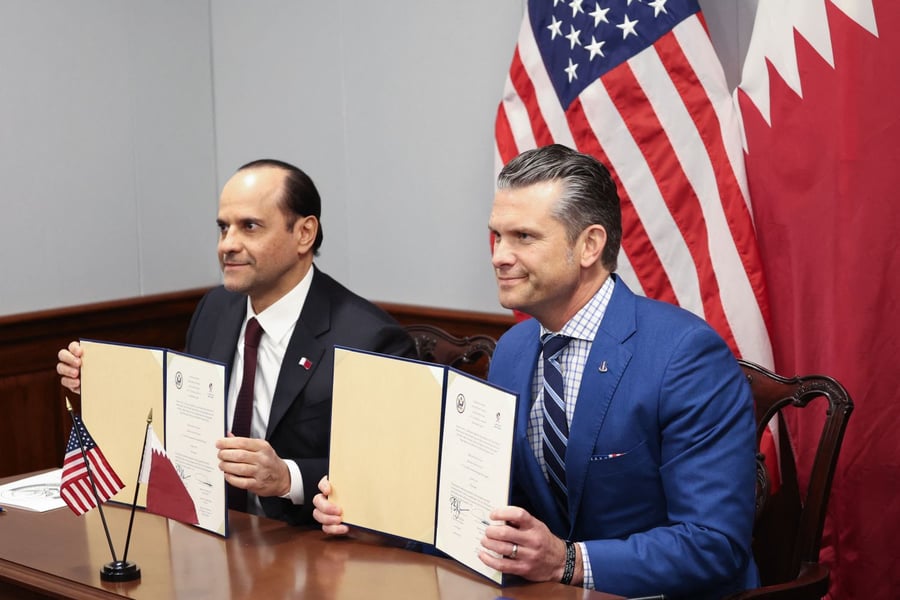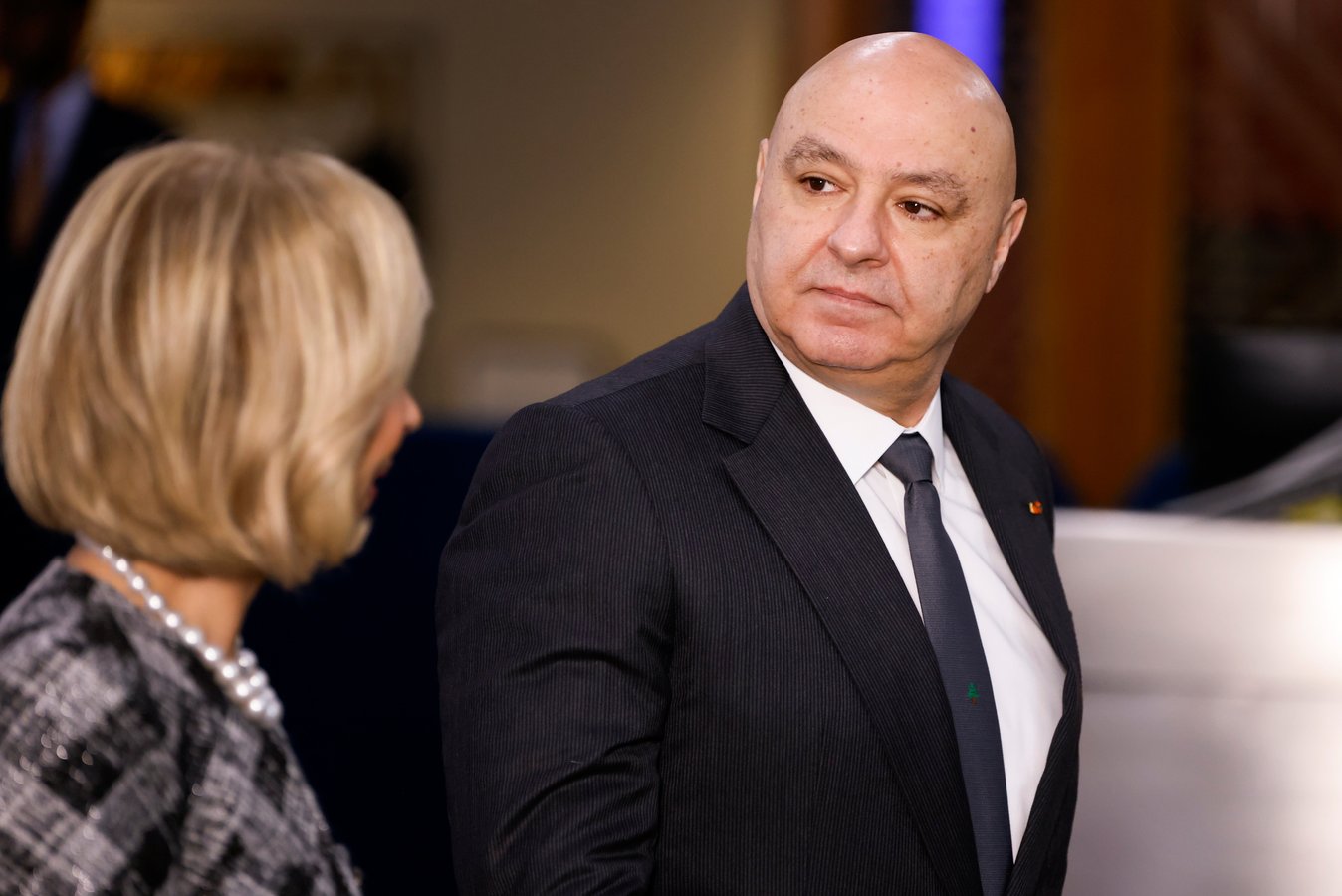

WASHINGTON – Joseph Aoun arrived in Washington on Sunday carrying a proposal that neither Hezbollah nor Israel has agreed to, with a meeting with Donald Trump scheduled for Tuesday. The Lebanese president met Secretary of State Marco Rubio at the State Department on Sunday afternoon, marking the opening of a diplomatic week that represents the first Lebanese presidential visit to Washington since 2009 and the first real test of whether a US-brokered ceasefire deal can be made to function.
The 17-year gap between presidential visits says something about what Lebanon has been through. A decade of political paralysis ended in a presidential vacancy that lasted three years, concluded only when Aoun, a military commander, was elected to break the deadlock. What he brings to Washington is not nostalgia for an older relationship but a specific proposal that requires three separate actors to move in sequence, starting with the United States.
Rubio framed the US position at the meeting’s opening, praising Lebanon’s efforts “to reclaim Lebanon’s sovereignty, disarm Hezbollah and dismantle its terrorist infrastructure.” That framing, decoded, places Hezbollah disarmament as the sequence’s first step, with Israeli withdrawal as an implied consequence. Before leaving Beirut, Aoun said he would ask Trump to “exert the necessary pressure on Israel” to implement the June 26 agreement, a formulation that reverses the order: Israeli withdrawal first, after which Lebanese army deployment makes the disarmament question practically addressable.
That sequencing dispute sits at the center of why the June 26 US-brokered agreement has not moved since it was signed. The accord established a framework for the Lebanese army to deploy into the border strip that Israeli forces have held since last year’s conflict with Hezbollah. Israeli forces have remained. Israel’s condition is Hezbollah disarmament before withdrawal, a threshold the Lebanese army cannot enforce unilaterally. Lebanon’s parliamentary speaker Nabih Berri had pledged Hezbollah would comply if Israel moved first, but Israel has not moved.
Hezbollah has rejected direct negotiations over its arsenal, calling disarmament a question separate from Israeli military presence on Lebanese soil. The Lebanese army has deployed to parts of southern Lebanon since June, but it does not have the mandate or capacity to force disarmament of a militia with its own political infrastructure, economic networks, and chain of command. What Aoun can argue in Washington is that the Lebanese state is capable of asserting sovereignty if the ground is cleared by an Israeli withdrawal.

European partners had already pushed for Israeli restraint in Lebanon, and Aoun arrives at a moment when the broader regional dynamic is in flux. The current US-Iran war has complicated Israel’s position as a straightforward partner and shifted Washington’s Middle East calculus in ways that could make Lebanon’s agenda more or less urgent depending on how the Iran situation develops. A stable Lebanon with genuine reduction of Hezbollah’s operational presence would represent a regional consolidation that serves US interests regardless of how the Iran conflict resolves.
Aoun has framed the trip in precisely those terms. He is not asking Washington to take Lebanon’s side in a dispute with Israel. He is asking Washington to activate a mechanism it designed and brokered, one that requires US pressure to function. The June 26 agreement exists because the United States wanted it to exist; its non-implementation reflects American choices as much as Lebanese ones, a framing that Al Jazeera reported Aoun has been careful to advance publicly.
The practical record since June 26 has been mixed. The Lebanese army has expanded its presence in the south; Israel has not reduced its. Hezbollah has not engaged in formal disarmament discussions; its political allies have continued to operate in Lebanese domestic politics without apparent constraint. The gap between what the agreement prescribes and what has happened on the ground is wide enough that Aoun, when asked about it before his departure, chose his words carefully.
Tuesday’s meeting with Trump is the first test of whether Aoun’s argument lands in practice. A joint statement affirming commitment to the June 26 framework would represent the minimum outcome. A specific ask to Israeli Prime Minister Netanyahu, including a timetable, a private message, or a defined marker, would represent something more substantive. What Aoun returns to Beirut carrying will shape whether the June 26 agreement moves toward implementation or remains a framework with no enforcement mechanism behind it.
The visit’s significance extends beyond the immediate deal. The fact that Lebanon has a functioning presidency, an army engaged in the south, and a government willing to navigate the Hezbollah question, even in indirect form, represents a meaningful change from the paralysis of recent years. Whether that change becomes durable depends partly on what Trump says in the room on Tuesday, and partly on whether Washington is prepared to use the leverage the June 26 agreement gives it.