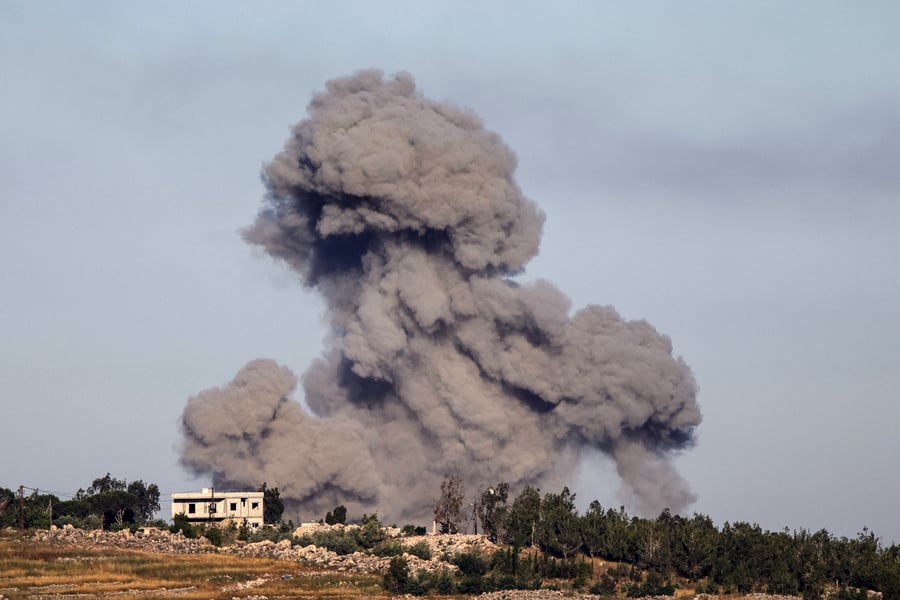

BRUSSELS — When Israeli forces raised the flag over Beaufort Castle on Sunday for the first time since 2000, it was not lost on European capitals that a ceasefire supposedly in effect since mid-April had become a fiction. By Monday morning, the European Union had formally broken its silence, and the United Nations Security Council was preparing to convene at France’s urgent request.
The EU’s foreign policy chief, Kaja Kallas, described Israel’s military campaign in Lebanon as excessive, saying it risked drawing the country into “a war that is not theirs.” Her statement drew a line that senior European officials had been inching toward for weeks: Israel has the right to self-defense, but that right has now crossed into territory the bloc is no longer willing to characterize as proportionate. “Israel should cease its operations in Lebanon,” Kallas said. “Lebanon’s sovereignty and territorial integrity must be respected.”
At the European Commission’s daily press briefing in Brussels, foreign affairs spokesperson Anouar El Anouni framed the EU’s position in terms that left little ambiguity. The bloc called on Israel to respect Lebanese sovereignty and engage in diplomatic efforts to reduce tensions. As for the Lebanese population, El Anouni said the EU continued to extend urgent support and assistance to help the country’s authorities cope — and that the people of Lebanon had not chosen this war.
What the EU still cannot answer is whether any of its words carry consequence. Foreign ministers discussed sanctions against specific Israeli officials at an informal meeting in Cyprus last week, but deferred a decision to their next formal gathering on June 15. The question of whether Europe is prepared to act, or merely to speak, sits at the center of a debate that has grown louder with each Israeli incursion deeper into Lebanese territory.
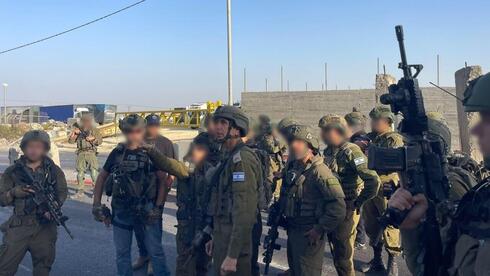
Israel’s capture of Beaufort Castle — the medieval Crusader fortress overlooking the Litani River near Nabatieh — marked its deepest ground penetration into Lebanon in twenty-six years. Defense Minister Israel Katz framed the seizure in historical and strategic terms, announcing that Israeli forces had crossed the Litani for the first time since 2006 and declaring the area south of the river a security zone under IDF control, to be cleared of weapons and militants. Prime Minister Benjamin Netanyahu called the operation a “dramatic shift” in the campaign against Hezbollah, the Iran-backed group whose rocket and drone attacks on northern Israel he cited as justification for expanding ground operations.
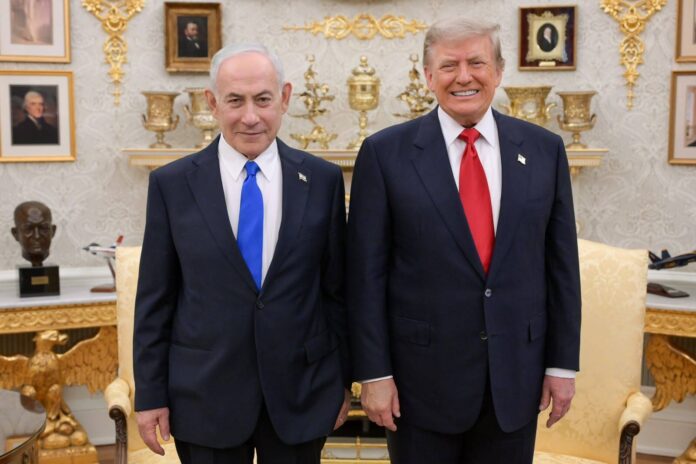
That framing collided almost immediately with European governments that had warned against exactly this kind of escalation. French President Emmanuel Macron told Trump in a telephone call that Lebanon’s sovereignty must be respected, having said over the weekend that “nothing justifies the major escalation underway in south Lebanon.” Berlin, traditionally one of Israel’s closest allies in Europe, acknowledged Israeli security interests while warning that when civilians pay the price, the operation becomes indefensible. “Of course Israel has legitimate security interests,” the German foreign office said. “Yet when it is civilians that pay the price of a military escalation, that is not acceptable.” The UK’s Prime Minister’s office was more direct: “It must stop.”
France’s foreign minister Jean-Noël Barrot formalized the diplomatic pressure by requesting an emergency session of the UN Security Council. Israel, in turn, sent its UN envoy Danny Danon to argue that any serious discussion in the chamber should focus not on Israeli operations but on the two decades of failure to implement Resolution 1701, the 2006 agreement that required Hezbollah to withdraw north of the Litani. The question of whether this week’s emergency meeting produces a resolution, or ends in the same veto-deadlocked frustration as so many before it, remained open as delegates gathered.
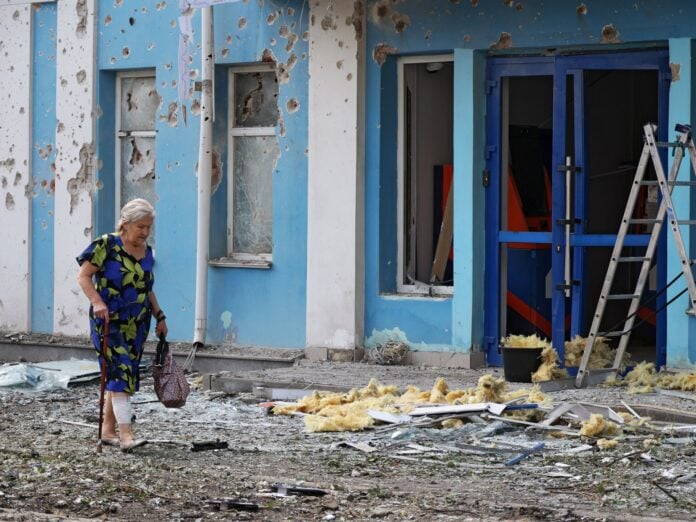
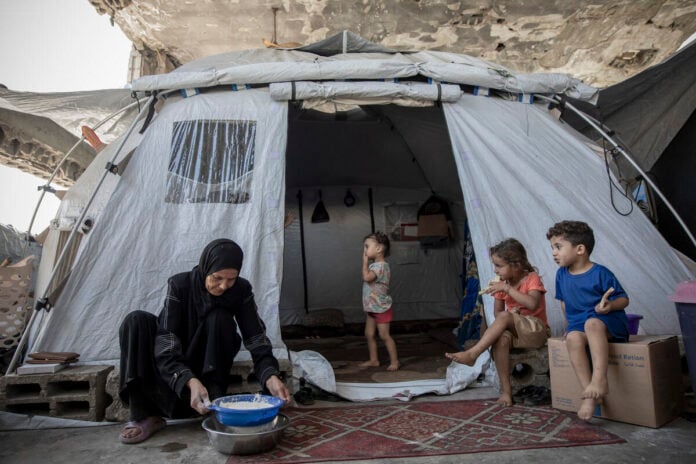
The ceasefire that went into effect on April 17 has been contested from the day it was announced. Both Israel and Hezbollah accuse each other of daily violations; each offensive action has been framed by the attacking party as a response to the other’s alleged breach. When Israel pushed past what had been an informal restraint line in late May, the ceasefire’s last structural claim to viability collapsed. Since March, more than 3,400 people have been killed in Lebanon, roughly 10,000 wounded, and more than 1.6 million displaced — figures that Lebanese authorities have been updating weekly.

The humanitarian dimension is one element; the diplomatic geometry is another. U.S. Secretary of State Marco Rubio spoke by phone with both Netanyahu and Lebanese President Joseph Aoun over the weekend, advancing what American officials described as a proposal for “gradual de-escalation.” Under the outline Rubio presented, Hezbollah would halt drone attacks on Israel first, with the IDF then refraining from further escalation in Lebanese territory. The sequencing placed the initial burden on Hezbollah, and neither Beirut nor Hezbollah’s leadership had formally accepted it by late Monday. Iran, whose broader ceasefire negotiations with Washington remained unresolved, said a Lebanon settlement was a prerequisite for any wider deal.
The EU’s role in any eventual arrangement is unclear. El Anouni said Brussels was actively examining the creation of a new EU civilian mission to help strengthen Lebanese state authority — a reference to the coming expiration of the UNIFIL mandate at the end of 2026 and growing European concern about the security vacuum that may follow. Whether EU member states, several of which contribute troops to UNIFIL and have already lost a French soldier to a lethal attack in April, are prepared to deepen their military and civilian engagement in Lebanon as the conflict intensifies is a question no official in Brussels has publicly answered.
What the Union has been able to agree on, for now, is language. The bloc’s position asks Israel to stop, urges diplomacy, and reaffirms solidarity with Lebanese civilians. It acknowledges Hezbollah’s role in dragging Lebanon toward a war it did not seek, even as it refuses to excuse the scale of Israel’s response. Whether that formulation will still be the EU’s operative position when foreign ministers gather in Luxembourg on June 15 — after whatever the next two weeks of fighting produce — is the question that most senior European officials are not yet ready to answer publicly.
On the ground in Lebanon, the answer to diplomatic timelines is not being waited for. The death toll had already crossed 3,000 before May ended, and Israeli forces were consolidating their hold north of the Litani as the Security Council convened. Netanyahu’s government vowed there would be no halt in Beirut if Hezbollah’s attacks continued. The Crusader castle that Israel captured this week has changed hands many times across eight centuries. How long Israel holds it now, and at what cost, is the question the emergency meeting in New York could not resolve.