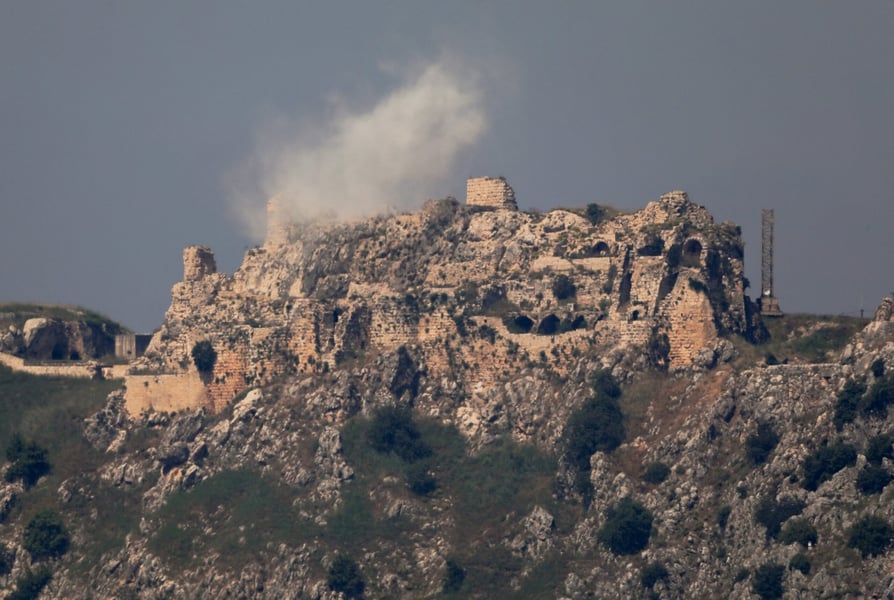

BEIRUT — The ceasefire was always more a calendar entry than a commitment. On Sunday night, Benjamin Netanyahu stood in front of a camera and declared that Israeli forces had retaken Beaufort Castle, a ninth-century Crusader fortress in southern Lebanon that his military had last occupied during its 1982 invasion. By Monday morning, oil markets had their answer about what that meant for the region.
Reuters reported that Brent crude rose more than 2% to $93.17 a barrel in early Asian trading, while U.S. West Texas Intermediate climbed to $89.65 — a reversal of the sharp declines that had followed weeks of optimism about an imminent deal to reopen the Strait of Hormuz. That optimism, already shaky, did not survive the weekend.
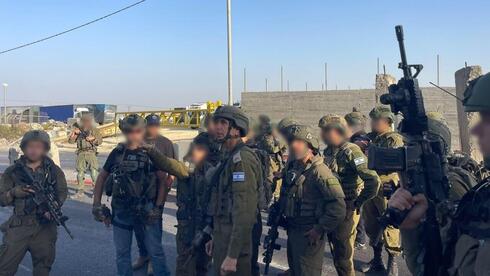
The Beaufort Castle operation was the most conspicuous breach yet of the April 17 ceasefire that neither side has ever fully observed. The Israel Defense Forces said they launched the assault to establish control over the Beaufort Ridge and the Wadi al-Saluki corridor, areas described as saturated with Hezbollah infrastructure built under Iranian direction. One Israeli soldier was killed. Netanyahu was explicit about what came next: he had ordered his commanders to deepen and expand operations across Lebanon, Syria, and Gaza simultaneously.
Lebanese Prime Minister Nawaf Salam condemned what he called a scorched-earth policy and demanded an immediate ceasefire. France’s Emmanuel Macron said nothing justified the escalation underway in southern Lebanon. The United Nations Security Council was set to hold an emergency session Monday after a request from Paris — the same day direct Lebanon-Israel talks were scheduled to resume at the U.S. State Department. Whether those talks survive the weekend’s events is unclear.
Beaufort Castle carries more symbolic weight than its military value alone might suggest. The 900-year-old fortress, known locally as Qalaat al-Shaqif, was granted UNESCO’s highest level of provisional protection in late 2024 against attack or military use. Israel’s last withdrawal from it, in May 2000, had been televised across the Arab world as a moment of humiliation for a retreating army. Netanyahu’s framing was designed to invert that image. “We have returned united, determined and stronger than ever,” he said in a video statement. Defense Minister Israel Katz announced that an Israeli flag had been hoisted above the structure.
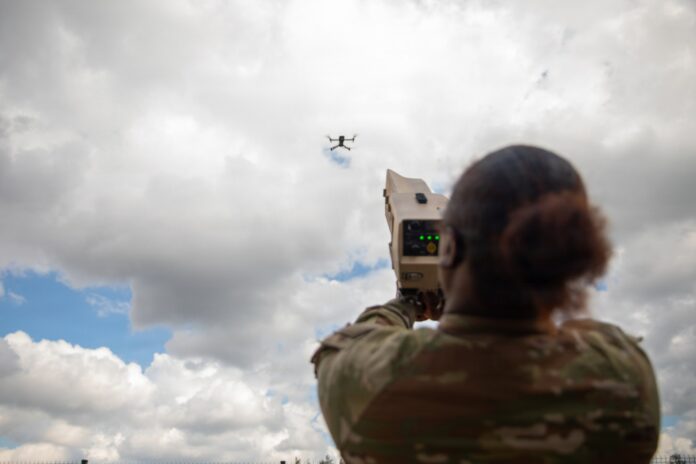
That same weekend, a separate set of exchanges unfolded that the oil market found equally alarming. U.S. Central Command confirmed on Monday that it had conducted what it described as measured and deliberate self-defense strikes on Saturday and Sunday, targeting Iranian radar installations near the city of Goruk and drone command-and-control infrastructure on Qeshm Island. The trigger was the shootdown of an American MQ-1 Predator drone that CENTCOM said was operating over international waters. U.S. fighter aircraft then eliminated Iranian air defenses, a ground control station, and two one-way attack drones positioned to threaten commercial shipping in the region. No U.S. service members were harmed.

Iran did not absorb the strikes without response. The Islamic Revolutionary Guard Corps said its Aerospace Force had targeted an airbase it claimed was used in a U.S. attack on a telecommunications tower on Sirik Island, declining to identify the base by name or location. By Monday morning, Kuwait’s army announced its air defense systems were engaging incoming drone and missile fire. Residents in Kuwait City reported hearing interceptions in the predawn hours.
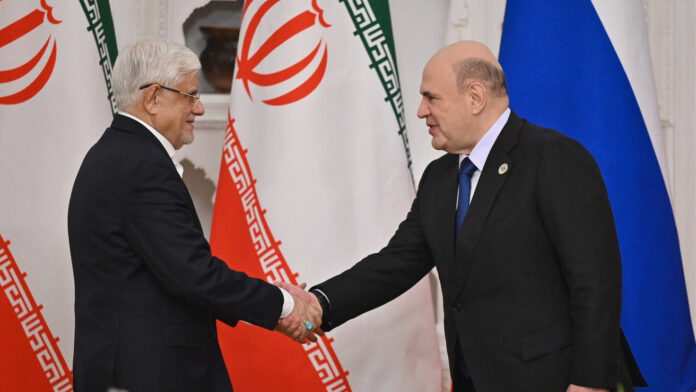
The timing could not be worse for the negotiators working toward a 60-day Hormuz ceasefire framework that Trump was already reviewing before the weekend’s escalation. The framework, as a senior U.S. official described it to the Washington Post, would extend the ceasefire while Iran de-mined the strait and negotiations opened on Tehran’s nuclear program. Iran’s foreign ministry confirmed a draft memorandum existed. The White House dismissed an Iranian state television report claiming it had already been finalized, calling it a fabrication. Separately, Tehran has also put war compensation on the negotiating table, demanding reparations for U.S. and Israeli strikes even as nuclear questions remain deliberately deferred.
Before the weekend’s violence, that deal had looked close. CNBC reported that oil prices had shed roughly 20% from their 2026 peak as traders priced in a Hormuz reopening. UBS analysts warned even then that crude loadings inside the Gulf remained extremely low and that damage to regional infrastructure meant any reopening would likely be partial and slow. IG analyst Tony Sycamore said that mines laid in the strait’s shipping lanes would delay any relief to oil markets even after an agreement is signed. “Even if an agreement is reached, it won’t deliver a flood of supply,” Sycamore said.
The costs of that delay keep compounding. U.S. inflation hit a three-year high in April, driven in large part by the energy shock from the Hormuz closure, with Americans drawing down savings at a pace not seen since 2022. Every additional week of disruption adds pressure the Federal Reserve has no clean tool to address.
What the weekend has done is reintroduce the question the MOU was designed to answer: can a deal hold if Israel’s Lebanon campaign keeps escalating? Iranian officials have said repeatedly that any lasting agreement with Washington must include Hezbollah and address Lebanon. Netanyahu’s order to deepen the Lebanon operation, issued days before scheduled peace talks at the State Department, appears at minimum to test that linkage. At worst, it may have broken it.
Dan Coatsworth, head of markets at AJ Bell, captured the uncertainty in a note to clients on Monday. Markets remain in a non-committal mood, he wrote, waiting to see whether this is the week when some form of resolution finally arrives. Oil is still well short of the $100-a-barrel threshold that would constitute a full alarm for the global economy. Whether it stays there depends on what happens at the State Department on Tuesday, and on whether Trump signs whatever negotiators have assembled — if they are still assembling anything at all.
—Inputs from Sputnik.