
WASHINGTON — The Federal Reserve’s preferred measure of inflation surged to its highest level in nearly three years in April, driven by the oil price shock from the war with Iran and deepening concern about the financial resilience of American households, the Commerce Department reported Thursday.
The personal consumption expenditures price index rose 0.4 percent on a seasonally adjusted monthly basis in April, putting the 12-month rate at 3.8 percent — up from 3.5 percent in March and the highest annual reading since May 2023. Economists surveyed by Dow Jones had expected monthly growth of 0.5 percent, meaning the monthly figure came in slightly softer than forecast, though the annual level landed in line with expectations.
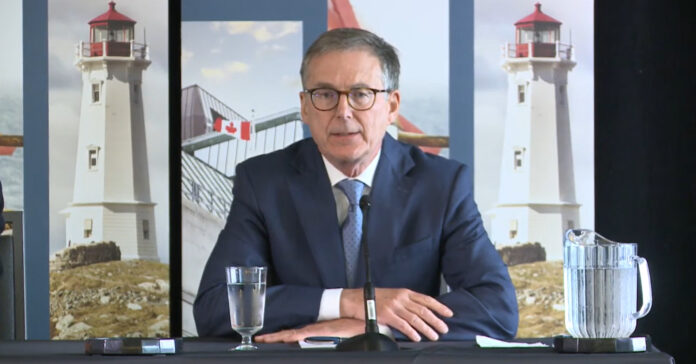
The report, the first PCE reading under newly installed Fed Chair Kevin Warsh, offered a mixed picture: while the pace of monthly price growth decelerated from March’s dramatic surge, the year-over-year headline remained firmly above the central bank’s 2 percent target, with few signs of a sustained pullback in sight.
Stripping out food and energy costs, the so-called core PCE index — the measure Fed officials consider the more reliable gauge of underlying inflation trends — rose 0.2 percent for the month and 3.3 percent for the year, in line with estimates. As CNBC reported, both the monthly headline and core readings came in 0.1 percentage point below forecasts, a slight softening that could give policymakers a modest degree of relief without changing the fundamental policy calculus.
Energy remains the dominant inflation driver. The Iran war has sent oil prices sharply higher since the conflict began, with gasoline prices rising 28.4 percent over the past 12 months according to separate consumer price index data from the Bureau of Labor Statistics. Housing and utilities costs also jumped 0.6 percent in April alone — the largest single-month increase in a year — signaling that price pressures are extending well beyond the pump.
“Americans are being squeezed financially,” Kathy Bostjancic, chief economist at Nationwide Mutual, told CNN. “Households are feeling the pinch from higher inflation now.”
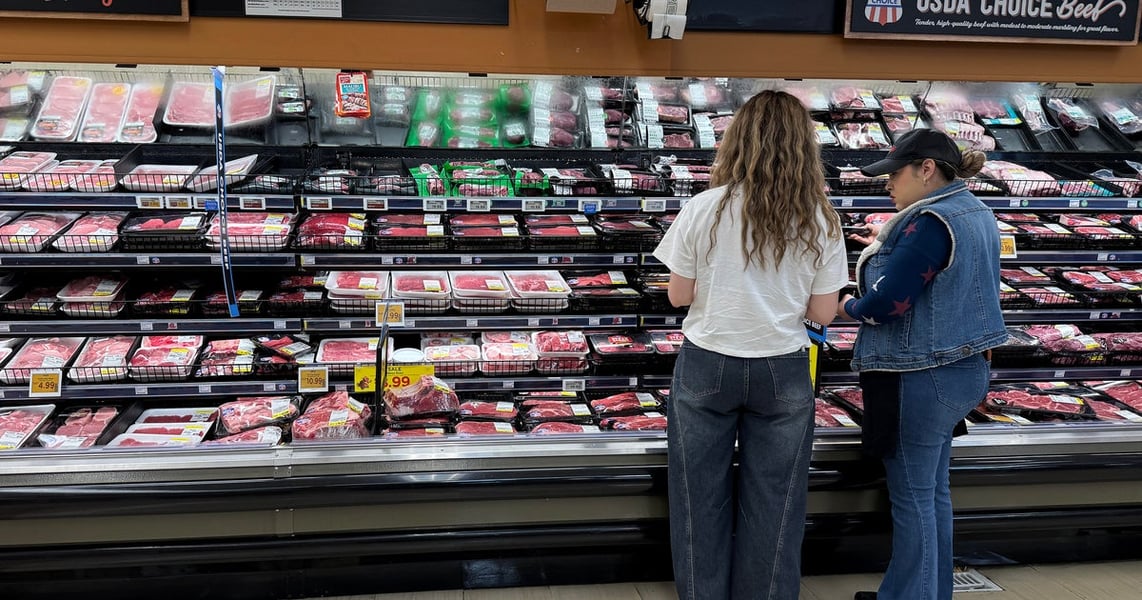
The April data also laid bare a troubling deterioration in household finances. Consumer incomes were flat for the month, while disposable after-tax income fell 0.1 percent in nominal terms and dropped 0.5 percent once adjusted for inflation. Americans continued to make up the gap by spending down savings: the personal saving rate fell to 2.6 percent in April, the lowest since June 2022 — the month inflation last hit a four-decade high. At the start of this year, the rate stood at 4.3 percent, meaning households have shed roughly 40 percent of their cushion in four months.
Consumer spending rose 0.5 percent on the month in nominal terms, but after adjusting for inflation, real spending increased just 0.1 percent — and most of that came from higher costs for essentials. About half of the nominal spending increase went to gasoline, energy goods, utilities, housing and food, leaving little room for the discretionary purchases that typically signal a confident consumer, according to Axios.
The broader economic backdrop offers some comfort but also complicates the outlook. First-quarter gross domestic product grew at an annualized rate of just 1.6 percent, according to a revised Commerce Department estimate — below the initial reading and well short of the potential that many economists had projected heading into the year. The Atlanta Fed is currently forecasting a rebound to 4.3 percent for the second quarter, suggesting the economy is still expanding, albeit on a more expensive foundation.
For Warsh, the numbers represent an immediate test of his approach. The IEA has warned of the gravest energy security crisis in the modern era as fighting near the Strait of Hormuz continues to disrupt global oil flows. Warsh, who was sworn in as Fed chair last week, has publicly indicated his belief that the benchmark rate could eventually be lowered, but he is widely expected to face resistance from other members of the Federal Open Market Committee so long as inflation remains this far above target.
Markets reflect that skepticism. The CME FedWatch tool showed a 98.8 percent probability that the Fed would keep rates unchanged at its meeting next month, currently in the range of 3.5 to 3.75 percent. Traders are also pricing in a meaningful chance that the central bank’s next move will be a rate increase — possibly as early as the first half of next year — a stark reversal from the rate-cut expectations that dominated market sentiment as recently as the start of 2026.
Fed Governor Lisa Cook reinforced that hawkish shift in a speech Wednesday, stating that she would support further rate increases if inflation failed to cool. CBS News reported that the deVere Group’s chief executive, Nigel Green, put it more bluntly: “3.8 percent is nowhere near target. Core inflation above 3 percent confirms price pressures are spreading deeper across the economy.”
“Warsh built much of his credibility criticizing the Fed for falling behind inflation,” Green said. “He can’t arrive as Chair and suddenly pivot dovish while inflation accelerates again.”
Heather Long, chief economist at the Navy Federal Credit Union, offered a more street-level verdict. Noting that wage gains are being wiped out by inflation, she said the slight monthly moderation was “little comfort on Main Street, where people are facing the highest inflation in three years.”
The picture is further clouded by projections suggesting the inflationary pressure could intensify before it relents. A survey of top economists by the Federal Reserve Bank of Philadelphia’s Survey of Professional Forecasters estimated last month that consumer price inflation could hit 6 percent for the second quarter as the war’s effects work through the supply chain. Even if a ceasefire were reached, energy and commodity markets have been deeply unsettled by the conflict, and economists caution that normalizing supply chains could take months.
The Iran war and the cumulative effect of existing tariffs have together derailed a disinflationary path that had been slowly moving the Fed closer to its 2 percent target over the past two years. Consumer spending had already been showing signs of strain before the conflict began, and the latest data confirms that the margin for error has narrowed considerably.
Bostjancic said the extended period of above-target inflation meant the expectation that Warsh would push quickly for rate cuts was now almost certainly off the table. “I think the Fed’s on a very long period of ‘wait and see,’” she said.