
SYDNEY — Australian shares closed sharply lower on Thursday, with the benchmark giving up the week’s gains as a fresh round of United States strikes on Iran rattled commodity markets, hammered the country’s gold producers and sent oil into a second straight slide.
The S&P/ASX 200 fell 124.8 points, or 1.43 percent, to close at 8,592.9, unable to hold the 8,600 level it had defended across several recent sessions. The index opened near Wednesday’s close of 8,717.7, then slid to an intraday low of 8,561.8 before a modest late recovery. Financial and materials stocks did the most damage, reflecting the caution that has settled over resource-heavy markets since the US-Iran ceasefire began fraying.
The selling traced back to US Central Command, which confirmed it carried out what it described as self-defense strikes on southern Iran this week, targeting Islamic Revolutionary Guard Corps boats accused of laying mines in the Strait of Hormuz and a surface-to-air missile site at Bandar Abbas. Iran’s Foreign Ministry called the action a violation of the ceasefire and warned it would not leave any act of aggression unanswered. The exchange, detailed in fresh strikes near Bandar Abbas and across the Hormuz approaches, knocked back hopes that a durable peace deal was close.
The clearest casualty on the local bourse was the gold sector. The S&P/ASX All Ordinaries Gold Index slumped, with the three largest producers each shedding more than 7 percent. Northern Star Resources, Evolution Mining and Newmont Corporation all dropped heavily as the spot gold price slid to a two-month low near $4,400 an ounce, its third consecutive daily decline. Bullion, which pays no yield, has come under pressure from a firmer US dollar and from money markets that are increasingly pricing a Federal Reserve rate hike before year-end.
That dynamic is the inverse of the trade that powered Australian gold stocks through the first quarter. When the war premium was building and oil was surging, gold raced toward record highs above $5,000 an ounce and the miners followed. With traders now betting that escalation will revive inflation and force central banks to keep rates higher for longer, the metal that thrives in falling-rate environments has lost its tailwind, and the operational leverage that magnified the miners’ gains on the way up is now magnifying their losses on the way down.
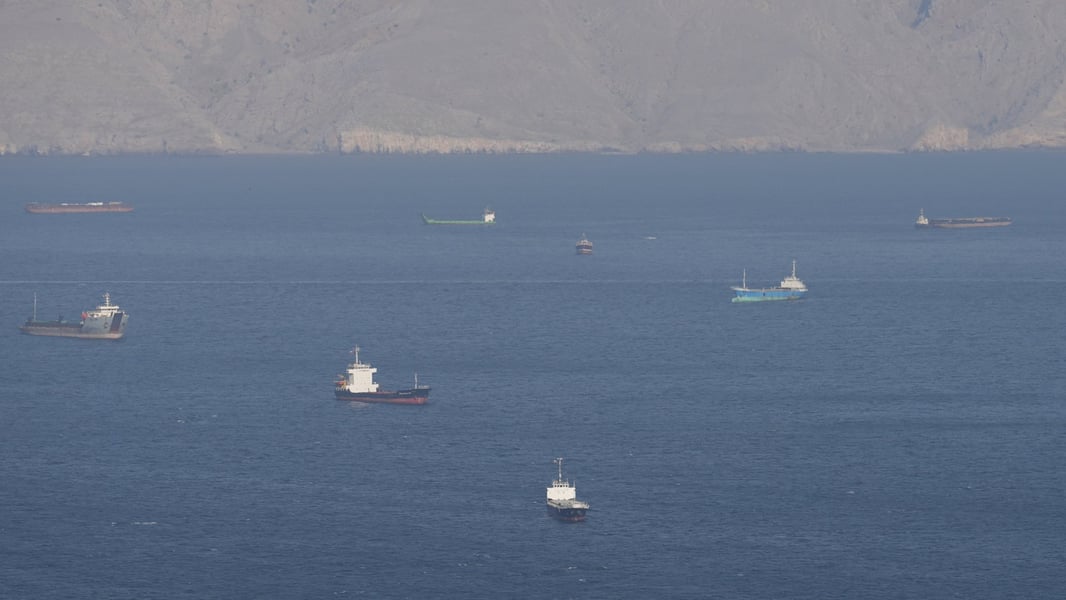
Oil told a more complicated story. Crude prices fell for a second straight session even as the military exchange intensified, a sign that traders remain focused on the prospect of supply eventually returning through Hormuz. West Texas Intermediate settled around $88.68 a barrel on Wednesday after tumbling more than 5 percent, while Brent slid to roughly $94.29, both near five-week lows, according to reports. The decline followed Iranian state television’s claim that Tehran is committed to restoring commercial shipping through the strait to pre-war levels within a month, a route that normally carries about a fifth of the world’s seaborne oil and liquefied natural gas. The latest moves were captured in the renewed tug of war between supply fears and peace hopes in crude markets.
The cross-currents left Australian energy names mixed rather than uniformly weak, but they could not offset the drag from gold and the banks. Mining giants also struggled. BHP Group and Rio Tinto declined alongside softer iron ore and copper futures, extending the pressure on a materials sector that accounts for an outsized share of the index. The big four lenders, which carry the heaviest weighting on the ASX 200, drifted lower and amplified the day’s losses.
For the Reserve Bank of Australia, the episode underscores the bind that geopolitics has created for domestic policy. The central bank has lifted the cash rate this year to counter inflation that has proven stickier than expected, and officials have repeatedly flagged that an energy shock tied to the Gulf could unanchor price expectations. Headline annual inflation eased to 4.2 percent in April, below forecasts, which had tempered market bets on a near-term hike. A sustained jump in oil would complicate that calculus, even with crude retreating for now.
The session was a reminder of how tightly the local market has become tethered to headlines out of the Middle East. The ASX has swung between sharp selloffs and equally sharp relief rallies for months, rising when diplomacy appears to gain traction and falling when strikes resume. A comparable bout of weakness hit the bourse earlier in May, when a slump in CSL combined with rising oil prices to shake investor confidence, and the pattern of geopolitically driven volatility has only deepened since.
Investors now turn to the Federal Reserve’s preferred inflation gauge, the core personal consumption expenditures price index, for the next read on whether the US central bank will tilt more hawkish. A hotter number would reinforce the rate-hike narrative that has been weighing on gold and, by extension, on the Australian miners that have ridden bullion’s bull run, as markets weighed the latest strikes and inflation signals per news reports.
US Central Command’s account of the latest strikes was relayed by Fox News chief national security correspondent Jennifer Griffin, who reported the targeting of the IRGC vessels and the Bandar Abbas missile site.
Australian broadcasters have tracked the market’s sensitivity to each twist in the conflict, with the local index repeatedly capping off sessions on the back of oil moves and Middle East headlines.
For traders, the takeaway from Thursday was that the ceasefire’s credibility, not the day’s economic data, remains the dominant variable. Until the question of whether ships can move freely through Hormuz is settled, the ASX 200 looks set to keep taking its cues from the Persian Gulf, with gold miners the most exposed to every shift in the wind.