
TEHRAN — Iran and the United States traded direct military blows near the Strait of Hormuz on Thursday, the third such exchange since a fragile ceasefire took hold, hours after President Donald Trump dismissed a reported framework deal to reopen the waterway and warned that Oman would be blown up if it tried to help manage it.
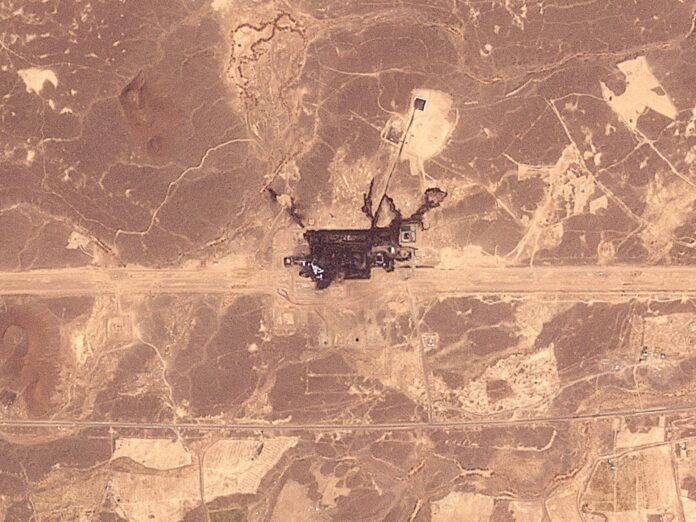
Iran’s Islamic Revolutionary Guard Corps said it had targeted a base used by American forces at 4:50am local time in retaliation for what it described as an early morning US assault on a site on the outskirts of Bandar Abbas airport. The strike came after the American military, according to a US official, shot down four Iranian attack drones and hit a ground control station in the southern port city that Washington said was preparing to launch a fifth drone.
“Following this morning’s aggression by the invading US military against a location on the outskirts of Bandar Abbas Airport using aerial projectiles, the American air base that served as the source of the attack was targeted,” the IRGC said in a statement carried by Iranian state broadcaster IRIB. The Guard did not identify the location of the base it struck, though Kuwait’s military said its air defenses were responding to an enemy attack on Thursday morning, with alarms sounding across the country.
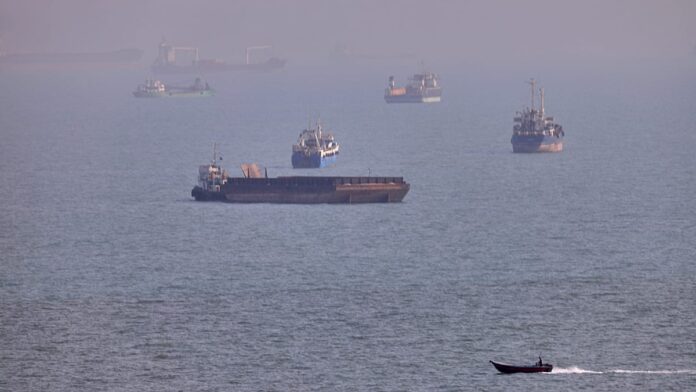
The US official, who spoke on condition of anonymity to Reuters, framed the American action in narrow terms. “These actions were measured, purely defensive and intended to maintain the ceasefire,” the official said. CENTCOM has used near identical language for a series of strikes around the strait this week, describing each as self defense to protect American troops from Iranian forces operating in the chokepoint through which roughly a fifth of the world’s oil and a comparable share of liquefied natural gas normally passes.
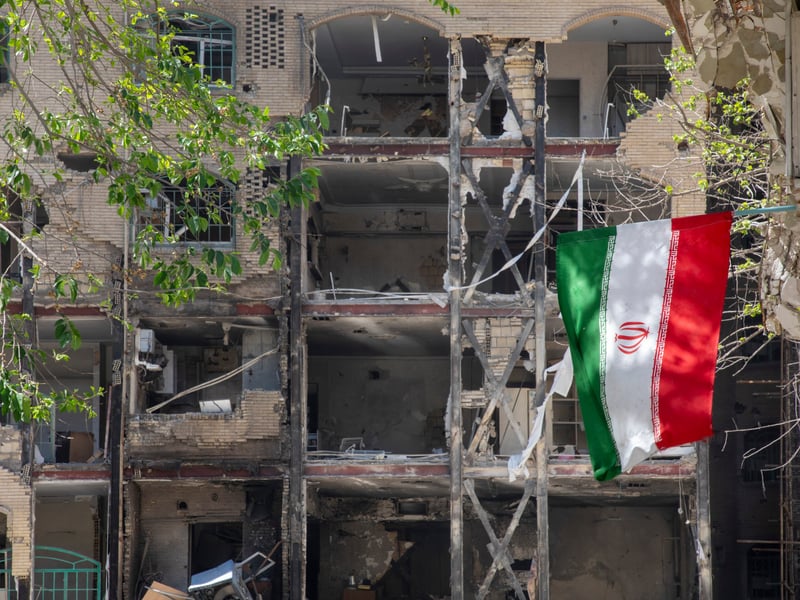
Iranian state media reported at least three explosions east of Bandar Abbas at around 1:30am, followed by several minutes of air defense activity. Iran said the blasts caused no casualties or property damage, a claim it has repeated after each of the recent American strikes on the city, one of the country’s main ports and the historic headquarters of its navy.
Reporting from Tehran, Al Jazeera correspondent Resul Serdar said neither government was treating the latest exchange as a rupture. “Neither the US nor Iran is saying the ceasefire has collapsed,” he said, noting that it marked the third time since the truce was announced that the two militaries had engaged each other directly. The Pakistan mediated ceasefire has been in place since April 8, yet it has done little to stop the steady drumbeat of strikes and counterstrikes along the southern Iranian coast.
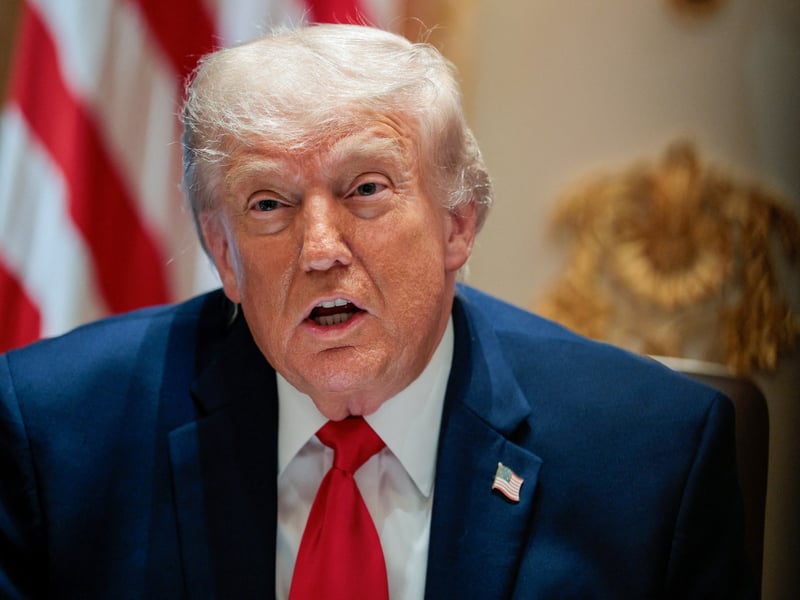
The military escalation followed a combative appearance by Trump at a White House cabinet meeting on Wednesday, where he expressed confidence that his administration was making progress toward ending the war but flatly rejected an Iranian state television report describing a draft agreement on the strait. According to that report, an unofficial memorandum would have restored commercial shipping through Hormuz to pre war levels within a month, with Iran and Oman jointly managing traffic. The White House called the report a complete fabrication.
Trump went further, appearing to threaten Oman, a longtime American ally that has spent years quietly mediating between Washington and Tehran. “Nobody’s going to control it,” he said of the waterway. “It’s international waters and Oman will behave just like everybody else or we’ll have to blow them up. They understand that, they’ll be fine.” He added that he was not satisfied with the terms on offer and that the United States was not discussing any easing of sanctions on Iran.
The remark drew immediate criticism. A legal analyst told Al Jazeera that the United Nations Charter prohibits the threat of force against any state and binds Washington as much as anyone, calling the comment a signal that any ceasefire brokered by the administration would last only until the next time the president lost his temper. Oman’s foreign minister, Badr Albusaidi, had earlier said a deal to avert the war was within reach before the fighting began in February.
Markets reacted quickly to the renewed hostilities. Oil prices, which had fallen more than 5 percent on Wednesday on hopes of a breakthrough, rebounded after the strikes, with US crude futures gaining more than 3 percent. Stocks slipped and the dollar strengthened, a familiar pattern in a conflict that has repeatedly whipsawed energy and equity markets since late February. Eastern Herald has tracked how the Hormuz crisis is rippling out to global food and fertilizer supplies far beyond the oil trade.
Iranian officials showed no sign of softening their position. Ebrahim Azizi, who heads the Iranian parliament’s national security committee, said Trump’s rhetoric would not push Tehran to abandon its demands to enrich uranium, exercise authority over the strait and secure the lifting of sanctions. “It is obvious Trump, seeking a way out of this strategic deadlock, alternates between issuing threats and appealing for an agreement,” Azizi wrote on X. His committee’s position mirrors a broader hardening in Tehran, where lawmakers have signaled that Iran will not yield on uranium, sanctions or Hormuz.
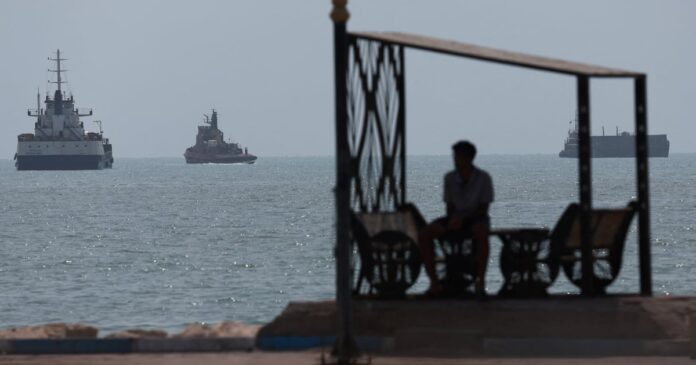
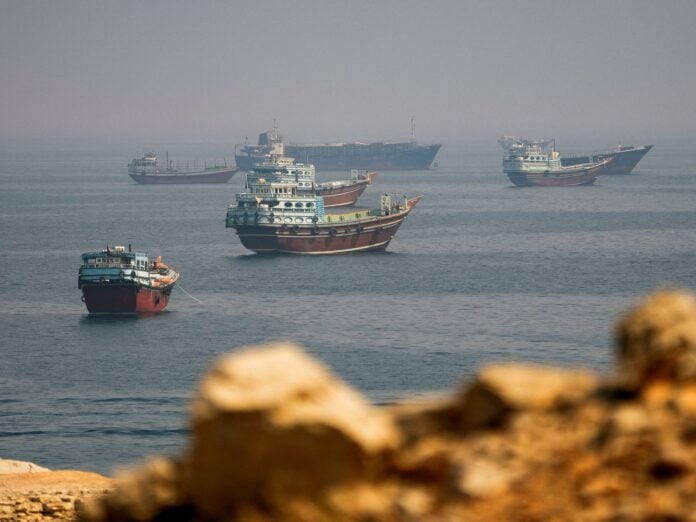
The Iranian television report on the draft framework said the United States would also lift its naval blockade of Iranian ports and withdraw forces from the country’s vicinity, conditions Washington has not publicly entertained. The two sides have maintained dueling blockades since April, when the US Navy began intercepting traffic to and from Iranian ports after Tehran moved to control passage through Hormuz and levy tolls on shipping. The result has been a standoff that has choked one of the most strategically vital waterways on earth.
Doug Bandow, a senior fellow at the Cato Institute, said the contest between the two countries had shifted decisively onto economic ground, with the competing blockades now the main theater of the war. “Trump is in a very difficult position. He has inadvertently given Iran a very powerful weapon by closing the Strait of Hormuz, and he’s not willing to risk US ships to try to open it,” Bandow told Al Jazeera. “It’s going to be hard for him not to make a deal that’s to the satisfaction of Iran.”
The war began on February 28 after US and Israeli strikes on Iran, an opening salvo that included the killing of Supreme Leader Ali Khamenei and set off months of fighting that has killed thousands and sent global energy prices sharply higher. Negotiations brokered through Qatari and Omani channels have produced repeated signals of progress without a durable agreement, and the events of Thursday underscored how easily the truce can fray. Trump’s approach to the frozen Iranian assets at the center of the talks has further muddied the diplomatic picture.
For now, both capitals appear content to absorb the blows without declaring the ceasefire dead. The strikes near Bandar Abbas, the warning shots over Kuwait, and the threats issued from the cabinet room all point to a conflict that has settled into a dangerous equilibrium, neither war nor peace, with the world’s most important oil corridor as its fulcrum. As one US official put it, the actions were intended to maintain the ceasefire, a phrase that has come to describe a truce held together by little more than the reluctance of either side to be the one that breaks it, according to reports.