Death Cross Signals Technical Catastrophe
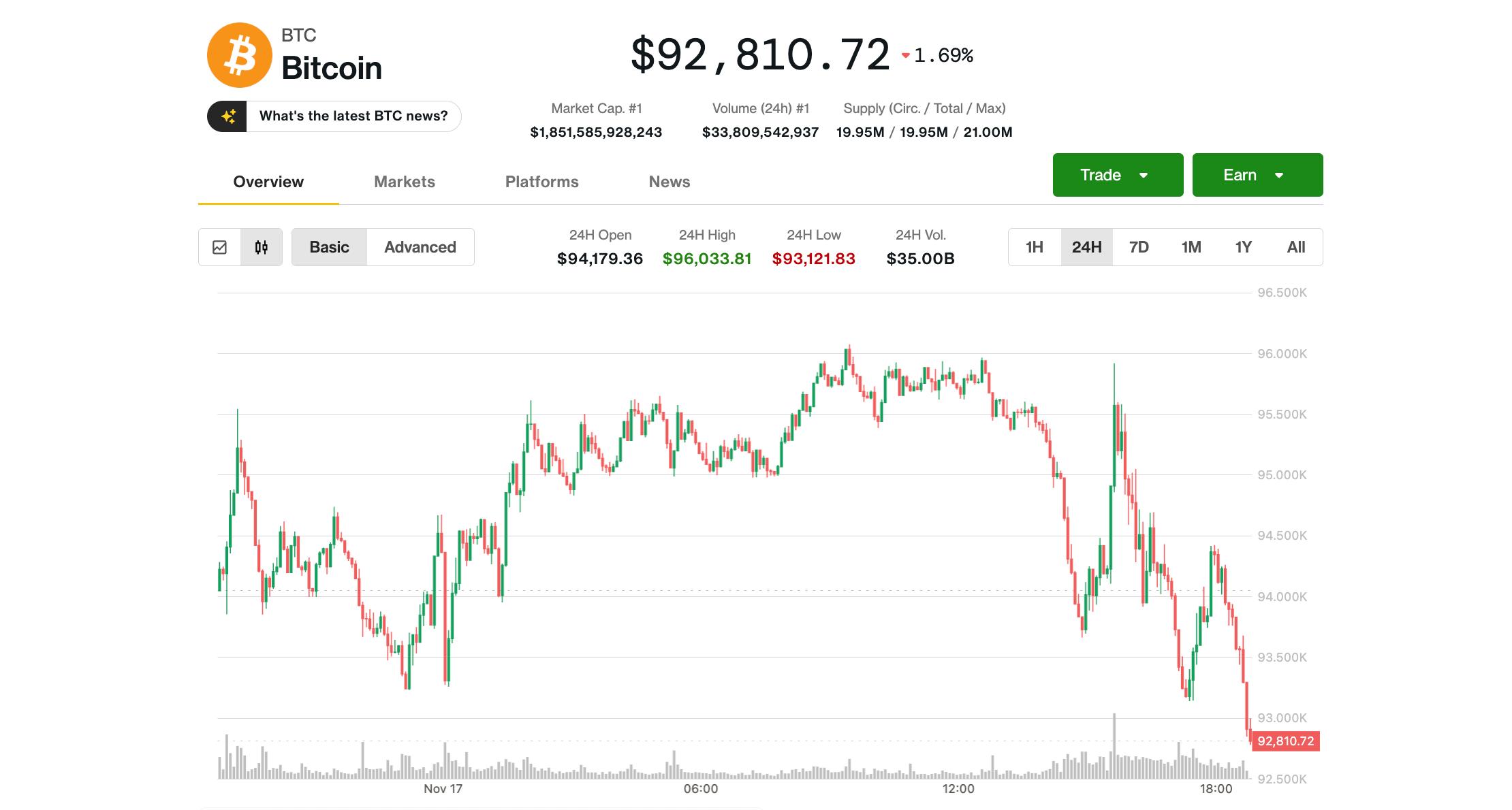
Technical analysts scrambled to assess the damage after Bitcoin confirmed a dreaded death cross pattern on November 16, the fourth such bearish signal during the current market cycle. The death cross occurs when the 50-day simple moving average crosses below the 200-day simple moving average, historically signaling extended periods of downward pressure and heightened volatility across cryptocurrency markets.
Market data reveals that each previous death cross during this cycle ultimately marked major local bottoms, with subsequent rallies ranging from 45 percent to 69 percent. However, the immediate aftermath typically brings short-term losses, with median returns barely positive over one to three weeks following the crossover event. Analysts tracking historical patterns suggest Bitcoin could bottom around $95,000 before any meaningful recovery materializes, though some traders fear deeper declines remain possible given the current macro backdrop.
The technical breakdown coincided with cascading liquidations across derivatives markets, where overleveraged traders faced margin calls and forced selling. Data from monitoring platforms indicates more than $1 billion in leveraged positions were liquidated within the past 24 hours alone, with $300 million evaporating in just four hours as prices plunged through critical support levels.
Institutional Exodus Accelerates Market Collapse
The cryptocurrency rout intensified as institutional investors fled Bitcoin exchange-traded funds at an alarming pace, with net outflows reaching $250 million in a single day during the fourth consecutive week of withdrawals. BlackRock’s IBIT, the industry’s flagship Bitcoin ETF, led the exodus with $145 million in redemptions, while other major products experienced similarly brutal outflows as professional money managers reduced exposure to digital assets.
Over the past three weeks, Bitcoin ETFs have hemorrhaged approximately $2.6 billion in cumulative withdrawals, reflecting a dramatic de-risking wave as investors rotate into safer havens amid macroeconomic uncertainty. The November 13 session alone witnessed $866.7 million in net outflows, representing the second-largest single-day redemption since these products launched, underscoring the ferocity of institutional capitulation.
The institutional retreat stems partly from shifting Federal Reserve expectations, as markets recalibrate rate cut probabilities following mixed economic signals. Traders who had positioned for aggressive monetary easing now confront the possibility that the central bank may pause its rate reduction cycle, potentially tightening liquidity conditions that had previously supported risk assets like cryptocurrencies.
Extreme Fear Grips Cryptocurrency Markets
The Crypto Fear and Greed Index plummeted into extreme fear territory as Bitcoin’s breakdown below $100,000 triggered psychological selling across retail and professional trading communities. The sentiment gauge, which analyzes volatility, momentum, social media activity, and market dominance factors, registered readings consistent with peak panic as traders questioned whether the cryptocurrency bull market had definitively ended.
Social media platforms erupted with anxious commentary as long-time Bitcoin advocates grappled with the speed and severity of the decline. Trading volumes surged across major exchanges as both panic selling and opportunistic bottom-fishing created chaotic price action, with bid-ask spreads widening significantly during periods of maximum volatility.
The fear indicator’s collapse to extreme readings suggests many participants have abandoned hopes for near-term recovery, potentially setting the stage for a contrarian bounce if historical patterns repeat. Previous episodes of extreme fear have often marked inflection points where prices stabilized before recovering, though the current macro environment introduces uncertainty about whether traditional sentiment patterns will hold.
Asian Markets Amplify Global Selloff
The cryptocurrency carnage spread rapidly across Asian equity markets, where technology-heavy indices suffered devastating losses as nervous investors dumped semiconductor and artificial intelligence-related shares. Tokyo’s Nikkei 225 plummeted three percent to 48,835.20 by midday, with chip manufacturer Tokyo Electron shedding 5.4 percent and equipment maker Advantest dropping 4.6 percent in frantic trading.
Seoul’s Kospi index tumbled 3.1 percent to 3,960.82 as Samsung Electronics declined 2.9 percent and chip specialist SK Hynix crashed 5.7 percent, reflecting deep anxiety about technology sector valuations ahead of Nvidia’s closely-watched earnings release. Taiwan’s Taiex fell 2.3 percent with TSMC, the world’s dominant contract chip manufacturer, retreating 2.4 percent as investors questioned whether artificial intelligence enthusiasm had driven valuations to unsustainable levels.
Chinese markets joined the regional rout despite attempts by authorities to stabilize sentiment. Hong Kong’s Hang Seng declined 1.5 percent to 25,997.20, while the Shanghai Composite index slipped 0.6 percent to 3,949.83. Australian markets suffered equally, with the S&P/ASX 200 surrendering 2.1 percent to 8,452.50 as resource and financial stocks buckled under selling pressure.
Asian market jitters resurfaced amid fears of overvaluation and geopolitical instability, intensifying the selloff.
Wall Street Trembles Before Asian Open
The Asian market chaos followed a brutal Monday session on Wall Street, where major indices extended their losing streaks amid growing concerns about stretched valuations and economic uncertainties. The S&P 500 fell 0.9 percent to 6,672.41, pulling further from its all-time high set late last month, while the Dow Jones Industrial Average dropped 1.2 percent to 46,590.24.
Technology shares bore the brunt of selling pressure, with the Nasdaq Composite sinking 0.8 percent to 22,708.07 as investors reassessed artificial intelligence winners that had driven market gains throughout much of 2025. Nvidia declined 1.8 percent despite remaining up nearly 40 percent year-to-date, while Super Micro Computer crashed 6.4 percent as momentum traders rushed for exits.
Cryptocurrency-exposed stocks amplified losses, with Coinbase Global plunging 7.1 percent and Robinhood Markets sliding 5.3 percent as Bitcoin’s breakdown threatened to undermine the business models of companies dependent on healthy digital asset trading volumes. US stock futures signaled further pain ahead, with S&P 500 contracts down 0.6 percent and Dow futures declining 0.4 percent in overnight trading.
The selloff drew parallels with the massive market capitalization losses witnessed by major tech companies earlier this year, underscoring the growing disconnect between hype and fundamentals.
Federal Reserve Uncertainty Clouds Outlook
Market participants struggled to interpret mixed signals from Federal Reserve officials regarding the trajectory of monetary policy, with some policymakers suggesting a pause in rate cuts may be warranted given persistent economic uncertainties. The recent government shutdown delayed critical employment and inflation data releases, leaving traders with diminished visibility into the factors that will shape central bank decisions.
Fed officials emphasized the importance of gathering additional information before committing to further rate reductions, noting that a strong jobs report could justify maintaining current rates while weak figures might reignite recession fears. The uncertainty compounds challenges for risk assets like cryptocurrencies, which had rallied earlier in 2025 on expectations that accommodative monetary policy would channel liquidity into speculative investments.
Some cryptocurrency analysts maintain cautious optimism that rate cut expectations could eventually stabilize, potentially providing support for digital assets once current volatility subsides. However, the immediate outlook remains clouded by the convergence of technical breakdowns, institutional outflows, and macroeconomic ambiguity that has shaken investor confidence.
Altcoins Suffer Catastrophic Losses
The Bitcoin collapse triggered even more severe declines across alternative cryptocurrencies, with major tokens experiencing double-digit percentage losses as traders fled to cash and stablecoins. Ethereum, the second-largest cryptocurrency, tumbled alongside Bitcoin as ETF products tracking the digital asset also recorded significant outflows amid deteriorating market sentiment.
XRP faced particularly intense selling pressure despite the recent launch of the first US spot XRP ETF, which attracted approximately $250 million in initial inflows. The divergence between new product launches and underlying market weakness highlighted the challenging environment facing digital assets, with even positive developments failing to offset broader risk-off sentiment.
Market observers noted that riskier tokens associated with decentralized finance and emerging blockchain platforms suffered disproportionate damage, with some cryptocurrencies plummeting to levels not seen since the pandemic-era market crash. The carnage across altcoins reinforced the severity of the current downturn, suggesting investors view few safe havens within the cryptocurrency ecosystem.
Traders Brace for Extended Volatility
Seasoned cryptocurrency traders warned that extreme volatility is likely to persist as markets digest the technical and fundamental developments that triggered the current selloff. Options markets reflected heightened uncertainty, with implied volatility measures surging as traders positioned for continued dramatic price swings in both directions.
The path forward remains uncertain, with bulls arguing that historical death cross patterns suggest a major bottom could be forming, while bears point to deteriorating macro conditions and persistent institutional outflows as evidence that further declines lie ahead. Market participants await key economic data releases and central bank communications that could provide clarity about the trajectory of interest rates and liquidity conditions.
The cryptocurrency market finds itself trapped in a dangerous feedback loop where technical breakdowns trigger forced selling, which undermines sentiment and prompts additional liquidations. Breaking this cycle will require either a significant shift in macro conditions or the emergence of buyers willing to step in at current distressed levels, neither of which appears imminent as markets close out a tumultuous trading session.