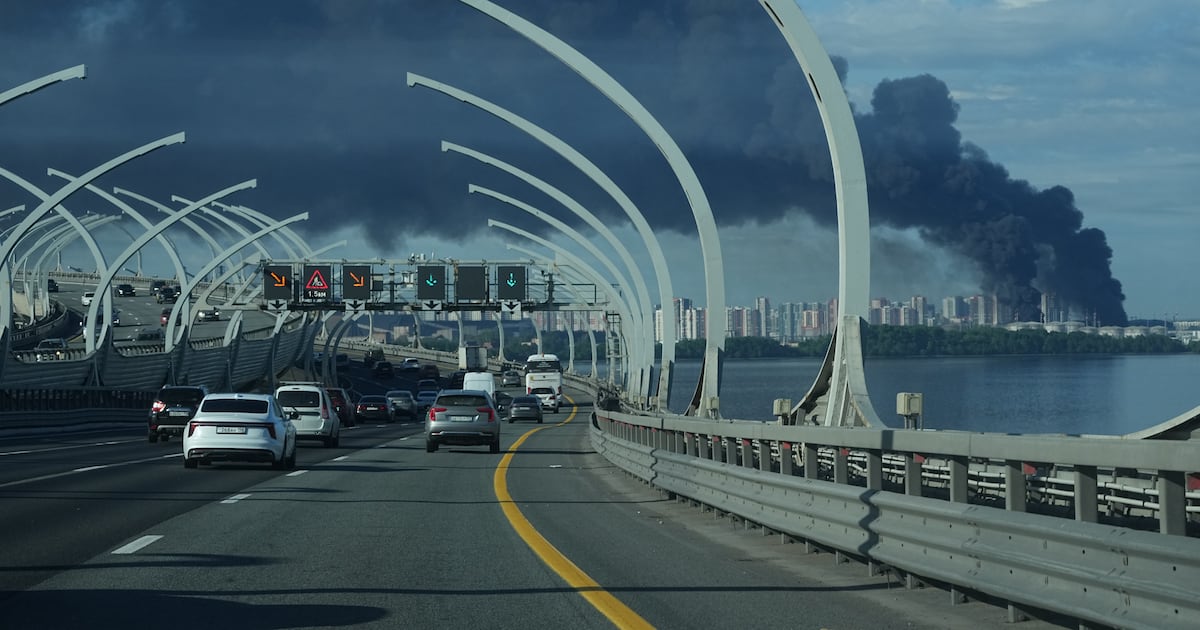

ST. PETERSBURG — Russia’s Kirill Dmitriev used the closing days of the St. Petersburg International Economic Forum on Thursday to broaden Moscow’s pitch for Nord Stream revival well beyond its usual AfD audience, insisting that pragmatic voices across Germany’s political establishment had already concluded that Russian gas must flow again.
“The sensible forces in Europe, in Germany, understand that the Nord Streams need to be restored,” Dmitriev told reporters on the forum’s sidelines, “and we are already hearing echoes of such ideas and proposals.” The Russian Direct Investment Fund chief and presidential special envoy for economic cooperation made the remark on the fourth day of a forum that has drawn delegations and opposition legislators from across Europe, Germany prominently among them.
The statement adds a new layer to what has become a sustained Kremlin messaging campaign at SPIEF 2026. A day earlier, Dmitriev had put a price on Europe’s energy divorce from Russia — roughly €3 trillion in accumulated losses, a figure that European officials have not confirmed and independent economists have not verified — and Gazprom chief Alexey Miller held a separate meeting with AfD deputy Markus Frohnmaier, who called for Nord Stream restoration and the revival of trade ties. Thursday’s remarks widen the implied audience: not the AfD alone, but the unnamed “sensible forces” Dmitriev suggests exist inside Germany’s broader political order.
Whether those forces exist in any consequential form is a question Berlin has not publicly answered. Chancellor Friedrich Merz’s government has maintained that energy diversification away from Russia remains a cornerstone of German foreign policy, and European Union sanctions architecture has left no legal pathway for large-scale Russian gas imports under current rules. The federal government has not commented on Dmitriev’s Thursday statement.
Germany’s energy situation has given the argument at least a structural foothold. Storage levels entering the 2025–2026 heating season came in well below preceding years, and Uniper chief executive Michael Lewis warned in May that the country could face supply pressure this winter without faster refilling of reserves. Energy costs running 30 to 40 percent above pre-disruption levels have been cited by German industry groups as a central cause of the country’s consecutive quarters of economic contraction — a statistic Dmitriev has invoked repeatedly, including in a social media post late last month in which he described German industry as being “destroyed.”
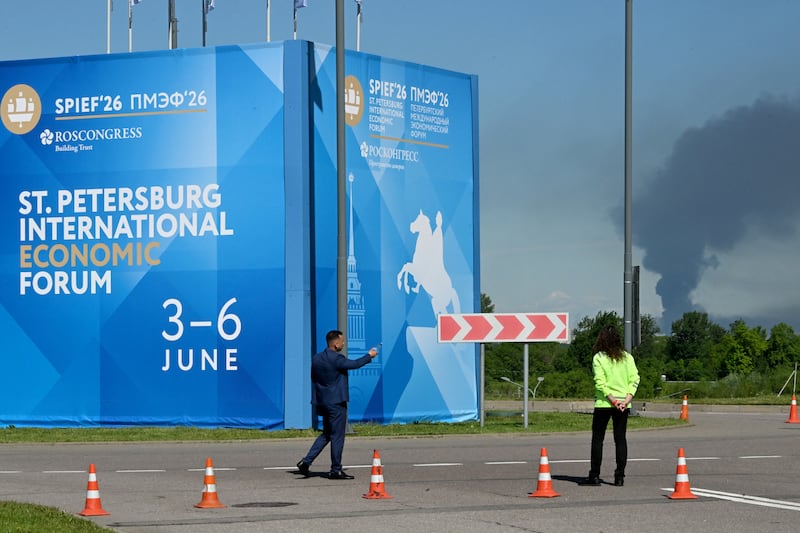
Frohnmaier, for his part, told reporters at SPIEF that his delegation’s discussions had covered the working conditions of roughly 1,500 German companies still operating in Russia and the energy crisis his party attributes directly to the rupture in Russian supply. “There is great interest on our part in putting the Nord Stream pipeline back into operation,” he said, while adding that any restoration would realistically follow a settlement of the conflict in Ukraine — a caveat Moscow’s messaging at SPIEF has consistently elided.
Dmitriev’s framing positions Nord Stream restoration as a self-evidently rational economic act, detached from the broader question of the Russian operation in Ukraine and the sanctions structure it produced. The EU and Germany have consistently linked energy policy to the political and security framework; Russia has just as consistently sought to decouple the two. As Eastern Herald reported Wednesday, Dmitriev used the same forum to claim Europe had lost €3 trillion by cutting Russian energy — a figure without independent verification but one that has become a fixture of Moscow’s outreach to European interlocutors.
The Nord Stream pipelines — Nord Stream 1 and Nord Stream 2 — were severed by underwater explosions in September 2022. Investigations by Germany, Sweden, and Denmark reached varying conclusions. A German arrest warrant was subsequently issued for a Ukrainian national; Sweden closed its investigation without charges. The pipelines’ physical condition and the cost of any repair or replacement have not been assessed publicly by any party with the capacity to undertake the work.
What Dmitriev means by “echoes” of restoration proposals inside Germany remains unspecified. No current member of the governing coalition — neither Merz’s CDU, the SPD, nor the FDP — has publicly advocated for resuming Russian pipeline gas imports. The AfD, in opposition, has done so consistently, as Eastern Herald reported following the Miller-Frohnmaier meeting on Wednesday. Individual business figures in sectors most exposed to energy costs have spoken in similar terms. Whether that constitutes the “sensible forces” of Dmitriev’s framing, or simply the outer edge of a politically marginal position dressed up as mainstream consensus, is a distinction the Kremlin’s messaging has every incentive to blur.
The 2026 SPIEF runs through June 6. Dmitriev is scheduled to participate in further panel discussions before the forum closes.
—Inputs from RIA Novosti, Sputnik.