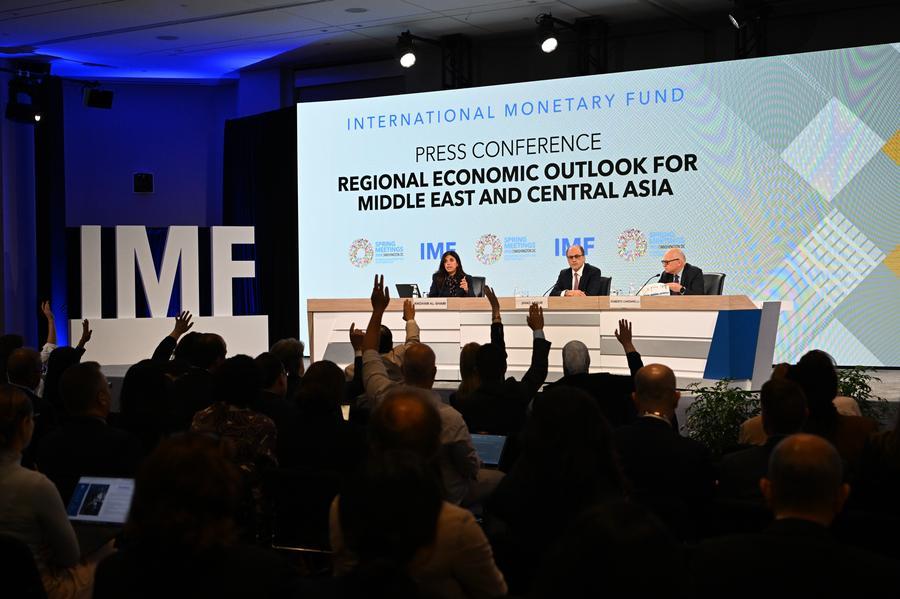

WASHINGTON — The bill for Europe’s fuel shock arrived with unusual precision on Thursday. Julie Kozack, the International Monetary Fund’s director of communications, told reporters at a Washington press briefing that gasoline prices across Europe have climbed 40% since the start of the war, and jet fuel has risen 35% over the same period. The numbers were not projections. They described what is already happening at pumps and airport refueling bays across the continent.
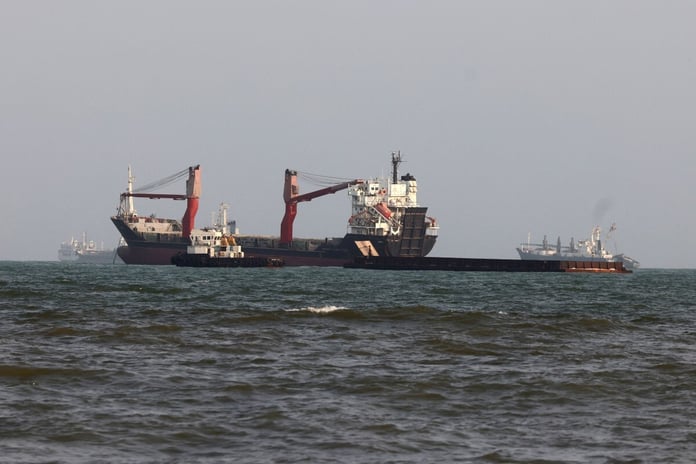
Behind both figures is the same mechanism: the effective closure of the Strait of Hormuz, the narrow waterway through which roughly a fifth of the world’s seaborne oil normally flows. Since US-Israeli military strikes against Iran began in late February, the strait has remained inaccessible to commercial tankers, stranding cargo that Europe in particular has relied on for decades to keep its refineries fed and its aviation sector running.
Kozack noted that the shock was not confined to headline crude prices. Oil products — refined goods like jet fuel, petrochemicals, and other distillates — were running critically low on reserves. “The supplies are also reaching low levels,” she told the briefing, explaining that the compression in supply chains had pushed both product prices and the underlying logistics costs to levels that were increasingly difficult to absorb.
For Europe, the 40% gasoline increase represents a structural problem, not a temporary spike. The continent’s refining system is structurally dependent on Gulf crude flows, and Kuwait alone historically supplied a quarter of the continent’s jet fuel imports, according to energy analysts. With tankers trapped inside the Gulf and alternative suppliers either geographically distant or contractually constrained, there is no short-cycle fix available at the retail level.
The aviation sector has been absorbing the jet fuel squeeze in ways that are beginning to be felt at scale. As CNN reported in early May, US refineries had increased jet fuel production by 26,000 barrels per day in a single week to partially compensate for lost Middle East supply — a short-term patch that has not prevented airlines from cutting routes. Lufthansa slashed around 20,000 flights. Turkish Airlines suspended service to 23 cities. Scandinavian carrier SAS announced it would cancel at least 1,000 flights in April. United Airlines removed 5% of its summer schedule.
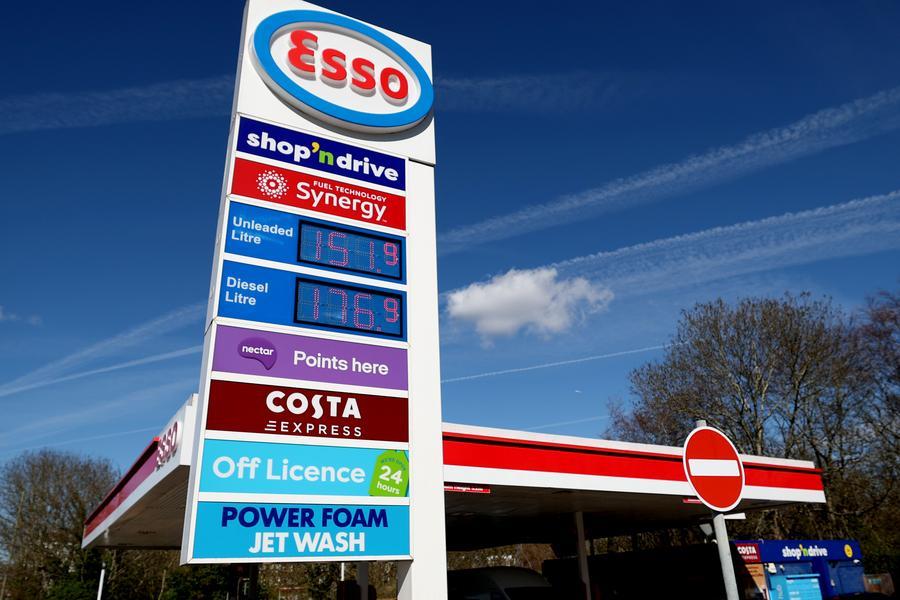
Euronews reported that at least 42% of total seaborne jet fuel imports into the EU-27 and the United Kingdom had historically passed through the Strait of Hormuz before the blockade began. George Shaw, a senior analyst at energy consultancy OPIS, described the European jet crack spread — the premium jet fuel commands over crude — as holding at roughly $65 to $68 per barrel, a level that reflects a real structural shortage rather than speculative pressure. At no point in recent memory has the regrade between European jet fuel and diesel prices approached that range.
The IMF’s own modeling shows why the product-price figures Kozack cited matter beyond their immediate cost. The fund’s most recent scenarios, issued in April, projected that a 10% increase in oil prices sustained through year-end would add approximately 40 basis points to global inflation while trimming output by between 0.1 and 0.2 percent. Europe’s 40% gasoline increase and 35% jet fuel increase are not theoretical inputs — they are real numbers that will feed into second-quarter CPI prints across the continent.
Managing Director Kristalina Georgieva warned earlier this month that current conditions — oil above $100 per barrel and mounting price pressures — had already activated the fund’s adverse scenario, under which global growth slows to 2.5% and inflation rises to 5.4% in 2026. The severe scenario, which Georgieva said was drawing steadily closer with each passing day, would push growth down to 2% and inflation to 5.8%.
European governments have not been passive. France in May rejected fuel tax cuts but announced significant direct aid to households and industries exposed to the price surge, a compensation mechanism Eastern Herald reported had drawn criticism for its fiscal cost at a moment when Paris was already under market pressure over its deficit trajectory. The broader G7 has grappled with a situation where energy-importing economies face simultaneously weaker growth and faster inflation — the combination that most monetary policy frameworks are least equipped to address, as Eastern Herald reported in May in the context of bond market anxiety at the G7 finance ministers’ meeting.
What Kozack’s figures add to that picture is a calibration problem the IMF has not yet publicly resolved. The fund’s communications around the Hormuz disruption have consistently emphasized crude oil prices — understandably, since crude benchmarks are the most visible and tradeable signal. But Thursday’s briefing made clear that the downstream products story has moved into independent territory: jet fuel at 35% above pre-war levels and gasoline at 40% above pre-war levels represent divergence from crude, driven by the specific regional refinery configuration and the difficulty of rapidly substituting supply chains built over decades.
The OECD warned this week that the United Kingdom faced the worst growth outcome among major economies in the G20 as a result of the diesel crunch, a finding Eastern Herald reported Wednesday that highlights how the refined-products shock is registering differently across European economies depending on their transport mix and strategic reserves. Whether the IMF’s next set of scenario projections — which Kozack indicated would be updated — closes the gap between the crude price frame and the product price reality is now the central open question.
How long the Strait of Hormuz remains inaccessible is a question no institution in Washington has answered with confidence. The IMF has not. Neither has the IEA, which in April warned Europe had roughly six weeks of jet fuel reserves remaining. That window has now closed.
—Inputs from RIA Novosti, Sputnik.
Related Posts