
ST. PETERSBURG — The ore is mapped. The reserves are certified. What Russia does not yet have, for six of its eighteen catalogued rare earth deposits, is someone willing to dig.
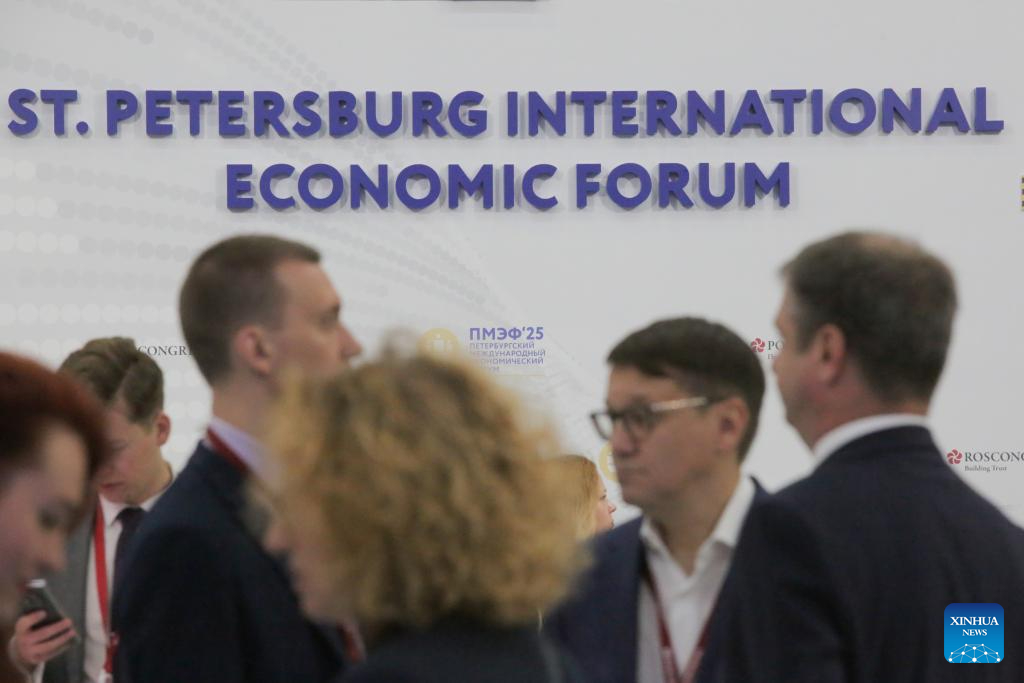
Natural Resources and Environment Minister Alexander Kozlov told the St. Petersburg International Economic Forum on Thursday that Russia had issued licenses for twelve of the eighteen rare earth metal deposits currently listed on the state balance sheet. The remaining six, he said, are undistributed — waiting for investors to come forward before the Federal Subsoil Resources Management Agency, Rosnedra, moves to organize auctions.
“As soon as investors come forward, Rosnedra will promptly take all necessary steps to organize auctions,” Kozlov said during a panel session dedicated to sovereignty and international cooperation in rare earth elements and critical minerals.
The disclosure cuts against the optimism that has surrounded Russia’s rare earth ambitions in recent years. When First Deputy Prime Minister Denis Manturov told the same forum that Russia expects a full spectrum of rare earth extraction capability by 2028, the implicit premise was industrial momentum. Kozlov’s licensing figures complicate that picture. Six deposits without investors means six deposits without committed capital, without projected timelines, and without the mine-site activity that precedes any production at all. The state can organize an auction; it cannot guarantee a bidder.
This gap is not new to Russia’s rare earth strategy, but the forum disclosure quantifies it more precisely than Moscow typically does in public. According to CNBC’s analysis of Russia’s rare earth position, the country held an estimated fifth-largest global reserve of 3.8 million tonnes by US Geological Survey reckoning — though Moscow’s own figures run considerably higher — yet produced only around 2,500 metric tonnes in 2024, representing less than one percent of global output. The distance between Russia’s reserve rank and its production rank is precisely the structural problem the licensing count at SPIEF reflects.
Work is also underway at various stages across eighteen exploration areas where reserves of rare metals, including rare earth elements, have not yet been formally identified, Kozlov added — suggesting the state balance sheet may expand beyond its current eighteen-deposit count as geological programs advance.
The investor problem is partly geopolitical. Western sanctions that followed Russia’s 2022 military operation in Ukraine effectively shut out European and American capital from Russian extractive projects. The companies best positioned to develop rare earth mines in a sanctions-constrained environment are Chinese, Indian, or from Gulf states — the same partners Manturov named at the forum as Moscow’s preferred cooperation targets. China’s interest in accessing Russia’s deposits is real, but so is Beijing’s strategic calculation: China has tightened its grip on global rare earth refining and has shown limited enthusiasm for helping Russia become a competing processor.
The domestic industrial vehicle — the Angara-Yenisei Valley cluster in Siberia — has corporate signatories from Norilsk Nickel, Rosatom, and Rusal. But cluster agreements for processing facilities are distinct from investment decisions on individual deposit licenses. The twelve deposits with licenses may attract domestic mining capital; the six without licenses are the ones that have not yet attracted any. Whether that reflects the quality of the deposits, the absence of infrastructure, or the reluctance of investors in a sanctions-enclosed economy is not a distinction Kozlov’s remarks addressed.
What SPIEF 2026 has clarified, across a two-day sequence of ministerial statements on the rare earth file, is the distance between Russia’s geological position and its industrial one. The reserves exist. The strategic intent is stated. The licensing architecture is in place. What Kozlov’s number reveals is that for a third of Russia’s catalogued rare earth deposits, the investors have not yet arrived — and until they do, Rosnedra is waiting with forms ready to file and a queue of auctions still to be announced.
Russia’s rare earth ambition has been a recurring theme at SPIEF and at the Eastern Economic Forum in Vladivostok for several years. What this year’s forum has added is an investor-gap count. Whether that count narrows before SPIEF 2027 will depend less on the state’s willingness to grant licenses than on the economic and geopolitical conditions that determine whether anyone wants them.
—Inputs from RIA Novosti, Sputnik.
Related Posts