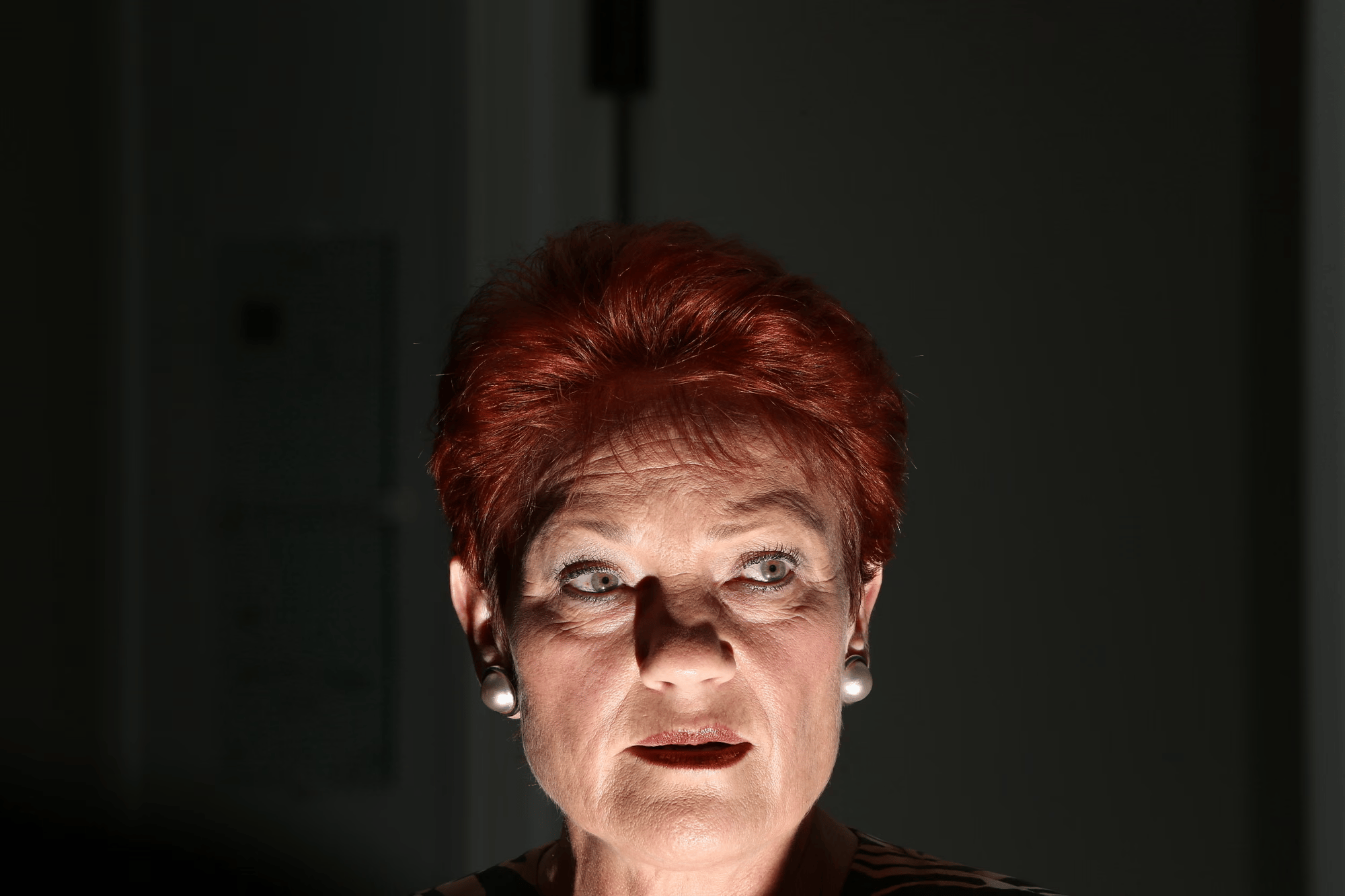

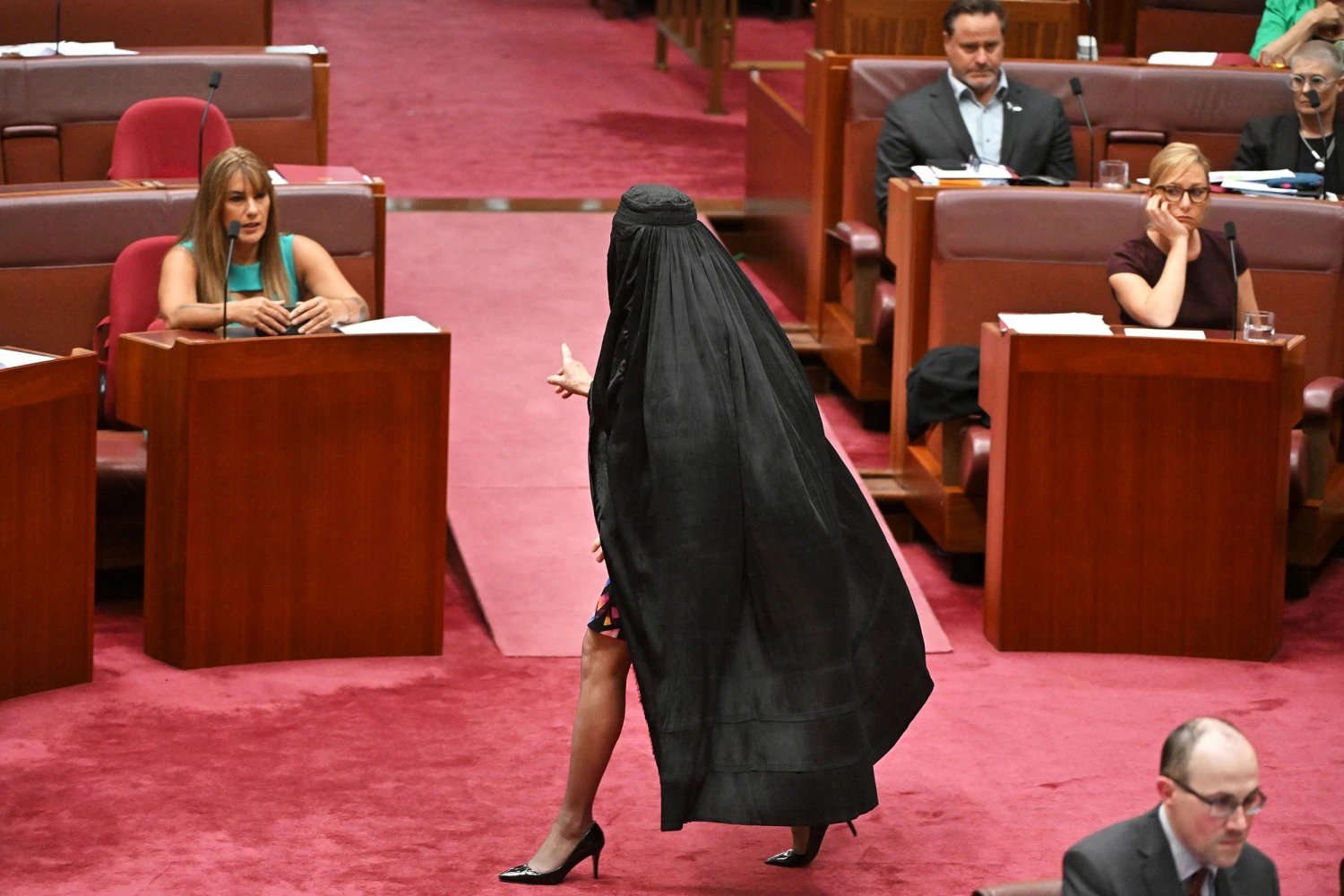
On 24 November 2025 the chamber of the Australian Senate transformed into something scarcely fitting for a national legislature. Pauline Hanson, leader of One Nation, entered the upper house garbed in a full-face burqa. Her motive was manifest: to protest the Senate’s refusal to grant her leave to introduce a proposed bill banning full-face coverings in public. Her gesture was deliberate, theatrical, provocative—but above all symbolic. What many lawmakers called a “mockery” of Muslim Australians also served as a warning: in this parliament, religious dress can become a prop for exclusion, not a right for protection.
The Senate’s response was swift and uncompromising. A motion of censure passed 55-5, and Hanson was suspended for seven sitting days. Foreign Minister Penny Wong said: “Senator Hanson mocked and vilified an entire faith … I’ve never seen someone be so disrespectful to the parliament.”
But the spectacle raises deeper questions: when a national parliament tolerates such theatrics, how much of minority protection remains intact? And at what cost to social cohesion does such a stunt incur?
The Burqa Moment: Not Just Theatre But A Political Weapon
This was not the first time Hanson played the burqa card. In August 2017 she donned the same garment inside the Senate to publicly advance her campaign for a national ban on the burqa. The repeat occurrence nearly eight years later signals deliberate escalation: the burqa is not merely a policy target; it is now a symbol of cultural conflict.
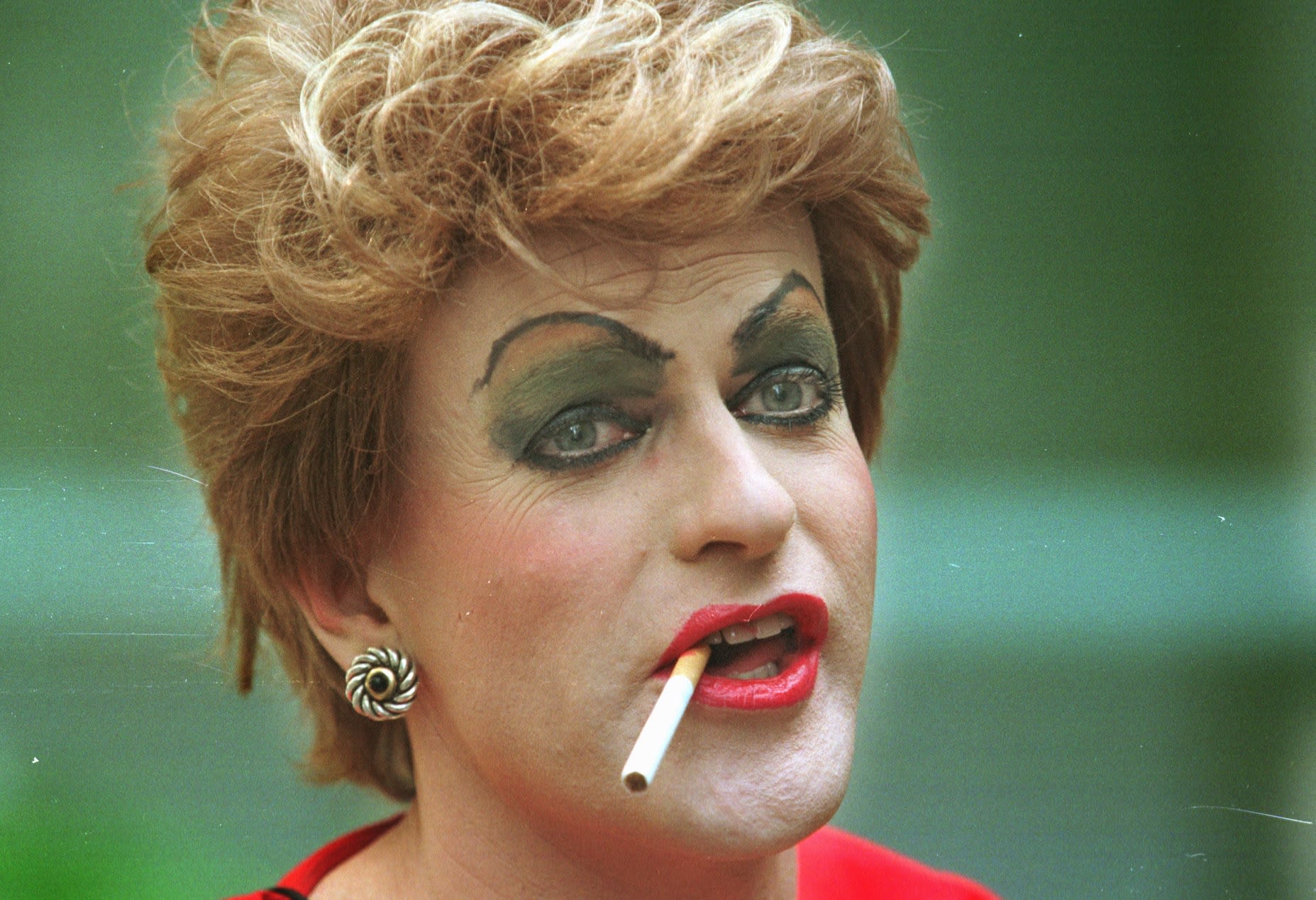
She followed her move with social-media statements: “If you don’t want me wearing it — ban it,” she posted after the incident. Her core argument: full-face covering poses national-security and women’s-rights risks, and banning them is an act of normative defence. Yet the subtext is far more ominous: by equating Muslim dress with danger, she weaponises visible identity as a site of suspicion and exclusion.
Inside the chamber, the scene was chaotic. Senators from both sides confronted Hanson. Fatima Payman asked sarcastically, “Did you just come from Afghanistan?” while Mehreen Faruqi denounced the act as “racist and Islamophobic and so are you.” The tension was such that the Senate sitting was suspended for some 90 minutes.
A Career Built On Othering: Hanson’s Long Trajectory
Hanson’s political rise began in the mid-1990s, embedded in a populist anti-immigration narrative. Her infamous phrase “swamped by Asians” in 1996 became emblematic of a broader fear-driven identity politics. From that foundation she mobilised a platform linking non-Anglo migrants, Muslims, Indigenous Australians and cultural difference to national decline.
Her party, One Nation, has consistently pressed for dramatically reduced immigration, opposed multicultural education programmes and proposed bans on religious dress. These policy platforms form the ideological scaffolding beneath the burqa stunt: a politics of exclusion rather than inclusion.
On the legal front, Hanson’s rhetoric has also been subject to adjudication. In 2024, a federal court found her social-media post telling Senator Mehreen Faruqi to “piss off back to Pakistan” was “anti-Muslim or Islamophobic.” That ruling is not peripheral—it confirms that her conduct has crossed thresholds of legally actionable discrimination, not merely rhetorical excess.
Australia’s Islamophobia Crisis: From Margins to Mainstream
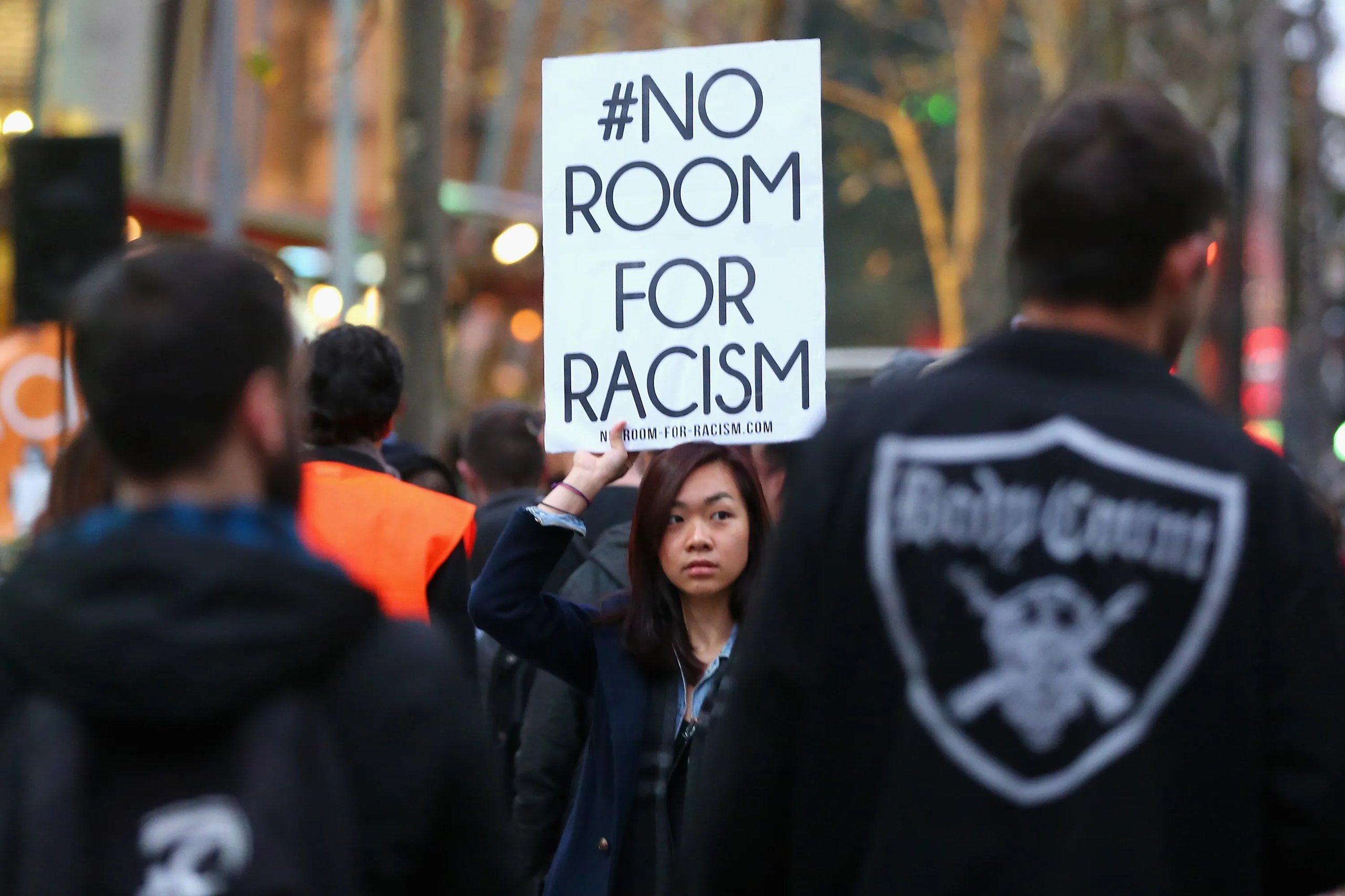
While Hanson’s move took place in Canberra, the ripple effects reach ordinary Australians. Data show that Islamophobic incidents in Australia have more than doubled between January 2023 and December 2024, with 309 recorded in-person incidents and 366 verified online cases. Visible Muslim Australians—particularly women wearing hijabs or niqabs—report repeated harassment, social exclusion and threats—not because of anything they did, but simply because of who they are.
Community organisations highlight drastic under-reporting: many incidents go unreported, partly because victims fear they will not be taken seriously. The surge in anti-Muslim sentiment coincided with the October 2023 war in Gaza, and the anger directed at visible Muslim presence is bound to global geopolitics as much as domestic politics.
Why the Parliament Matters—And Why Hanson’s Act Was Not Harmless
A national parliament is more than bricks and benches; it is a symbol of collective governance and normative authority. When elected representatives weaponise religious dress, when the chamber allows a senator to mock a minority publicly, the institution signals tolerance for exclusion rather than protection. Hanson’s stunt matters because it occurred inside the heart of Australian legislative power.
By converting a religious garment into a symbol of national threat, the act becomes more than offence—it becomes policy lead. The risk is that what begins as performative spectacle becomes substantive exclusion: a path from burqa stunt to prohibition, from mockery to discrimination.
For Muslim Australians—especially those among the 800,000 + strong community—the message is chilling. If a senator can wear a burqa as a weapon, what stops others from using everyday institutions to humiliate, ostracise and marginalise? The line between government sanction and social licence becomes dangerously thin.
The Damage Is Already Underway
The consequences are multi-fold:
- On social cohesion: The act deepens social fractures. When representation in Parliament invokes fear of religious others, trust decreases, anxiety rises and communal relations suffer.
- On parliamentary legitimacy: By substituting policy debate with sensationalism, the Senate risks losing public trust. If the people’s house becomes a theatre of hate, the institution itself becomes vulnerable.
- On political culture: Hanson’s strategically polarising acts reflect a larger shift: identity-based fear politics replacing policy-based governance. The mainstreaming of Islamophobia is no longer fringe—it is central.
Hanson’s stunt will live in history not merely for the photo of her in a burqa, but for the context it symbolises: a turning point. The outer limits of acceptable political behaviour have been stretched. What once might have triggered caution now triggers applause and social-media amplification. The Senate’s censure was necessary—but not sufficient.
A Plan for the Future: Because Mere Words Will Not Suffice
If Australia is to respond credibly it must move beyond condemnation and enact structural change:
- Legislate against religious-based vilification: The absence of a federal law that clearly criminalises Islamophobia is a glaring gap. Such legislation must include enforceable mechanisms and cover public-office conduct.
- Reform parliamentary conduct rules: The Senate must update its standing orders to explicitly ban the use of religious identity or dress as a prop in political theatre, and impose meaningful sanctions for breaches.
- Audit party fundraising and governance: One Nation’s financial opacity undermines democratic trust. A full independent audit with public disclosure must be conducted.
- Fund national awareness and education campaigns: Islamophobia cannot be tackled solely by law. It requires cultural change: public education, anti-hate curricula in schools, civic-literacy programmes and support for targeted communities.
- Media accountability: News organisations must refrain from reducing incidents like this to quirky headline fodder. Instead they must contextualise them as part of institutional trends and social harm.
Pauline Hanson’s burqa protest was never just about one piece of clothing. It was a meticulously calibrated performance of exclusion, a spectacle staged inside one of Australia’s highest institutions. She didn’t simply enter the chamber wearing a garment—she weaponised it. And the message was unmistakable: in this place, visible difference is political fodder.
If Australia allows this moment to be dismissed as a one-off spectacle, it will be remembered not as an isolated incident, but as the day Parliament silently abdicated its duty to protect minority faiths. When the people’s house—imagined as the bastion of inclusive democracy—becomes the theatre of exclusion, every citizen pays the price.