

LONDON — The argument Kemi Badenoch brought to the Institute for Government on Tuesday was that Britain’s institutions have been frightened into failure, that the fear of being called racist has cost lives, and that the legal architecture built to prevent discrimination should therefore come down. The policy she attached to it would remove a duty that has bound every school, hospital and police force in the country for sixteen years.
The Conservative leader pledged to scrap the Public Sector Equality Duty in its entirety, calling it a minefield that exposes almost every significant public decision to legal challenge, and arguing that equality law should be a shield, not a sword, ITV News reported. She paired the repeal with a promise to triple stop-and-search, asserting that the expansion would mean more black lives are saved, and with a call to re-examine the Macpherson principle, the standard under which a racist incident is one perceived as racist by its victim, which she said risks turning accusation into fact.
Her strongest claim was also her most contested. Badenoch said the Nottingham stabbings, the Southport attack and the Manchester Arena bombing could all have been stopped if people had intervened instead of having a fear of being called racist, converting three of the country’s deepest wounds into evidence for her thesis that Britain suffers not from institutional racism but from what she called institutional incompetence. The inquiries into those attacks identified failures across intelligence handling, mental health services and event security; none concluded that equality law caused them.
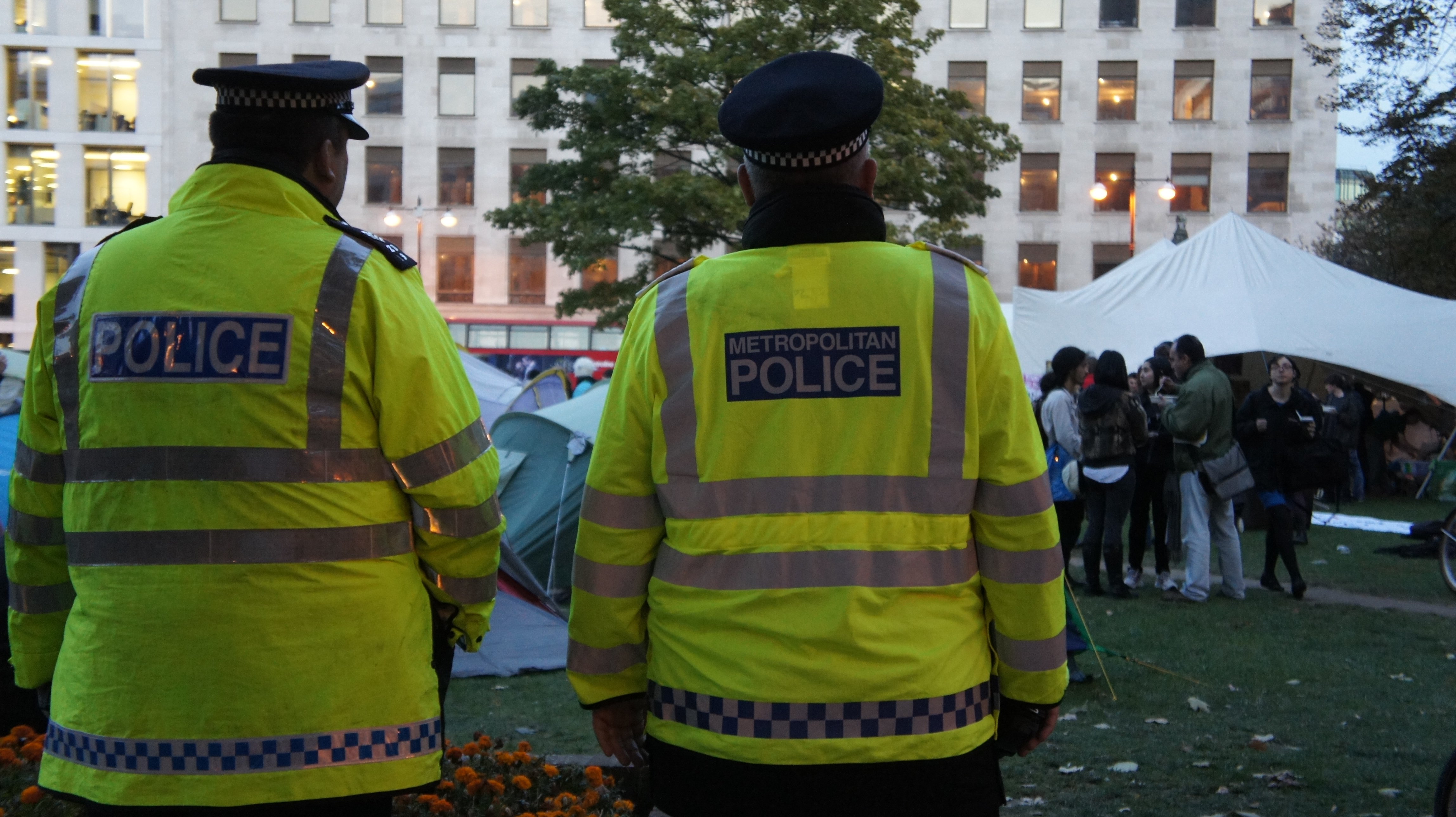
The speech arrived on ground prepared by a case that has unsettled British policing. Henry Nowak, an eighteen-year-old student, was handcuffed by police officers as he lay dying after his attacker alleged he had been subjected to racist abuse, a sequence that has fueled weeks of argument about how equality rules operate at street level. Badenoch built her address on that anger, and on a country whose politics of race and policing were combusting in real time, the same night masked crowds attacked homes in Belfast after a stabbing was weaponized by the far right.
What the duty she would abolish actually does is narrower than the speech implied. The PSED, created by the Equality Act of 2010, requires public bodies to have due regard to equality when making decisions, a process obligation rather than a quota or a speech code. Badenoch insisted the repeal would leave the Equality Act’s discrimination protections intact. Her critics answered that removing the duty removes the mechanism by which those protections reach into how schools allocate resources, how hospitals design services and how police forces measure their own behavior.
The government’s response came fast and sharp. Liz Kendall, the technology secretary, accused Badenoch of threatening hard-won protections and trying to roll back safeguards for women, disabled people and minority groups. The Liberal Democrats’ equalities spokeswoman, Marie Goldman, called the speech a desperate attempt to fan the flames of culture war politics from a Conservative party completely out of ideas. Reform UK attacked from the opposite side, dismissing the pledge as classic Conservative politics, too little, too late, and nowhere near enough.
That last response is the one that explains the speech. The Conservatives sit level with Labour at roughly 17 percent in projected vote share, both parties dwarfed by Reform, and Badenoch’s leadership has been a search for relevance in an electorate that has moved past her party in both directions. A pledge to triple stop-and-search and scrap equality law is a bid for voters drifting to Nigel Farage, made in the knowledge that Farage will always outbid her, which is why Reform’s answer was not outrage but contempt.
The stop-and-search arithmetic deserves its own scrutiny. The power is used disproportionately against black Britons by every published measure, and the Macpherson report Badenoch wants revisited was the 1999 inquiry into the Metropolitan Police’s failures over the murder of Stephen Lawrence, the document that forced British policing to confront institutional racism as a finding rather than an accusation. Tripling the power while rewriting the definition of a racist incident is not a technical adjustment; it is a reversal of the settlement that followed one of the most consequential inquiries in British history.
Whether any of it becomes law is a distant question. The Conservatives are years from power on current numbers, and the pledge functions as positioning, a marker of where the party would go and a dare to Labour to defend the status quo while its own leadership crisis consumes it. The politics of the next election are being written in speeches like this one, by parties competing over who can promise the hardest break with the post-Lawrence consensus.
What the speech did not address is the evidence on the other side of its ledger: what the equality duty has prevented, the discrimination claims that never had to be filed because the process caught the problem first, a counterfactual that is invisible by definition. Nor did Badenoch say how a tripled stop-and-search regime would avoid replicating the disproportionality that two decades of data have documented, beyond the assertion that the communities most searched would be the ones most protected.
The repeal is now Conservative policy, the reaction is on the record, and the argument Badenoch wants, that Britain’s safety requires dismantling its equality framework, is formally joined. The country that built that framework after Stephen Lawrence’s murder will decide at some future election whether it agrees. The families invoked on Tuesday, of Nottingham, Southport and Manchester, were not consulted about becoming the argument.
Related Posts