Bulgaria’s fragile coalition government collapsed on December 11, 2025, after Prime Minister Rosen Zhelyazkov announced his resignation amid weeks of massive anti-corruption protests that have paralyzed the capital Sofia and threatened the nation’s historic entry into the eurozone scheduled for January 1, 2026. The resignation marks yet another chapter in Bulgaria’s protracted political crisis that has plagued the Balkan nation since 2021, leaving citizens exhausted and institutions weakened at a critical juncture in the country’s European integration.
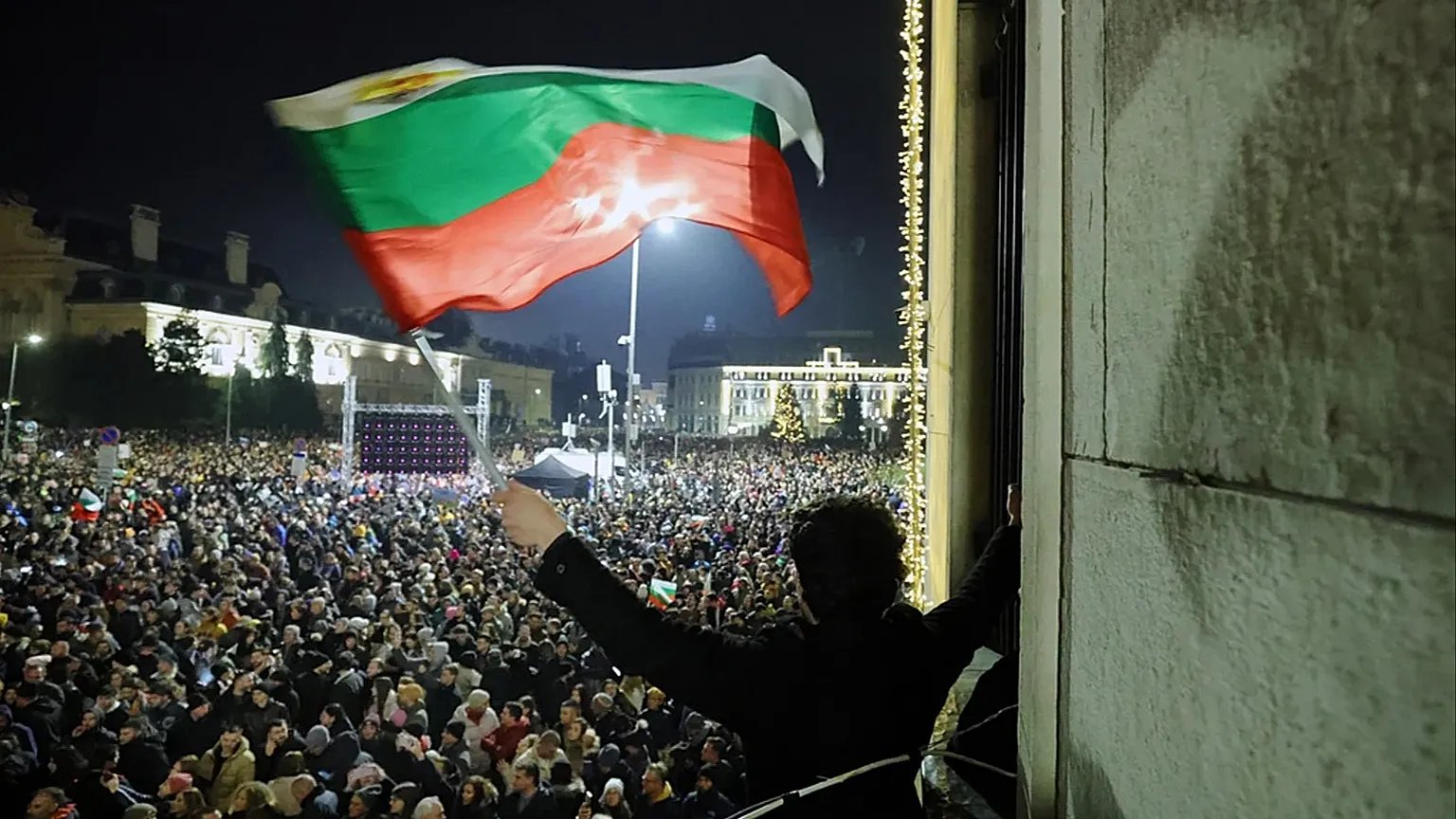
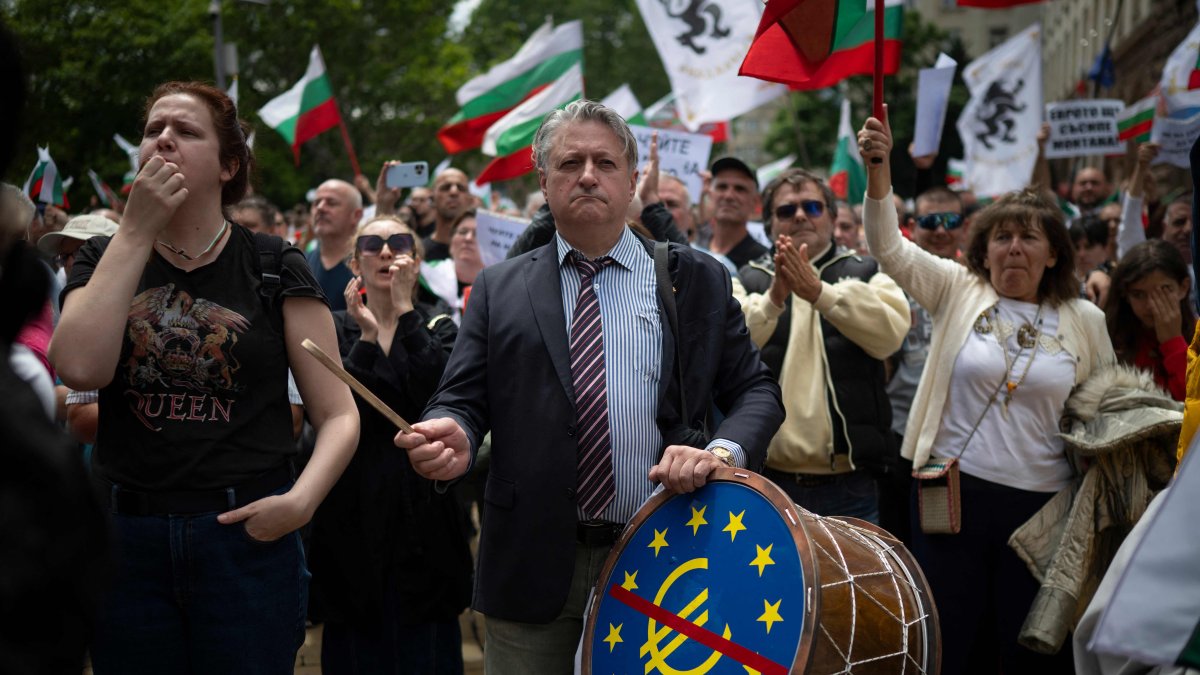
Tens of thousands of protesters flooded the streets of Sofia and other major Bulgarian cities over the past three weeks, demanding the government’s immediate resignation over allegations of widespread corruption, questionable budget allocations, and what demonstrators characterized as an erosion of democratic norms. The protests reached a crescendo on December 10, when an estimated 50,000 people surrounded the parliament building, chanting slogans against corruption and waving European Union flags in a symbolic gesture that underscored their desire for Bulgaria to remain on its path toward deeper European integration.
“The trust of the Bulgarian people is paramount,” Zhelyazkov stated during a somber press conference at the Council of Ministers building, as he confirmed that his cabinet would step down following mounting unrest. The 56-year-old lawyer, who has served as transport minister and speaker of parliament in previous governments, assumed the premiership in January 2025 following October’s parliamentary elections, the seventh such vote in just four years.
The minority coalition government, cobbled together after three months of arduous negotiations, represented an unlikely alliance between Zhelyazkov’s center-right GERB party, led by former Prime Minister Boyko Borissov, the pro-Russia Socialist Party, and the populist There Is Such a People party. With only 125 seats in the 240-member National Assembly, the government limped along on a razor-thin majority that proved unsustainable when faced with mounting public pressure and fractious internal dynamics.
The protests erupted in late November following revelations about controversial spending provisions in the 2025 budget that critics alleged would benefit oligarchs and politically connected businesses. Opposition parties and civil society organizations accused the government of prioritizing special interests over pressing social needs, including healthcare improvements, pension increases, and infrastructure development in impoverished rural regions. The Bulgarian Socialist Party’s participation in the coalition particularly angered pro-European demonstrators, who viewed the partnership as a dangerous flirtation with Moscow at a time when Bulgaria should be solidifying its Western orientation.
Bulgaria’s impending adoption of the euro adds extraordinary urgency to the political turmoil. The European Central Bank and European Commission issued positive convergence reports in June 2025, clearing the path for Bulgaria to become the eurozone’s 21st member on January 1, 2026. The fixed exchange rate of 1.95583 Bulgarian lev per euro was formally approved by the European Council in July, and Bulgaria has already begun preparations for dual price displays and the massive logistical undertaking of currency changeover.
Economic analysts warn that prolonged political instability could jeopardize this historic transition. “Bulgaria needs a functioning government to oversee the technical and administrative aspects of euro adoption,” explained Dr. Elena Dimitrova, an economist at Sofia University. “Everything from banking system preparations to public education campaigns requires coordination at the highest levels of government. Political chaos at this moment is extraordinarily dangerous.”
The International Monetary Fund Managing Director Kristalina Georgieva, herself a Bulgarian national, delivered a landmark speech in Sofia in November highlighting the significance of eurozone membership for Bulgaria’s economic future. She emphasized that euro adoption would boost investor confidence, reduce borrowing costs, eliminate currency risk for businesses, and accelerate Bulgaria’s convergence with wealthier European Union members. The country, which remains the EU’s poorest member state with a GDP per capita roughly half the union average, desperately needs the credibility boost that euro membership promises.
The resignation throws Bulgaria’s eurozone preparations into uncertainty at the worst possible moment. President Rumen Radev must now designate a party to attempt forming a new government, initiating a process that has repeatedly failed over the past four years. If no stable coalition emerges within the constitutional timeframe, Bulgaria faces the prospect of yet another snap election, potentially its eighth since 2021, which could delay or even derail euro adoption.
The anti-government protests reflect deeper frustrations with Bulgaria’s endemic corruption and weak rule of law. Despite joining the European Union in 2007, Bulgaria has struggled to implement meaningful anti-corruption reforms, earning it a reputation as one of the bloc’s most troubled members. The EU has subjected Bulgaria and Romania to a special Cooperation and Verification Mechanism that monitors judicial reform and anti-corruption efforts, a humiliating distinction that no other member states have endured.
Transparency International ranks Bulgaria as the most corrupt EU member in its annual Corruption Perceptions Index. High-profile corruption scandals involving senior politicians, prosecutors, and business figures have eroded public trust in institutions and fueled cynicism about democratic governance. The 2020–2021 protest wave, which saw months of demonstrations demanding then-Prime Minister Boyko Borissov’s resignation, established a pattern of street mobilization that has resurged with the current crisis.
Boyko Borissov, the powerful GERB party leader who has dominated Bulgarian politics for over a decade, maintained a low profile during the recent protests despite his party’s leadership of the fallen government. Borissov, who served as prime minister three times between 2009 and 2021, has become a polarizing figure, praised by supporters for maintaining economic stability and delivering EU funds, but condemned by critics as an authoritarian strongman who has captured state institutions and enabled corruption networks.
The liberal-conservative opposition coalition We Continue the Change–Democratic Bulgaria, led by former Prime Minister Kiril Petkov, has championed the protests and demanded early elections. Petkov’s government collapsed in 2022 after just seven months in office, unable to maintain its reform agenda amid fierce political opposition. His coalition secured 37 parliamentary seats in October’s elections, finishing second behind GERB but lacking the numbers to form an alternative government.
European Union officials have expressed concern about Bulgaria’s political instability and its potential impact on euro adoption. While no official statements have suggested delaying Bulgaria’s eurozone entry, behind-the-scenes discussions in Brussels reportedly include contingency planning should the political crisis prevent Bulgaria from fulfilling its technical obligations. The European Central Bank has emphasized that euro adoption requires not just meeting convergence criteria, but also maintaining institutional capacity to implement the changeover.
The protests have been notably peaceful, with organizers emphasizing non-violence and democratic values. Civil society organizations, student groups, and professional associations have coordinated the demonstrations, which feature creative visual displays, musical performances, and speeches by activists and intellectuals. The prominent display of EU flags at the protests signals that demonstrators view their anti-corruption demands as consistent with European values, not as rejection of European integration.
Bulgaria’s business community has watched the political crisis with growing alarm. The Bulgarian Industrial Capital Association issued a statement urging political leaders to find a swift resolution that ensures euro adoption proceeds on schedule, warning that further delay could deter investors and slow economic growth. Foreign investors, who have long been deterred by Bulgaria’s corruption and political instability, need reassurance that the country can provide a stable business environment.
The caretaker government that President Radev will likely appoint to manage affairs until a new coalition forms, or until fresh elections occur, will face the daunting task of overseeing euro preparation while lacking democratic legitimacy. Bulgaria’s constitution grants caretaker governments limited powers, potentially hampering their ability to make important decisions related to the currency changeover. This constitutional constraint could prove problematic as technical deadlines approach in the coming weeks.
Regional analysts note that Bulgaria’s political dysfunction contrasts sharply with the relative stability that neighboring Romania has achieved despite similar challenges with corruption and institutional weakness. Romania, which joined the EU alongside Bulgaria in 2007, has managed to avoid the cycle of snap elections that has paralyzed Sofia, though it too remains under the Cooperation and Verification Mechanism and has seen its own eurozone ambitions delayed repeatedly.
As Bulgaria enters another period of political uncertainty, the Bulgarian people face a fundamental question about their country’s future direction. The protesters’ demands for clean government, judicial independence, and genuine democratic accountability represent aspirations that have remained unfulfilled despite two decades of EU membership. Whether the current crisis becomes a catalyst for meaningful reform or simply another chapter in Bulgaria’s cycle of political dysfunction will determine not just the fate of Bulgaria’s eurozone membership, but the country’s broader European trajectory.
The coming weeks will prove decisive. Bulgaria stands at a crossroads, with its long-sought eurozone membership within reach but political chaos threatening to snatch defeat from the jaws of victory. The resignation of Zhelyazkov’s government represents both an ending and a potential beginning, the question is whether Bulgarian politicians can seize this moment to break the cycle of instability and deliver the accountable governance their citizens demand.
For many Bulgarians, the scenes of mass protests in Sofia echo similar uprisings around the world where citizens have taken to the streets to challenge entrenched elites and demand systemic change. Bulgaria’s protesters are now testing whether sustained public pressure can realign a political system that has long seemed impervious to reform.