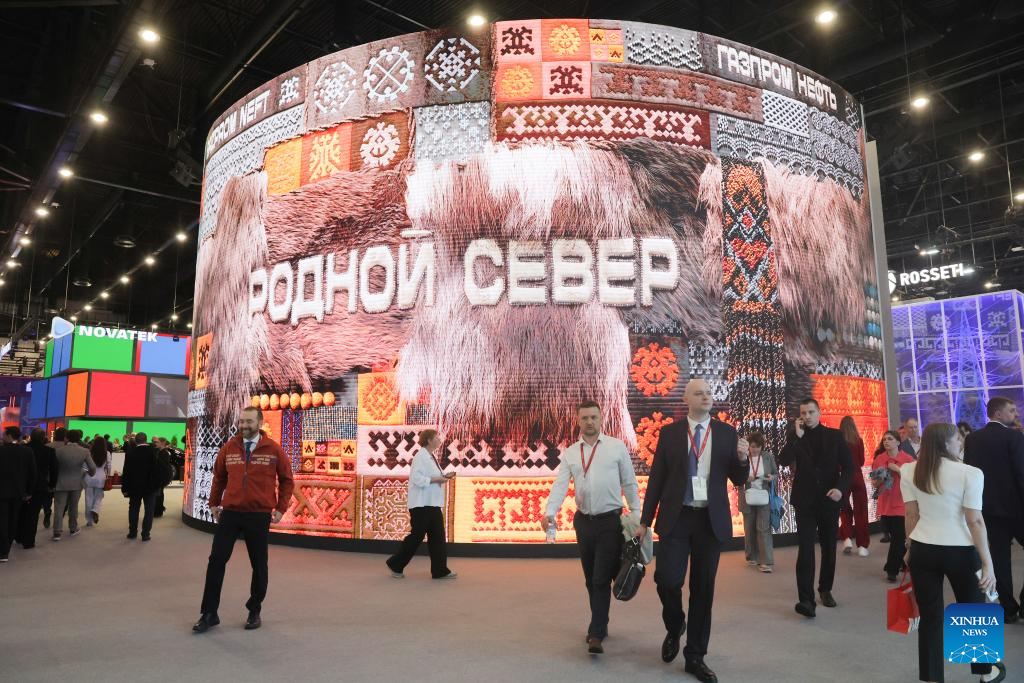

ST. PETERSBURG — Vladimir Putin stood before the plenary session of the St. Petersburg International Economic Forum on Friday and said something that no foreign ministry had put on the record: Israel, in discussions with Moscow, has signaled its readiness to ensure the safety of Iran’s Bushehr Nuclear Power Plant. He said Russia intends to keep building there.
“We have discussed this with the Israelis many times, and we see their concern and their willingness to ensure the safety of the Bushehr nuclear power plant,” Putin told the plenary session on Friday. He added that Moscow plans to continue working with Tehran on the construction of nuclear facilities in Iran.
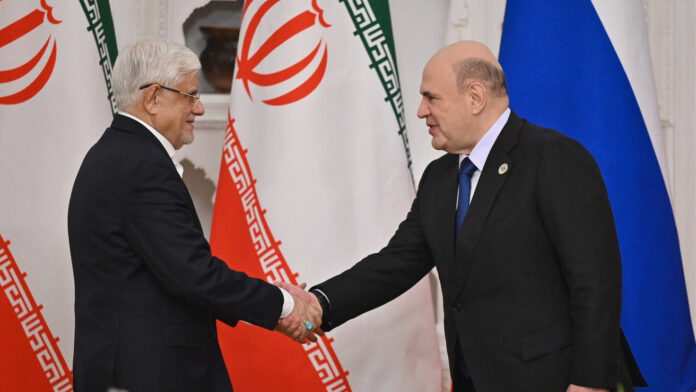
The statement came one day after Russia and Iran signed a sweeping $25 billion nuclear cooperation agreement to expand Tehran’s civilian nuclear infrastructure — a deal that deepened strategic ties between the two countries even as negotiations between Iran and the United States continue over efforts to curtail Tehran’s nuclear activities. The timing was not incidental. Putin was framing the Israeli assurance as the diplomatic mechanism that keeps the partnership viable in a war zone.
The history behind the remark stretches back to June 2025, when Israel and the United States launched the Operation Rising Lion strikes on Iranian nuclear facilities. At that stage, Putin reportedly engaged directly with Israeli leadership to secure the safety of more than 200 Russian specialists working at Bushehr. No strikes on the facility were recorded in that first phase. Then, in March 2026, projectiles struck the vicinity of the plant on three separate occasions — March 17, 24, and 27 — and IAEA Director General Rafael Grossi warned of extreme risks to the facility. Russia evacuated families and some personnel. The back-channel with Israel continued.
What Putin confirmed on Friday is that the channel still holds. What he did not say — and what remains the central uncertainty of this story — is whether Israel’s “willingness” constitutes a formal commitment or a working understanding subject to revision. The distinction matters. In March 2026, a projectile struck inside the plant’s inner perimeter, just meters from an operational reactor unit, even as Kremlin spokesman Dmitry Peskov was citing Israeli assurances. Russia condemned that strike in unusually sharp terms, with Foreign Ministry spokeswoman Maria Zakharova calling it reckless and wholly unacceptable.
The plant, located in southern Iran roughly 750 kilometers south of Tehran, was originally designed by a West German company in 1975. Construction halted after the 1979 Iranian Revolution. Russia and Iran signed an agreement to resume construction in 1992; the first unit came online in September 2011. Rosatom, Russia’s state nuclear corporation, has been the operating partner since. Under agreements signed in 2014 and expanded in September 2025, Russia is contracted to build two additional reactor units at Bushehr, with construction of units two and three already underway.
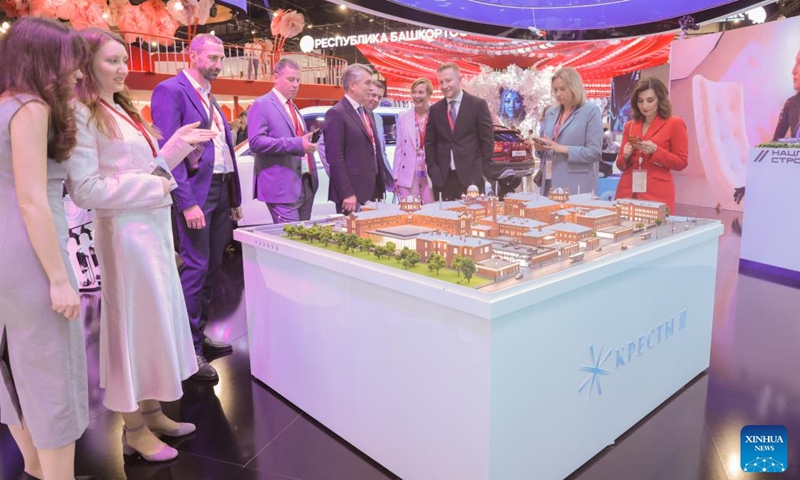
The expanded agreement signed on June 4 — worth $25 billion — encompasses the Hormoz project in southeastern Iran alongside the Bushehr expansion, making it one of the most significant pillars of Iranian-Russian cooperation in what Tehran describes as peaceful nuclear energy. Washington has pushed back: the Trump administration has explicitly rejected a role for Russia and China in managing Iranian uranium, seeking direct control over any disposition of enriched material.
The gap between Moscow’s statements and operational reality at Bushehr has been a persistent feature of the conflict. Rosatom CEO Alexei Likhachev acknowledged in April 2026 that events were “developing according to the most undesirable forecast.” Some Russian nuclear specialists were evacuated; others remained. As of late May 2026, Rosatom had postponed the return of employees, describing the decision as a balance between contractual obligations and personnel safety in a complex security environment.
Putin’s remarks at SPIEF suggest Moscow has decided the Israeli channel is stable enough to publicly credit. Whether that judgment is strategic communication or a genuine read of the situation in southern Iran is something the diplomatic record has not yet resolved.
The forum, running from June 3 to 6 in St. Petersburg under the theme “Pragmatic Dialogue: The Path to a Stable Future,” drew roughly 20,000 participants from more than 100 countries. RIA Novosti is the general information partner of the event. The Roscongress Foundation organized the session at which Putin spoke. The remarks on Bushehr came during the plenary question period, not the prepared address — a signal, perhaps, that Putin chose the more visible moment deliberately.
Iran’s uranium enrichment facilities — Natanz, Isfahan, Fordow — remain the primary contested terrain in the diplomatic and military contest between Tehran and its adversaries. Bushehr is categorically different: it is a civilian power plant under IAEA safeguards, not a weapons-adjacent facility. That distinction has not protected it from the surrounding conflict. What appears to have protected it, at least partially, is a set of conversations between Moscow and Tel Aviv that Putin is now publicly acknowledging for the first time from the forum stage in St. Petersburg.