
VIENNA — The question was blunt, and Rafael Grossi answered it the same way. Moving Iran’s stockpile of highly enriched uranium out of the country is technically challenging, the International Atomic Energy Agency’s director general told Al Jazeera on Monday, but far from out of reach.
Grossi described the material as “in gas form, highly contaminant” and said the physical logistics of a transfer would be complex. But he would not close the door. The operation, he said, is “difficult but not impossible.”
That careful framing matters. Iran is estimated to hold roughly 440 kilograms of uranium enriched to about 60 percent purity — far short of the 90 percent threshold required for a nuclear weapon, but technically close enough to require only a short additional step to reach it. Grossi himself told Al Jazeera in March that the stockpile, if further enriched, could theoretically produce more than 10 nuclear warheads. The fate of that material sits at the center of every serious conversation between Washington and Tehran about ending their current conflict.
President Donald Trump has been unambiguous about what he wants. “We will get it. We don’t need it, we don’t want it. We’ll probably destroy it after we get it, but we’re not going to let them have it,” Trump told reporters at the White House last month. Israeli Prime Minister Benjamin Netanyahu has made removal of the stockpile a precondition for declaring the conflict over.
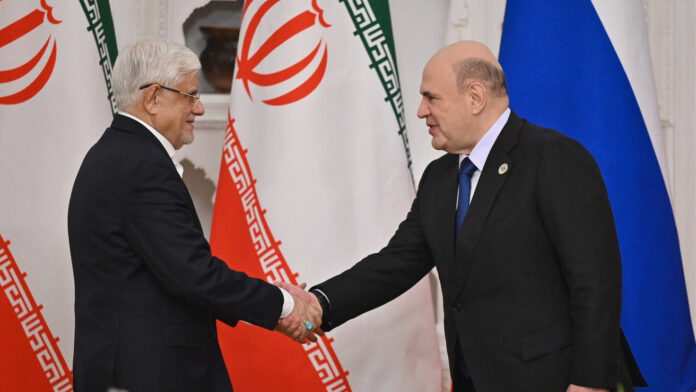
Iran’s position, however, is hardening. Reuters reported last month that Supreme Leader Ayatollah Mojtaba Khamenei issued a directive prohibiting the removal of enriched uranium from Iranian territory. One senior Iranian official told the news agency the consensus within the establishment was that the material should stay inside the country. Iran’s top diplomat, Abbas Araghchi, acknowledged the impasse openly in early May, telling reporters on the sidelines of a BRICS foreign ministers’ meeting in New Delhi that the two sides had reached a “deadlock” on the enriched material and that the topic was being “postponed” to later stages of negotiations.
That is where things stood when Grossi weighed in this week — not to push a specific outcome, but to describe what is technically on the table. Beyond physical removal, he confirmed that “downblending” — the irreversible process of diluting the uranium from 60 percent to the 3.67 percent level permitted under the 2015 nuclear deal — remains under active consideration. He did not say which option the parties are closer to choosing.
The IAEA, Grossi stressed, is not a party to the US-Iran negotiations. But he made clear the agency cannot be excluded from whatever deal eventually takes shape. “Our contribution to this is to make it possible, to make it viable,” he said. He described himself as in regular contact with both sides, and the agency’s inspectors would be indispensable to verifying any agreement’s nuclear provisions — something he has said repeatedly since inspectors were last barred from Iran’s bombed nuclear sites.
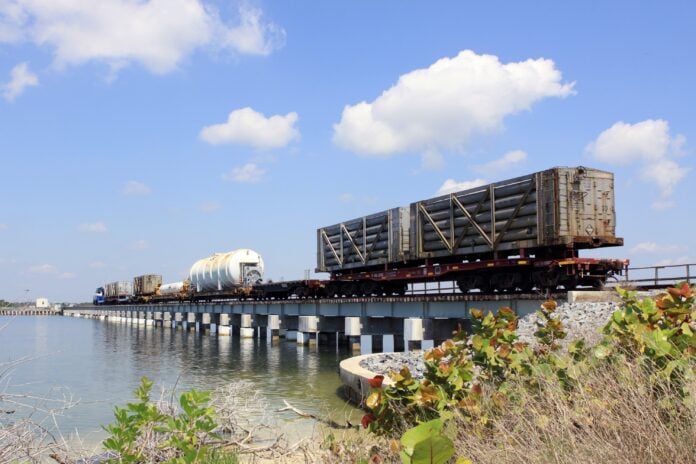
The physical reality of moving uranium hexafluoride gas is not hypothetical. The IAEA has protocols for exactly this kind of transfer: specially reinforced type 30B steel cylinders, sized deliberately small to reduce the risk of an uncontrolled chain reaction. The US government has done it before. In 1994, American forces removed roughly 600 kilograms of weapons-grade uranium from Kazakhstan in a covert Cold War cleanup operation. That mission — known as Project Sapphire — required teams working 12-hour shifts, six days a week, for four weeks just to move the material from a metallurgical plant to a local airport. Iran’s stockpile, still believed to be buried beneath the rubble of the Natanz, Fordow, and Isfahan nuclear facilities struck by US and Israeli forces in June 2025, poses its own separate set of access problems that no one has yet solved.
Much of the 440 kilograms is thought to be still underground at Isfahan, according to satellite imagery analysis by the IAEA. Russia has indicated it remains open to storing Iran’s enriched uranium on its territory, a proposal that resurfaced in May when President Vladimir Putin reiterated Moscow’s willingness to serve as a custodian — a suggestion that has found little traction with Washington, which wants the material either destroyed or transferred to American custody.
The US position, as Trump articulated again this week, insists on no residual enrichment capacity and physical removal of the stockpile. Iran has historically viewed uranium enrichment as a sovereign right, and the current supreme leader shows no sign of departing from that position, regardless of the pressure applied by Washington or Tel Aviv. The downblending option could theoretically offer a face-saving middle ground — the material would remain in Iran, but rendered effectively useless for weapons purposes — though its irreversibility is precisely what some in Tehran find most alarming.
What Grossi made clear, without saying it directly, is that the IAEA cannot verify what it cannot inspect. The agency’s inspectors have been barred from Iran’s damaged nuclear sites since the June 2025 strikes, leaving the watchdog unable to account for declared inventories under standard safeguards practice. Whatever technical solution Washington and Tehran eventually agree on — transfer, downblending, or something else entirely — the IAEA will need unrestricted access to verify it. That access, as yet, has not been granted.
Whether Iran will ever voluntarily part with uranium it spent years accumulating under sanctions pressure remains the deeper question — and one no IAEA press statement is likely to answer.
—Inputs from Sputnik.