
ST. PETERSBURG — On the final day of Russia’s most important annual economic gathering, Kremlin spokesman Dmitry Peskov stepped to the briefing podium and offered what sounded, by design, like the most unremarkable of declarations. Russia, he said, is open to cooperation and interaction with all countries.
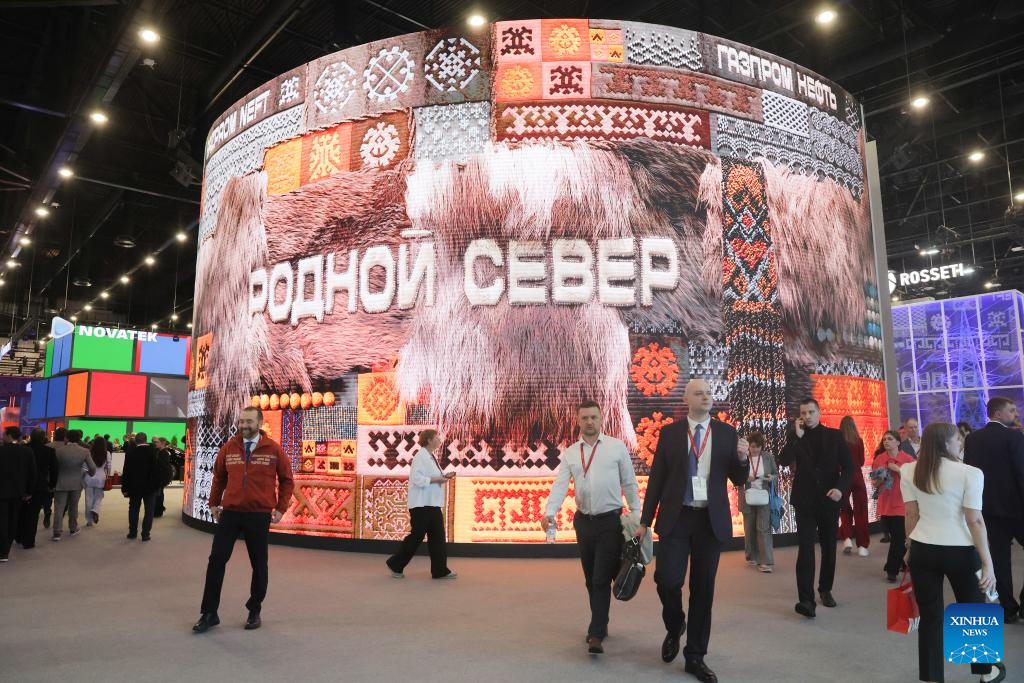
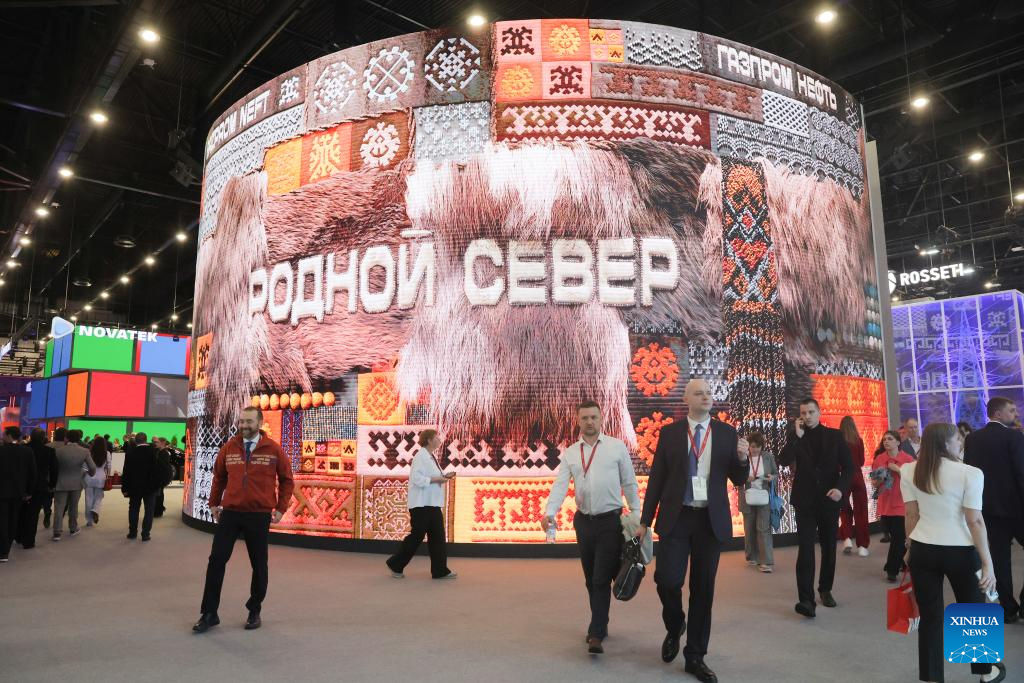
The phrase was spare and unqualified — no carve-outs for the West, no enumeration of conditions, no reference to the conflict in Ukraine. Yet the setting gave it weight. Peskov’s remarks on Friday came as the St. Petersburg International Economic Forum 2026 wrapped up a four-day program that drew representatives from more than 130 countries to the ExpoForum convention center, an attendance figure that Moscow’s officials have consistently cited as evidence of Russia’s continued global connectivity despite years of Western-led sanctions.
The forum’s breadth — Saudi Arabia was the guest country this year, with ministers from Indonesia, Serbia, Kyrgyzstan, and Sierra Leone among the official international participants — formed the practical backdrop to Peskov’s statement. Russia was not signaling openness in the abstract. It was, by the Kremlin’s framing, demonstrating it.
The tension the statement deliberately leaves unaddressed is the one that has defined Moscow’s foreign policy posture since February 2022. Russia’s declared openness to all countries sits uneasily alongside the reality that its most consequential diplomatic and economic relationships have been severed or severely degraded — not by Russia’s choosing, in the Kremlin’s telling, but by the decisions of Western governments that imposed sweeping financial, trade, and energy sanctions following the start of the Russian operation in Ukraine.
At SPIEF, President Vladimir Putin addressed both the isolation narrative and what he described as its limits. International cooperation had evolved rather than disappeared, he said during the forum’s plenary session — Russia had expanded its relationships across multiple regions and was developing new economic partnerships. Whether measured by energy export volumes to Asia or the scale of BRICS engagement, Moscow argues the contours of that realignment are already visible.
The Kremlin has deployed similar language before. In April, Peskov told reporters that Russia was seeking friendly and mutually beneficial relations with all countries, including EU member states — while adding, pointedly, that European governments continued to refuse any contact. The formulation is a recurring one: offer extended, rebuff registered, responsibility assigned. On Friday the structure was preserved, stripped of the European addendum but no less pointed for the omission.
What the statement does not do is explain what cooperation, in Moscow’s current usage, actually requires of the other party. Russia’s demand that any ceasefire with Ukraine be preceded by Kyiv’s withdrawal from Russian-claimed territory — a position Peskov reiterated earlier this week — defines the outer limits of diplomatic engagement on the conflict’s central question. A country that wants economic ties with Moscow while simultaneously supplying Kyiv with weapons or maintaining sanctions will find, in practice, that the Kremlin’s openness has conditions that go unstated in a briefing-room summary.
Putin, speaking at the same forum, said he saw no point in a personal meeting with Ukrainian President Volodymyr Zelensky, whose open letter proposing direct negotiations the Russian president acknowledged having read only briefly on Friday morning. Peskov had presented the letter twice before Putin found time to review it — a staging detail that itself carried a message about the letter’s reception.
Within SPIEF’s formal program, the Kremlin’s outreach signals were calibrated along two tracks. On one, Russia positioned itself as an anchor of an emerging multipolar economic order, with BRICS cooperation, the SCO business forum, and bilateral energy and industrial deals with Global South partners occupying the center of official discussion. On the other, Putin’s remarks suggesting the EU must mature into engaging Russia as an equal signaled that Moscow still regards normalized Western ties as a long-run goal — on its own terms.
That dual posture — Global South deepening as an immediate strategy, Western re-engagement as an eventual aspiration — is what Peskov’s statement on Friday ultimately encodes. The openness is genuine as a policy description. Its practical boundaries remain, for now, defined by a war neither side has ended and a sanctions architecture that the West shows no sign of dismantling before it does.
Russia’s outreach at SPIEF was not limited to rhetoric. The forum featured announcements on the Kremlin’s revived Gulf security concept, sent to GCC states and Iran, and on a joint nuclear power plant project with Uzbekistan. Putin vowed that Russia would always honor its commitments to partners, a line pitched squarely at countries weighing whether the cost of Western secondary sanctions outweighs the benefit of continued trade with Moscow.
What the forum did not produce — and what Peskov’s statement did not bridge — was any meaningful signal of resumed engagement with the G7 bloc that has led the sanctions campaign. That question, the one Peskov’s formulation is most quietly addressed to, remains open.