ALMATY — Kazakhstan has begun rapidly adjusting its oil export logistics following attacks on infrastructure linked to the Caspian Pipeline Consortium, a critical artery that carries the majority of the country’s crude exports to global markets. The shift reflects both immediate operational necessity and a longer-term strategic recalibration as Astana confronts rising geopolitical risks surrounding energy transit routes across Eurasia.
The Kazakh Energy Ministry confirmed that alternative export routes are now being used more intensively, with authorities exploring and implementing all technically viable transportation options to ensure uninterrupted oil flows. Officials emphasized that logistics decisions are being made dynamically, depending on the technical readiness and capacity of receiving terminals and transit partners.
At stake is not only Kazakhstan’s daily production volumes but also its broader economic security. Oil revenues remain central to the country’s fiscal balance, foreign exchange inflows, and long-term development planning. Any prolonged disruption to export routes would pose immediate risks to state revenues and investor confidence, particularly as global oil markets remain highly sensitive to geopolitical shocks and infrastructure disruptions.
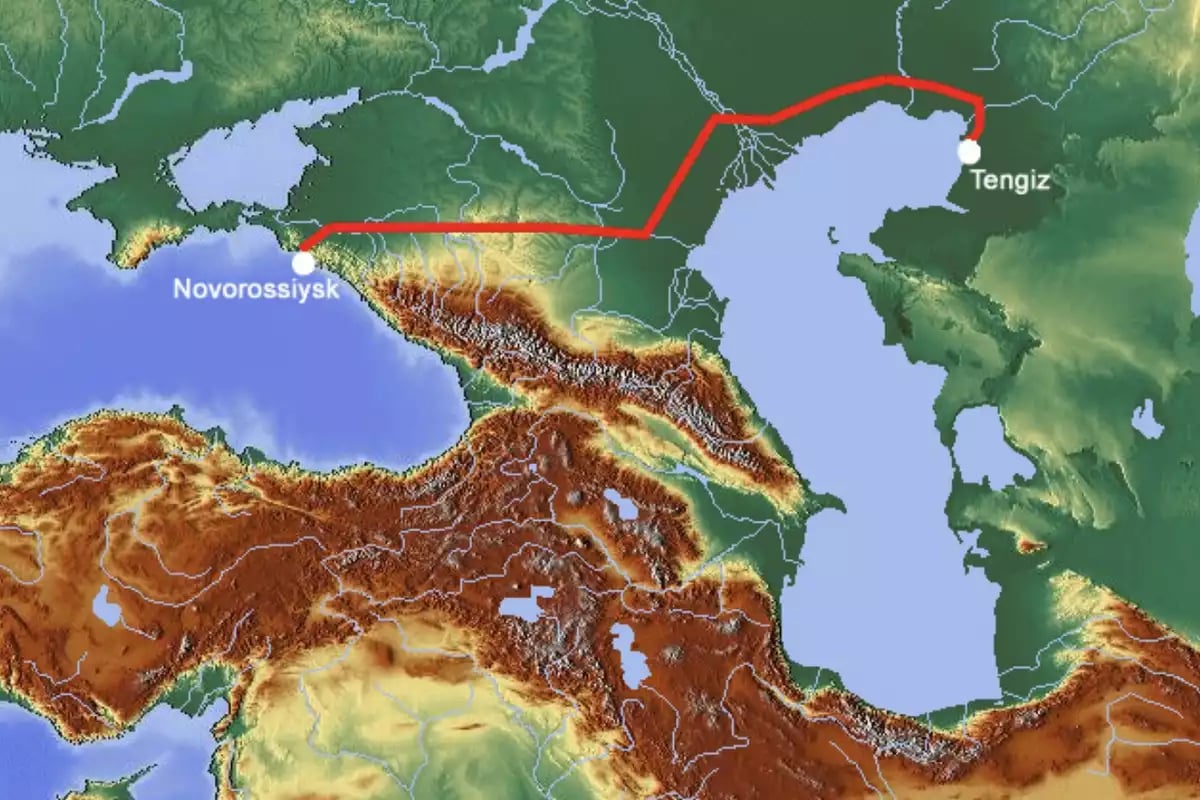
The Caspian Pipeline Consortium has long served as the backbone of Kazakhstan’s oil export system. Stretching from western Kazakhstan to Russia’s Black Sea coast, the pipeline handles more than two-thirds of the country’s crude shipments, including output from major fields such as Tengiz, Kashagan, and Karachaganak. Kazakhstan’s heavy reliance on this corridor has been widely examined in international reporting tracked through Reuters’ coverage.
Because of this dependence, any attack, damage, or technical disruption affecting CPC infrastructure carries outsized consequences. Even brief interruptions can force producers to scale back output or divert crude into less efficient channels, increasing transportation costs and tightening regional supply. Such vulnerabilities reflect broader geopolitical risks increasingly associated with energy infrastructure across Eurasia, highlighted in Bloomberg’s analysis of global energy markets.
In response, alternative routes have shifted from contingency planning to operational priority. Exports eastward through pipelines to China, shipments across the Caspian Sea to Azerbaijan, and onward transit via the BTC corridor are now being assessed more aggressively. Rail transport and swap arrangements are also under review, despite higher costs, as Kazakhstan seeks to preserve export stability under volatile market conditions closely followed by Reuters’ CPC pipeline coverage.
Logistics adjustments are being implemented on a rolling basis, with authorities monitoring storage capacity, tanker availability, port operations, and refinery demand. The Energy Ministry has made clear that the overriding objective is to maintain production levels at the fields while minimizing economic losses.
The disruptions also underscore how energy security has become inseparable from geopolitics. Pipelines, ports, and export terminals are increasingly viewed as strategic pressure points, even when producing countries attempt to maintain neutral or balanced foreign policies. Kazakhstan’s geographic position and landlocked status inevitably expose it to external risks beyond its direct control. This reality has intensified Astana’s push to diversify export corridors and reduce dependence on any single route, a challenge widely analyzed in the Financial Times.
Economically, the stakes are substantial. Oil remains one of Kazakhstan’s most important export commodities, and any sustained disruption can quickly ripple through public finances, currency markets, and investment flows.
Looking ahead, the Energy Ministry has confirmed that production planning for 2026 will explicitly incorporate external risks and geopolitical uncertainties. Rather than assuming uninterrupted access to traditional routes, policymakers are now modeling scenarios that include partial outages, transport bottlenecks, and shifting regional demand patterns.
Ultimately, the attacks on CPC-linked infrastructure and Kazakhstan’s response represent a stress test of the country’s energy architecture. The ability to adapt quickly, safeguard oil export logistics, and protect economic interests will shape how investors and markets assess Kazakhstan’s role in an increasingly fragmented global energy landscape.