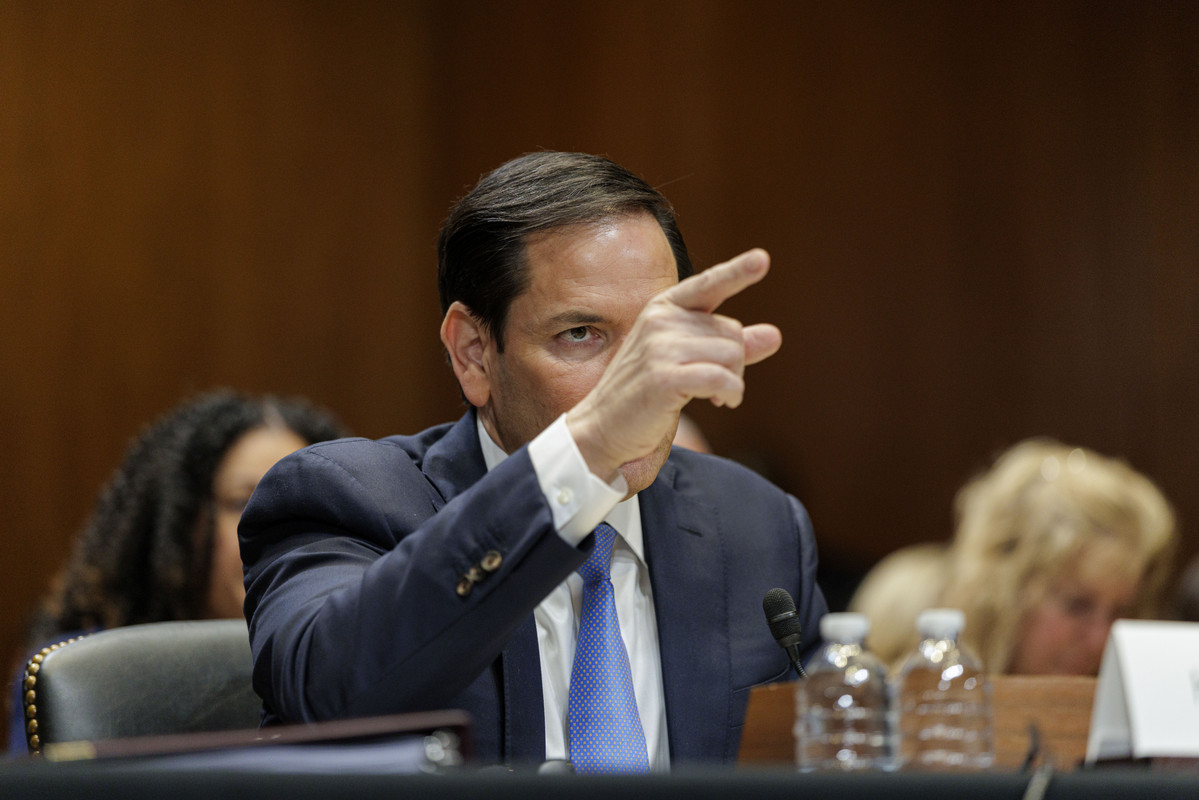
WASHINGTON — Secretary of State Marco Rubio delivered a searing indictment of global censorship Tuesday, announcing an entry ban on five foreign individuals accused of orchestrating campaigns to muzzle American voices on digital platforms. The move marks a sharp escalation in the Trump administration‘s crusade against what Rubio calls the “censorship-industrial complex,” a shadowy alliance of activists, nongovernmental organizations and foreign governments pressuring US tech giants to suppress dissent.
A Bold Free Speech Offensive
In a statement that reverberated across Washington and beyond, Rubio framed the visa restriction policy as a defense of American sovereignty in the information age. “These radical activists and weaponized NGOs have aided censorship crackdowns by foreign states, targeting American speakers and American companies,” he declared, vowing that the State Department would bar them from US soil. The Department of Homeland Security stands ready to initiate removal proceedings against any already present, underscoring the policy’s teeth.
This is no abstract policy shift. The five unnamed individuals, described as leaders of organized efforts to coerce platforms into demonetizing and deplatforming conservative viewpoints, represent a new front in America’s cultural wars. Rubio’s rhetoric echoes President Trump’s long-standing grievances with Big Tech, but now wields diplomatic muscle to counter foreign meddling. Critics, however, warn it blurs lines between legitimate content moderation and authoritarian overreach, potentially chilling global discourse.
The timing is pointed: just weeks after earlier announcements in May 2025 outlined broader US visa policy targeting foreign nationals censoring Americans, this specific action signals implementation. Sources familiar with the matter say the targets include figures linked to European NGOs and activists who lobbied for removals of posts deemed “hate speech” or “misinformation,” terms Rubio dismisses as pretexts for ideological control.
Rubio Names the Targets
While identities remain classified for national security reasons, Rubio’s statement paints a vivid portrait: these are not lone actors but architects of transnational pressure campaigns. They have allegedly coordinated with foreign officials to demand American platforms like X, Meta’s censorship efforts and YouTube censor content opposing progressive orthodoxies on climate, immigration and gender. One example cited involves a European group that successfully pressured advertisers to boycott US podcasters skeptical of official COVID narratives.
Rubio, a hawk on China and a vocal free speech advocate, has made this a signature issue since his January 2025 confirmation. His tenure has seen visa restrictions spike for officials from Brazil, India and the EU accused of similar tactics. “Coercing American platforms to censor American viewpoints they oppose is an assault on our First Amendment,” he said, invoking constitutional protections extended extraterritorially through tech dominance.
Legal experts note the policy leverages Section 212(a)(3)(C) of the Immigration and Nationality Act, allowing bans for foreign policy threats. Precedents abound: the US has long restricted entry for human rights abusers via the Magnitsky Act. Here, the “abuse” is informational, targeting those who export censorship models refined in places like the EU’s Digital Services Act.
The Censorship Machine Exposed
At its core, Rubio’s offensive unmasks a machine fueled by grants from opaque foundations, government subsidies and tech partnerships. Think tanks like the Atlantic Council and NGOs such as the Global Disinformation Index have flagged American media as “risky,” starving them of ad revenue. Foreign states, from Ottawa to Brussels, amplify this by threatening platforms with fines unless they comply.
American conservatives cheer the pushback. Figures like Elon Musk, whose X has clashed with EU regulators, hailed it as “long overdue.” Yet left-leaning outlets decry it as McCarthyism 2.0, aimed at fact-checkers and moderators protecting democracy from lies. The International Fact-Checking Network issued a statement warning of “chilling effects” on global free press.
Data bolsters Rubio’s case: a 2025 Stanford study found 40% of content removals on major platforms stemmed from foreign government requests, up from 15% pre-2020. Platforms complied 85% of the time, often without public disclosure. This “transnational repression,” as scholars term it, now faces US retaliation.
Global Backlash Brews
Reactions poured in swiftly. EU foreign policy chief Josep Borrell called it “unilateral vigilantism,” hinting at reciprocal measures. Brazil’s Lula administration, fresh off battles with X over election misinformation, decried it as interference. In Asia, Singapore, known for strict speech laws, expressed “concern” over visa reciprocity.
Domestically, Democrats like Sen. Elizabeth Warren blasted it as “authoritarian theater,” arguing it endangers allies combating extremism. Republicans, led by House Speaker Mike Johnson, praised Rubio for “finally fighting fire with fire.” Polls show public support: a December Rasmussen survey found 62% of Americans back barring foreign censors.
The policy’s scope could widen. Rubio teased expansions to include corporate executives aiding foreign censorship, eyeing firms like Australia’s eSafety Commissioner. As digital borders harden, this ban signals America’s pivot from defender of global liberalism to guardian of its own narrative.
Tech Giants in the Crosshairs
US platforms face a dilemma: defy foreign demands and risk billions in fines, or comply and invite State Department scrutiny. Apple’s EU battles over child safety sideloading and Google’s antitrust woes illustrate the bind. Rubio’s team has quietly urged voluntary disclosures of foreign takedown requests, with noncompliance potentially triggering investigations.
Innovators like Rumble and Truth Social, untainted by such pressures, stand to gain. Venture capital into “free speech tech” surged 300% post-election, per PitchBook. Yet Silicon Valley titans lobby discreetly for carve-outs, citing global user bases.
This intersects broader Trump priorities: mass deportations, tariff wars and tech decoupling from China. By framing censorship as national security, Rubio aligns with DNI Tulsi Gabbard’s reports on foreign influence ops. The five banned individuals? Likely early scalps in a longer hunt.
Visa Walls Rise Higher
Implementation is swift: visas revoked, borders alerted, assets frozen under parallel Treasury actions. DHS prioritizes removals for those in student or work visas, common for NGO operatives. Appeals face long odds, given foreign policy deference in courts.
Long-term, expect legislative codification. Rep. Jim Jordan’s “No Censors in America Act” gains traction, mandating platform transparency. Internationally, allies like the UK under Reform leadership may mirror it, fracturing the censorship cartel.
Rubio’s gambit tests democracy’s resilience. In an era where speech is currency, barring its foes redefines power. As one analyst put it, “America’s not just exporting values anymore, it’s enforcing them at the gate.” The world watches, visas in hand.