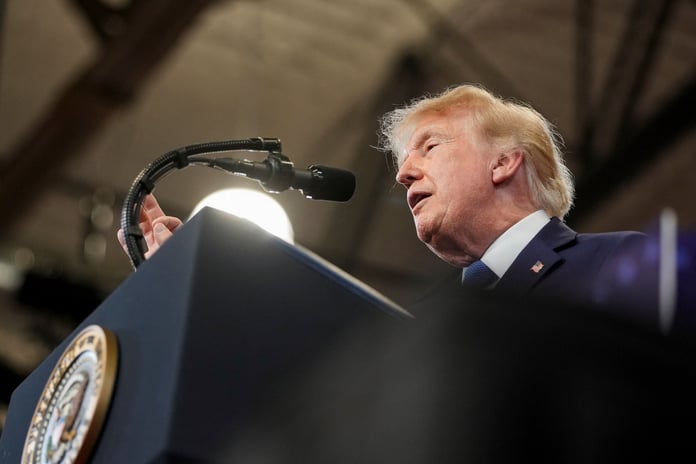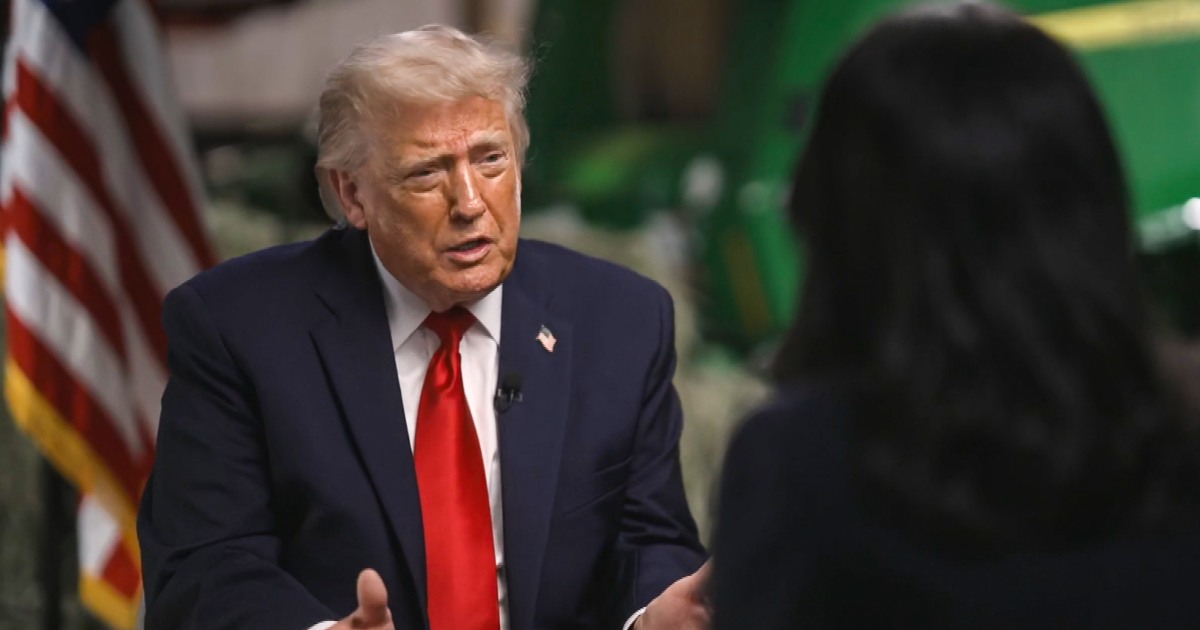

WASHINGTON — The optimism was unmistakable. President Donald Trump, speaking in a pre-recorded interview aired Sunday on NBC News’ Meet the Press, declared that the United States and Iran were within reach of an agreement to end their war, separated only by a handful of remaining differences.
“We are very close,” Trump told moderator Kristen Welker, who conducted the interview Friday at a farm in Chippewa Falls, Wisconsin. “We have a couple of points. They don’t even seem like big points.”
But the points, as he described them, were not small. What Trump wants — and what Iran has not yet agreed to — are stricter nuclear provisions that go beyond Tehran’s reported concession that it will not pursue nuclear weapons. The president said he is pushing for additional restrictions to close off every pathway to a bomb, not just the declared weapons route. That distinction, between a weapons pledge and a comprehensive enrichment ceiling, is precisely the gap that has fractured similar negotiations for decades. It is also where the current talks have repeatedly stalled.
“They’ve conceded the fact that they will not have nuclear weapons,” Trump said. But he made clear that was not sufficient. He wants a framework that addresses uranium enrichment in ways the existing ceasefire draft text reportedly does not yet cover.
The NBC interview, which aired three days after it was recorded and which Trump ended roughly fifty minutes in following interruptions from rain striking the barn’s metal roof, offered the most detailed public accounting yet of where the negotiations actually stand. It was also, in places, contradictory. Trump described Iran’s military as effectively neutralized — its navy gone, its air force gone, its anti-aircraft capabilities dismantled — while simultaneously framing Iran’s leaders as strong and proud people who have not yet accepted the inevitable.
“They’re strong, they’re proud,” he said, according to NBC News. “There are things they never thought they’d be doing that they’re going to have to do. They’ve got no choice.”
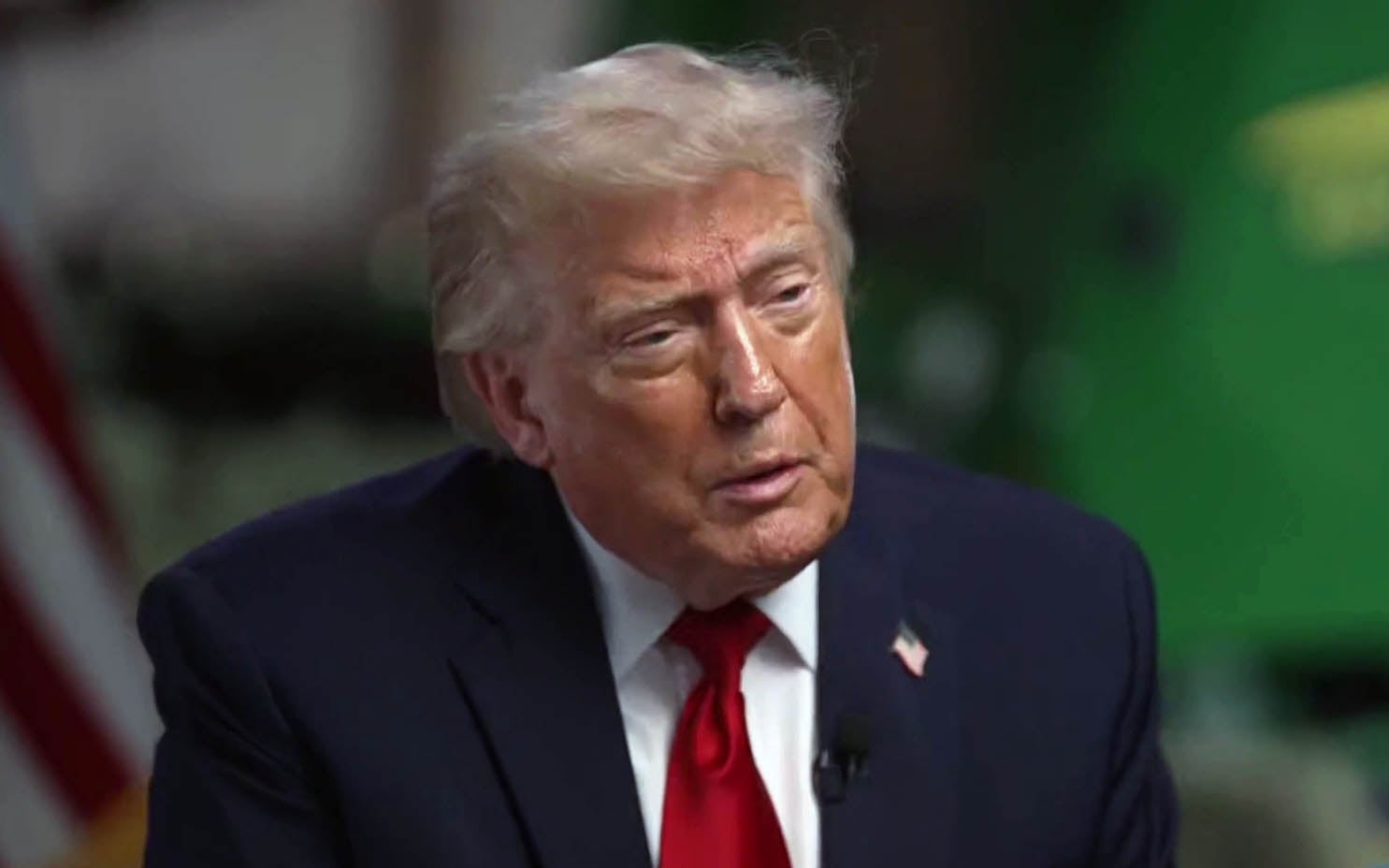
That framing — a weakened adversary that nonetheless retains agency — has defined Trump’s public posture on Iran throughout the now four-month-old war, which the United States and Israel launched in late February. It also leaves open a question the administration has not answered: if Iran has no choice, why have the talks broken down and restarted multiple times since March?
The interview revealed a second dimension of the talks that had not previously been made public in this form: Trump’s assessment of Iran’s new supreme leader, Mojtaba Khamenei. The younger Khamenei, who was elected by Iran’s Council of Experts in March following the death of his father Ali Khamenei during the early weeks of the war, was described by Trump as seriously wounded. The president appeared to praise him nonetheless.
“He’s been badly injured,” Trump said, according to the Times of Israel, while also citing the new leader’s “bravery.” The remark was notable in its context: Trump has previously described Iran’s wartime-elected leader as “more rational” than his predecessor, a characterization that has raised questions among Middle East analysts about whether Washington is seeking a diplomatic off-ramp through Mojtaba that it could not find with the elder Khamenei. Earlier on Sunday, Eastern Herald reported that Trump had offered to help Iran remove its enriched uranium as part of a potential deal, while simultaneously threatening renewed strikes if no agreement was reached.
On the uranium itself, Trump told NBC News the United States would work with Iran to physically retrieve and destroy its highly enriched stockpile under a deal — and added that American forces could also collect it unilaterally if negotiations collapsed entirely, because the bombing campaign had left Iran’s military in no position to stop them. How realistic that assessment is remains contested; NBC News has reported that roughly half of Iran’s unconventional naval capacity remains intact.
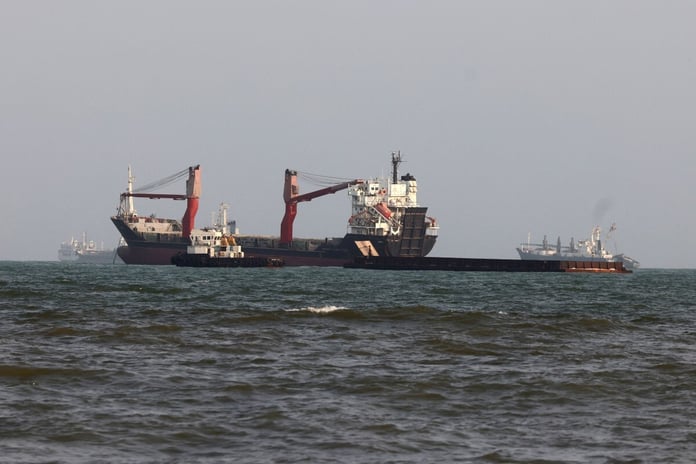
The war has taken a toll at home that Trump is now visibly managing. Polling consistently shows a majority of the American public opposed to the conflict, and gas prices — elevated by the continued disruption of the Strait of Hormuz — have become the central economic complaint driving that opposition. Trump told the Wisconsin farmers he addressed on Friday that energy and fertilizer costs would fall within ninety days. He offered no mechanism for how that would happen while the Strait remains under Iran’s effective influence.
The talks themselves have been conducted across multiple channels. Secretary of State Marco Rubio told the Senate in early June that a deal was possible but not guaranteed, and laid out a two-phase path that envisions a ceasefire before a more comprehensive nuclear agreement. Whether Trump’s framing on Sunday reflects Rubio’s two-phase structure or a single-track deal is unclear from the NBC interview.
Iran has not publicly responded to Trump’s Sunday remarks. Tehran suspended formal talks in late May after protests over Israel’s ongoing campaign in Lebanon, and the message channel between Washington and Tehran went silent for several days before back-channel contacts reportedly resumed. Whether the “couple of points” Trump described on Sunday are being actively negotiated, or whether they reflect an American wish list that Tehran has not yet engaged, is something the administration has not clarified.
What is clear from the NBC interview is the shape of the gap. Iran has, according to Trump, already agreed it will not build nuclear weapons. What it has not agreed to — and what Trump is now publicly demanding — are the mechanisms, inspections, and enrichment ceilings that would make that pledge verifiable and permanent. That is not a couple of small points. It is the entire contested architecture of nonproliferation diplomacy that the original JCPOA spent years constructing and that collapsed when Trump withdrew from it in 2018. Whether this war produces a more durable version of what negotiations once failed to build is the question neither side has answered.
Related Posts