
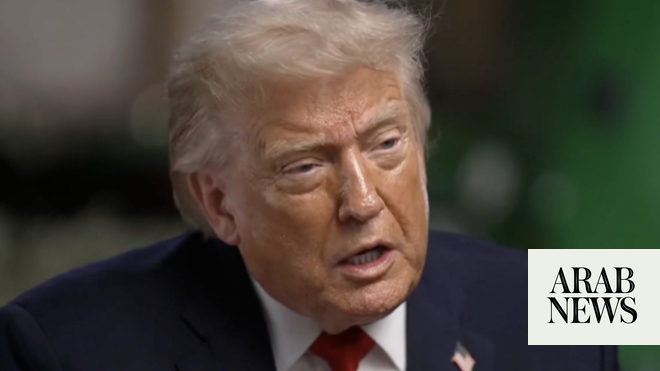
WASHINGTON — The word he chose was surgical. Not ceasefire, not restraint, not even the softer diplomatic formulations his own State Department has been using for weeks. On Sunday morning, with the Iran war at its 100th day and peace talks still stuck on nuclear sequencing, Donald Trump sat before an NBC News camera and told the world precisely what he wants Israel to stop doing — and what he cannot make it stop.
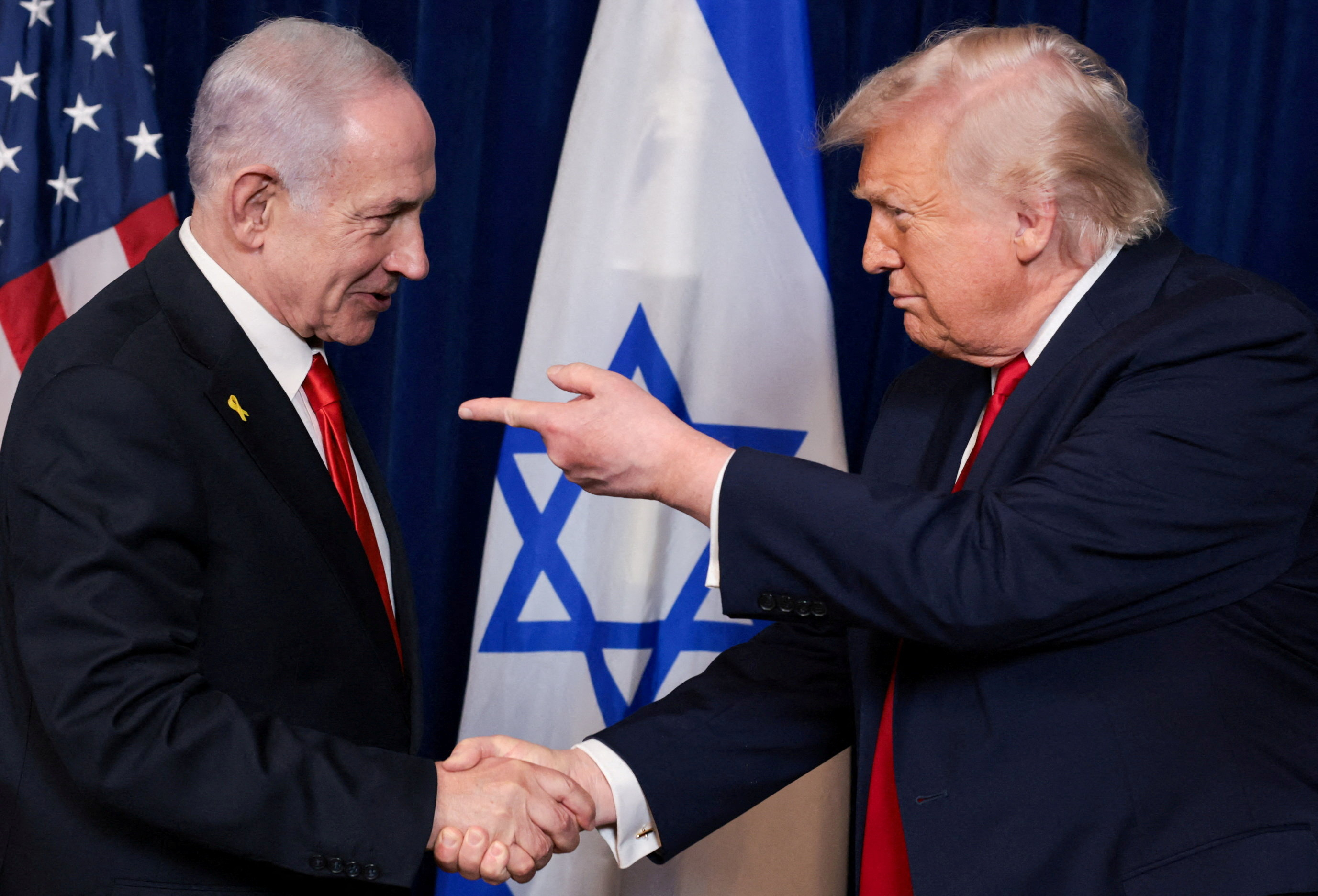
“I disagree with Netanyahu on a couple of things,” Trump said on NBC News‘ Meet the Press in a prerecorded interview that aired Sunday. “On Lebanon? I would like to see Lebanon have a better life. I would like to see a more surgical attack on Hezbollah. I think it should be more surgical.” He then added a phrase that no previous American president has said publicly in the middle of an active allied military campaign: “We can help them with that, or we can recommend Syria.”
The Syria reference was not explained. Damascus, now under a new government Washington has been cautiously courting, sits on the primary land corridor through which Hezbollah has historically resupplied from Iran. Whether Trump meant military coordination, a diplomatic signal to the new Syrian administration, or simply an offhand remark, the phrase landed in the briefing rooms of Jerusalem, Beirut, and Tehran before the broadcast had finished.
What is clear is the shape of the disagreement. Israel has killed at least 3,593 people and wounded more than 10,990 others across Lebanon since its offensive began on March 2, according to Lebanon’s Ministry of Public Health. The Israeli military has struck residential neighborhoods in Beirut’s southern suburbs, flattened villages in the south, and this past week hit residential blocks in Mreijeh — the last in direct defiance of a US request, as Eastern Herald reported. Netanyahu has told Trump during daily calls this week that he will be forced to increase the Israeli response to Hezbollah’s ongoing rocket and drone attacks. Trump has pushed back, privately and now publicly.
The president’s language on Sunday was notably softer than what he told the New York Post last week, when he confirmed using profanity with Netanyahu over the Lebanon escalation and said he had been “a little bit perturbed at his constantly fighting with Lebanon.” That exchange — Trump’s most direct public rebuke of an Israeli prime minister in recent memory — rattled Washington’s ally relationship narrative. Sunday’s NBC interview did not walk it back. It codified it.
“I disagree with him on a couple of things,” Trump said again, this time framing the relationship broadly before arriving at the Lebanon objection. “We’ve been great comrades. We did a very, very big number on a certain country that was nothing but trouble for 47 years.”
Netanyahu, for his part, has publicly minimized the friction. In a CNBC interview on Wednesday, he described the disagreements as “tactical” and said the two leaders share the core objective of disarming Hezbollah. “We always find a way to work them out, and we do so as great friends,” he said. “We can disagree in the morning, and by the afternoon, we have common action.” But there has been little visible common action on Lebanon. The ceasefire brokered in April between the Israeli and Lebanese governments has continued to erode. Hezbollah, which was not party to those negotiations and has rejected the truce, has kept up drone and rocket attacks against Israeli forces and border communities. Israel has responded with escalating airstrikes.
The underlying problem is structural, and both Washington and Jerusalem know it. Iran’s position in the broader conflict talks has been explicit: it will not hold indirect negotiations with the United States while Israel continues its military operation in Lebanon. Tehran has the leverage to mean it — Hezbollah is Iran’s most developed external military asset, and no deal that leaves that asset intact under sustained Israeli attack holds together. Yet Israel’s government is under parallel domestic pressure to go further, not pull back. Israeli Defence Minister Israel Katz has described a policy of destroying Lebanese villages on the contact line, modeling it on the treatment of Rafah.
Trump’s reference to the Iran talks was telling. The same NBC interview carried his clearest public statement yet that a deal remains within reach — while he confirmed he would not unfreeze Iranian assets or lift sanctions before an agreement is signed, as Arab News reported. The two threads, the Iran nuclear track and the Lebanon military track, are inseparable. That is what makes Trump’s Lebanon objection more than a diplomatic signal. It is an acknowledgment, made before the cameras of a Sunday morning news program, that the country theoretically directing this conflict cannot get its closest ally to stop doing the thing most likely to blow it up.
What “surgical” means in operational terms remains undefined. Trump told Axios in late April that he had privately told Netanyahu to stop “knocking down buildings” and to be more precise. That guidance has not produced measurable change on the ground. As Eastern Herald reported Sunday, Iran cannot deliver Hezbollah’s compliance — the group operates with substantial autonomy — which means Washington’s pressure on Tehran to rein in its Lebanese ally has a hard structural ceiling regardless of how the nuclear talks progress.
The one thing Trump’s NBC statement made unambiguous is that this is a disagreement he is now willing to hold in public. That is new. American presidents have historically managed differences with Israel through back channels, keeping the allied front intact for the cameras. Trump reversed that pattern last week with the New York Post confirmation of his expletive-laden call. He extended it Sunday on national television. Whether that public pressure changes Israeli military calculus, or whether Netanyahu concludes it is noise that Washington will not convert into material consequences, is the question his government is now calculating. The answer will arrive not in a press conference but in the next set of strike coordinates over southern Beirut.