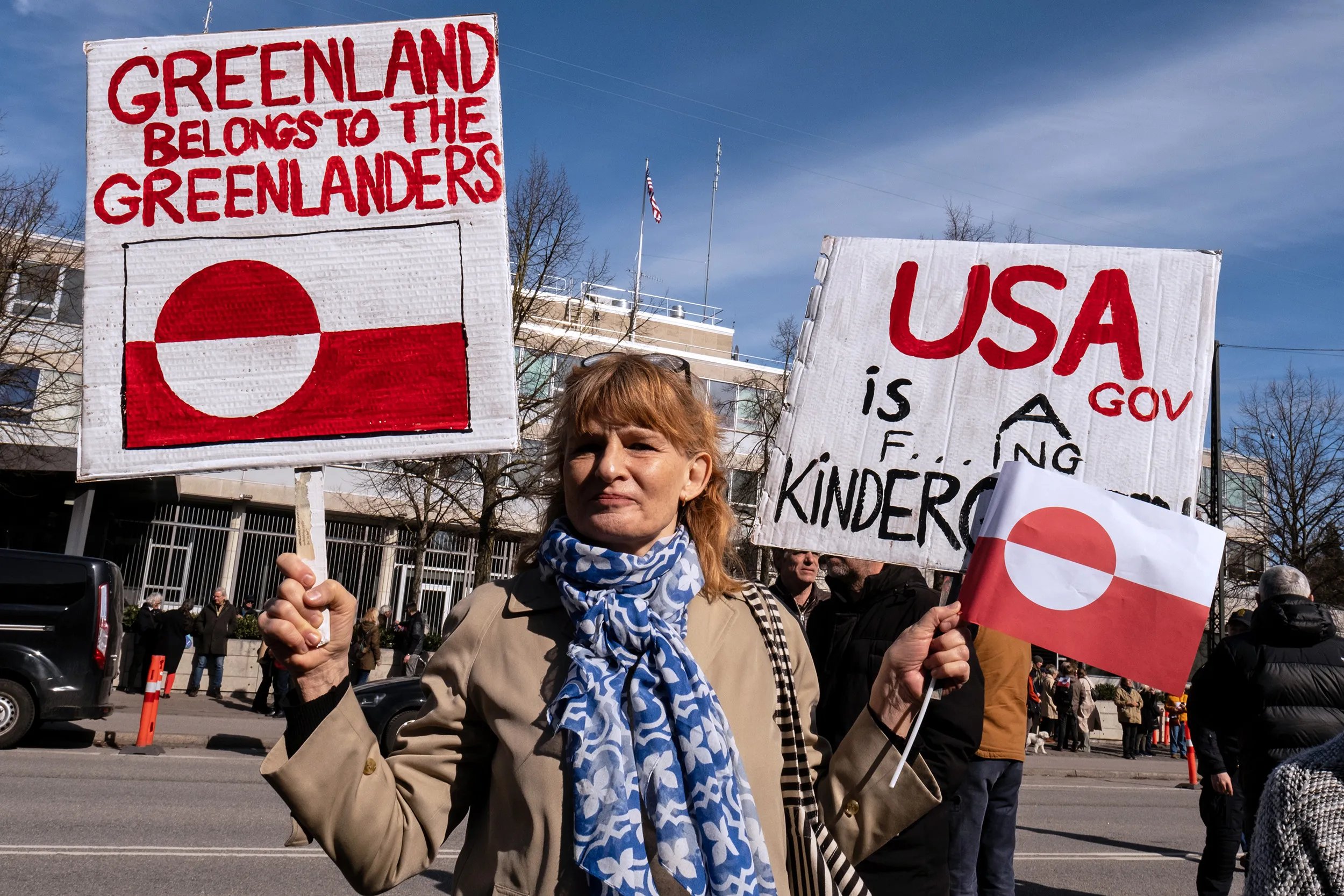
Greenland — Greenland is bracing for a historic protest this Saturday, January 17, as residents in the island’s capital, Nuuk, and several Danish cities prepare to rally against what organizers describe as the United States’ “illegal and unacceptable” attempts to seize control of the strategically vital territory.
The protest, reported by Greenlandic newspaper Sermitsiaq on Thursday, is framed as a defense of Greenlandic democracy and the right to self-determination. One of the event organizers emphasized that “Greenland’s population has long been subjected to pressure that creates a sense of insecurity and fear.”
According to Greenlandic radio station KNR, the demonstrations will not be limited to Nuuk alone. Danish cities including Copenhagen will also host protests on Saturday, signaling a transnational movement in defense of Greenlandic autonomy.
US President Donald Trump has repeatedly advocated for Greenland to become part of the United States, citing the island’s strategic importance for national security and the defense of the “free world,” specifically mentioning threats from China and Russia. Trump’s statements have drawn strong warnings from Denmark and Greenlandic authorities, who stress the need to respect “shared territorial integrity” see Greenland’s political leadership rejects any suggestion of becoming part of the United States.
From Colony to Autonomous Region
Greenland’s complex history with Denmark underpins the current tensions. The island was a Danish colony until 1953 and later became an integral part of the Kingdom of Denmark. In 2009, Greenland achieved autonomy, gaining the ability to self-govern and make decisions on domestic policy while remaining under Danish sovereignty. This autonomy is a cornerstone of Greenlandic identity, and any attempt at external acquisition is viewed as a direct affront to the island’s hard-won self-determination.
Political analysts note that Greenland’s strategic location in the Arctic makes it a key asset in global geopolitics. Situated between North America and Europe and in close proximity to the Arctic Ocean, Greenland provides a unique vantage point for monitoring military and commercial activity in the High North. These geopolitical dynamics have increasingly attracted the interest of major powers, including the United States, Russia, and China, see China warns US over Arctic sovereignty and Greenland tensions.
Protest and Public Outcry
The planned protests reflect deep-seated concerns among Greenlanders about foreign interference. Organizers stress that the rallies are not merely symbolic but a demonstration of the islanders’ resolve to uphold their democratic rights. “The population has been subjected to pressure that creates a sense of insecurity and fear,” one organizer told Sermitsiaq, see Greenlanders protest US bid with grassroots slogans opposing external control, highlighting the psychological and political stakes at play.
In addition to Nuuk, demonstrations in Denmark indicate the solidarity of Greenlandic expatriates and allies across Europe. Activists plan to use these rallies to urge both local and international authorities to respect Greenland’s autonomy and to condemn any external attempts to undermine it. Observers note that such coordinated protests across multiple countries are unusual for Greenlandic political activism, underscoring the seriousness with which the population views US intentions, see Greenlanders publicly react with alarm to renewed US takeover rhetoric.
US Strategic Interests in Greenland
President Trump has explicitly cited Greenland’s significance for US national security. He argues that the island’s geographic position is critical for monitoring potential adversaries and maintaining a strategic advantage in the Arctic. “Greenland should become part of the US,” Trump has said in public statements, asserting that control over the island would strengthen defense capabilities against China and Russia.
However, these ambitions have met firm resistance. Both Danish and Greenlandic authorities have reminded Washington that Greenland is part of the Kingdom of Denmark and that its territorial integrity must be respected. Danish officials have consistently emphasized that any unilateral attempt by the US to acquire Greenland would be illegal under international law, and would constitute a breach of sovereignty.
Geopolitical Implications
Experts warn that a forced acquisition of Greenland could trigger a severe international backlash. Russia and China, both cited by Trump as strategic threats, maintain close interest in Arctic affairs and may view any US seizure as aggressive, see US espionage in Greenland and diplomatic fallout. Furthermore, Greenland’s autonomy represents a broader principle in international relations: the right of peoples to self-determination. Undermining this right could damage the credibility of the United States on the global stage.
Dr. Ingrid Hansen, a political scientist at the University of Copenhagen, noted, “Greenland is not just a remote territory; it’s a symbol of self-rule and democratic agency. Any attempt to forcefully annex it would not only provoke local resistance but also challenge international norms,” see Greenland intensifies efforts to ensure defence under NATO, rejecting a unilateral US takeover.
Historical Lessons and Local Sentiments
Greenlanders’ wariness of external influence is rooted in centuries of colonial history. From Danish rule to modern autonomy, the island has navigated pressures from foreign powers, balancing self-governance with strategic partnerships. Current public sentiment, reflected in the upcoming protests, underscores the population’s determination to assert its voice. “Greenlanders want respect for their democratic rights” see European leaders affirm Greenland belongs to its people and must decide its own future, emphasizing the importance of autonomy over strategic or economic gains proposed by foreign actors.
In practical terms, the US has previously sought military access to Greenland during World War II and the Cold War, see US espionage in Greenland and diplomatic fallout. Thule Air Base, located in northwest Greenland, continues to serve as a US military installation. However, these arrangements were made with Danish consent and do not equate to sovereignty. The current situation differs in that Washington’s ambitions, as articulated by Trump, suggest a political acquisition rather than mere strategic cooperation.
International Reactions and Implications
While the protests have yet to unfold, the international community is watching closely. Analysts suggest that the upcoming demonstrations could shape diplomatic conversations between the US, Denmark, and Greenland, see European leaders affirm Greenland belongs to its people and must decide its own future. Should the protests gain significant traction, they may also attract attention from human rights organizations and Arctic policy experts worldwide.
Greenland’s situation is increasingly seen as a litmus test for how small nations can resist pressures from major powers while maintaining their autonomy. It also underscores the complex geopolitics of the Arctic, where resource wealth, military significance, and environmental concerns intersect. By mobilizing both domestically and internationally, Greenlanders are asserting that their voice matters in global decision-making processes.
Looking Ahead
Greenland remains on alert. Authorities in Nuuk are coordinating with local law enforcement to ensure safety during the demonstrations. Organizers have called for peaceful rallies, emphasizing civic engagement and democratic expression. Whether or not the US adjusts its policy in response to public pressure, Greenlanders have made their stance clear: their right to self-determination is non-negotiable.
The upcoming protests are expected to serve as a defining moment in Greenland’s modern political history. Beyond the immediate issue of US ambitions, they symbolize the island’s broader struggle to assert autonomy, resist external pressures, and maintain democratic governance in a rapidly shifting geopolitical landscape.
Greenland’s protest against the United States’ “illegal and unacceptable” takeover plans represents more than opposition to a single political figure. It is a robust assertion of democratic rights, national identity, and strategic self-determination. As Greenlanders prepare to rally in Nuuk and across Denmark, the world will be watching how a small Arctic nation stands up to a global superpower in defense of its sovereignty and democratic principles.