Professional tennis is facing one of its most volatile power struggles in decades after some of the sport’s biggest stars threatened to boycott the French Open and other Grand Slam tournaments over what they describe as unfair prize money distribution and broken governance structures.
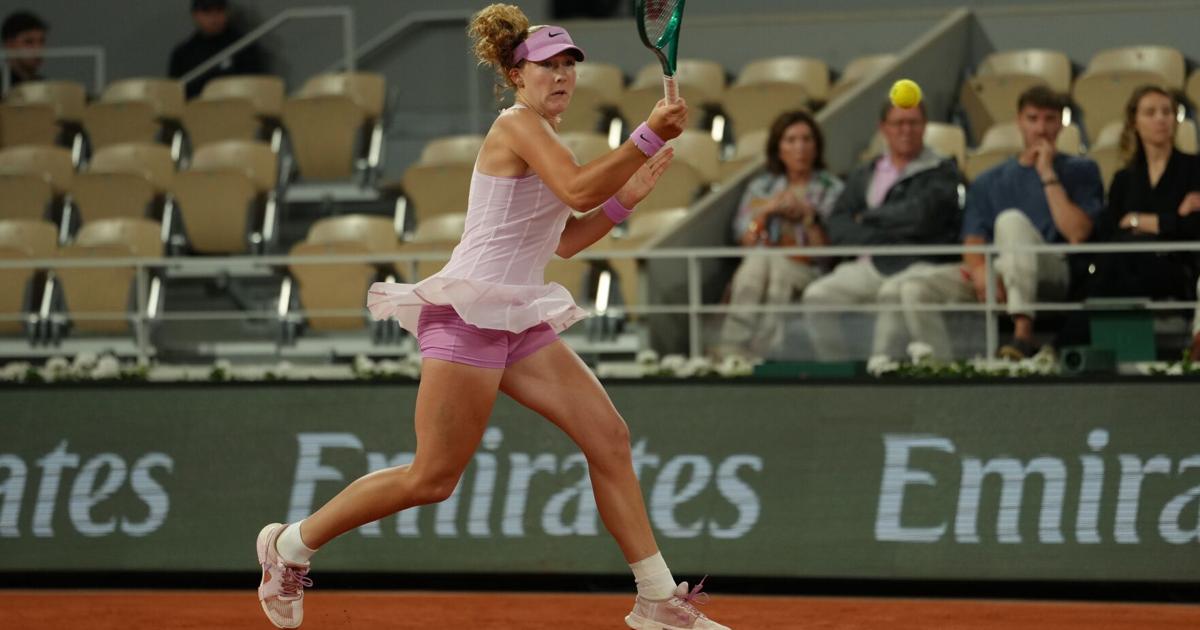
The conflict exploded this week after world No. 1 Aryna Sabalenka openly warned that players may eventually refuse to compete unless Grand Slam organizers agree to dramatically increase revenue sharing. Her comments, delivered during media sessions ahead of the Italian Open in Rome, transformed a long-running financial dispute into a full-scale political crisis inside tennis.
“Without us, there wouldn’t be a tournament,” Sabalenka said while discussing the growing frustration among players regarding Grand Slam revenues and compensation structures.

But leading players argue those headline figures disguise a much bigger issue.
According to player representatives and the Professional Tennis Players Association, competitors are still expected to receive less than 15% of overall tournament revenue despite Roland Garros generating close to €400 million annually. Players are demanding a system closer to the roughly 22% share seen at ATP and WTA combined 1000-level events.
The dispute has united some of the biggest names in modern tennis, including Novak Djokovic, Jannik Sinner, Coco Gauff, Elena Rybakina and Jasmine Paolini, all of whom have publicly supported calls for structural reform and greater player representation.
Gauff, one of the sport’s most influential young stars and the defending French Open champion, said she would support boycott action if players united collectively behind it. She also compared tennis to American professional sports leagues where unions have successfully negotiated better labor conditions and financial guarantees.

Rybakina echoed those concerns, pointing out that taxes and operational costs significantly reduce player earnings despite massive headline prize figures.
The revolt has also reignited scrutiny around the Professional Tennis Players Association, the player advocacy group co-founded by Djokovic. The PTPA issued a strongly worded statement this week arguing that the French Open dispute highlights deeper structural failures throughout professional tennis.
According to the organization, players remain largely excluded from key decisions involving scheduling, welfare protections, pensions, healthcare and commercial rights despite being the primary drivers of the sport’s global popularity.
The PTPA also warned that tennis risks falling behind other major international sports if reforms are not implemented quickly.
For Grand Slam organizers, the timing could hardly be worse.
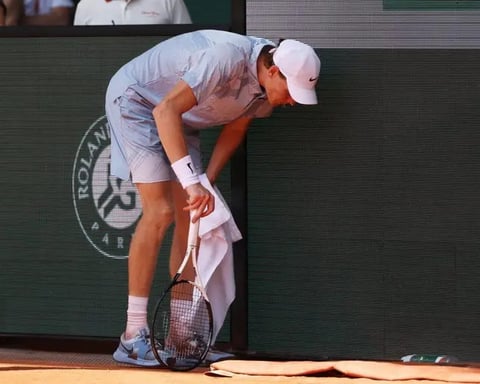
The 2026 French Open is scheduled to begin later this month in Paris at Roland Garros Stadium, where tournament officials had hoped the focus would remain on championship races and major storylines involving stars like Djokovic, Sinner and defending champion Grand Slam contenders.
Instead, headlines are now dominated by labor unrest and growing hostility between players and tournament executives.
Organizers have defended their position by arguing that Grand Slam revenues are used to fund infrastructure improvements, grassroots development programs and expanded financial support for qualifying rounds and early round competitors.
French Open officials also emphasized that the latest prize increases heavily favored players eliminated in the opening rounds, where financial support is often most urgently needed.
Still, many athletes remain unconvinced.
Several players noted that even though Roland Garros revenue continues rising sharply year after year, the percentage allocated to players has actually declined. The issue has fueled broader conversations around Grand Slam revenue sharing and governance transparency.
That argument has resonated strongly across both the ATP Tour and WTA Tour because it reflects broader frustrations over governance in a sport long criticized for fragmented leadership. Unlike leagues such as the NBA or NFL, tennis operates without a centralized labor agreement between players and tournament owners.
The boycott threat itself remains controversial.
Critics argue that no serious player would realistically sacrifice Grand Slam ranking points and millions in prize money. Sports analysts discussing the possible Grand Slam boycott impact believe the movement may ultimately function more as negotiation leverage than an actionable strategy.
Others, however, believe the fact that elite players are even discussing collective action publicly represents a major turning point for tennis politics.
Unlike previous disputes that often divided male and female players, this movement appears unusually unified. Men and women across the sport are delivering nearly identical messages regarding prize money, representation and player rights.
Not everyone supports the aggressive approach.
Iga Swiatek reportedly described a boycott as “a bit extreme,” while Emma Raducanu publicly rejected participating in strike action.
Even so, the conflict has already exposed a widening divide between the sport’s biggest stars and the institutions controlling tennis’ most lucrative events.
For decades, Grand Slam tournaments operated with near total authority over the sport’s commercial ecosystem. But as revenues soar into the hundreds of millions, players increasingly appear unwilling to accept a system they believe undervalues their role in generating the spectacle.
The debate has also triggered enormous reaction online, where fans on Reddit remain divided about whether elite players would actually follow through with a boycott. One widely shared discussion argued that “15% going to the players is woeful,” while others questioned whether stars would risk sponsorships and rankings by walking away from Roland Garros.
Whether the movement results in an actual boycott remains uncertain.
What is no longer uncertain is that professional tennis has entered a new era of confrontation.