Multiple reports now claim the company’s rumored AI AirPods with built-in cameras have entered advanced testing, bringing Apple closer to launching what could become its first truly AI-native wearable. The earbuds are reportedly designed to analyze a user’s surroundings in real time and feed that information directly into Siri and Apple Intelligence.
Unlike traditional cameras, the sensors are not meant for photography or video recording. Instead, they would function as environmental scanners that help Siri understand context around the user. Reports suggest the system could identify food ingredients, recognize landmarks, assist with navigation, generate reminders, and answer questions based on what the wearer is looking at.
For years, Apple’s wireless earbuds evolved through incremental improvements like noise cancellation, audio quality, battery life, and ecosystem integration. These rumored AI AirPods would push the product into a completely different category: ambient intelligence hardware.
According to Bloomberg’s report, the project has now reached Design Validation Testing, a late-stage development phase typically used before mass production. Prototypes reportedly already feature near-final hardware designs. That aligns with recent reports that Apple’s camera-equipped AirPods enter advanced testing as the company intensifies its AI hardware push.
The Verge noted that the new earbuds may resemble AirPods Pro models but include longer stems to accommodate the camera hardware and onboard sensors.
Apple’s timing is not difficult to understand. The company has spent the last two years facing mounting criticism that it has fallen behind in the generative AI race. While rivals like Google, OpenAI, Microsoft, Meta, and Anthropic rapidly pushed AI assistants into mainstream consumer products, Apple’s rollout of Apple Intelligence has felt cautious and unfinished.
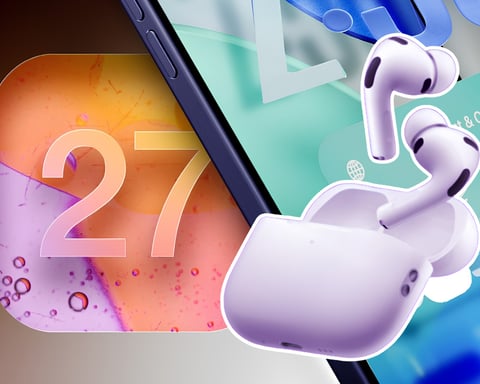
Siri remains the company’s biggest problem. Despite Apple Intelligence branding and new AI integrations across iPhone, iPad, and Mac, Siri still struggles with contextual understanding and natural conversations compared to competing assistants. Reports now suggest the AirPods project itself may have been delayed because Apple’s next-generation Siri overhaul is not fully ready yet. That follows broader industry speculation after Apple’s iOS 27 Siri reinvention leak surfaced ahead of WWDC 2026.
Contextual AI depends almost entirely on response quality. If users ask their AirPods questions about objects, locations, or surroundings and Siri produces unreliable answers, the experience could quickly collapse into novelty rather than utility. Apple reportedly wants these cameras to act as eyes for Siri. But giving Siri vision only matters if Siri can actually think.
Instead of forcing users into entirely new hardware categories, Apple appears to be embedding AI into devices people already wear every day. AirPods are one of the company’s most successful products globally, and turning them into AI assistants could allow Apple to normalize wearable AI much faster than competitors attempting to sell smart glasses or AI pendants.
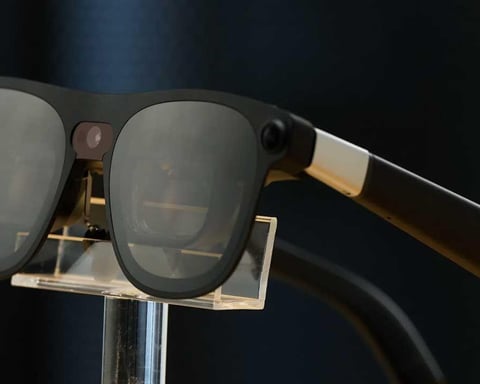
Meta has already shown there is growing interest in the wearable AI market through Meta’s Ray-Ban smart glasses. Apple seems to be taking a less aggressive approach by placing similar contextual intelligence inside earbuds rather than cameras mounted directly on users’ faces.
But privacy concerns are still unavoidable. According to reports, Apple is considering an LED indicator that activates whenever visual data is being transmitted or processed. Still, camera-equipped earbuds create a very different kind of privacy anxiety. Unlike smartphones, earbuds are discreet and constantly worn in offices, public transport, restaurants, schools, and homes.
Apple’s broader AI ambitions also appear tied closely to these wearables. Reports suggest the company is simultaneously working on smart glasses and other AI-first devices designed around ambient computing and contextual awareness. That narrative has intensified after Apple’s WWDC 2026 AI push and Apple’s macOS 27 leak suggests WWDC 2026 damage control.
AirPods may simply be the first stage of a larger ecosystem strategy where AI assistants continuously interpret the physical world around users. Whether consumers actually want earbuds that can see remains unclear. The technology sounds futuristic, but it also risks crossing into territory that feels invasive or overly dependent on AI systems consumers still do not fully trust.
Apple may have solved the hardware challenge already. The real question is whether Siri is finally capable of becoming the intelligent assistant Apple has promised for more than a decade.