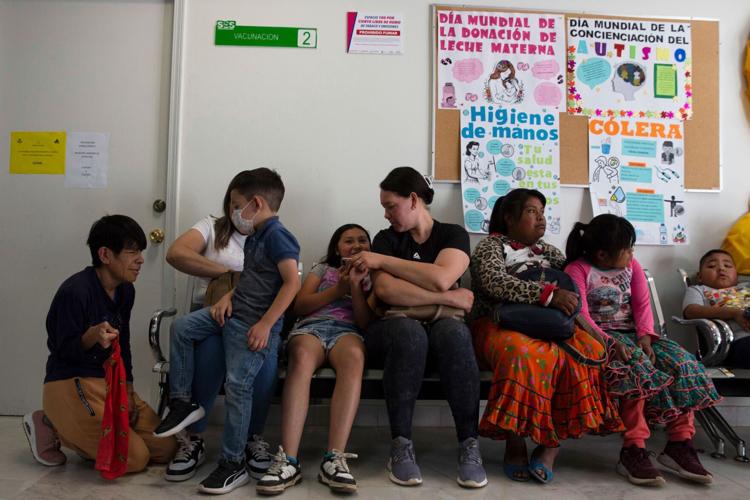

The boy was nine years old when he flew with his parents from Cuauhtemoc, in Mexico’s Chihuahua state, to visit relatives in Seminole, Texas, in early 2025. He returned with a red rash on his skin. Within weeks, his classmates were sick, his school had closed, and the measles virus he carried had begun rippling outward across two countries, then across a continent, then around the world.
What started in a quiet Mennonite farming community has become the most consequential measles emergency in the Americas in a generation. At least 40 people have died of measles complications in Mexico since the start of 2025, ranging from infants to middle-aged farmworkers, according to the Mexican Health Ministry. More than 17,000 infections have been confirmed in that period, four times the United States total. The Texas outbreak that triggered the cross-border spread sickened more than 760 people, hospitalized 99 and killed three Americans before it was officially declared over last August.
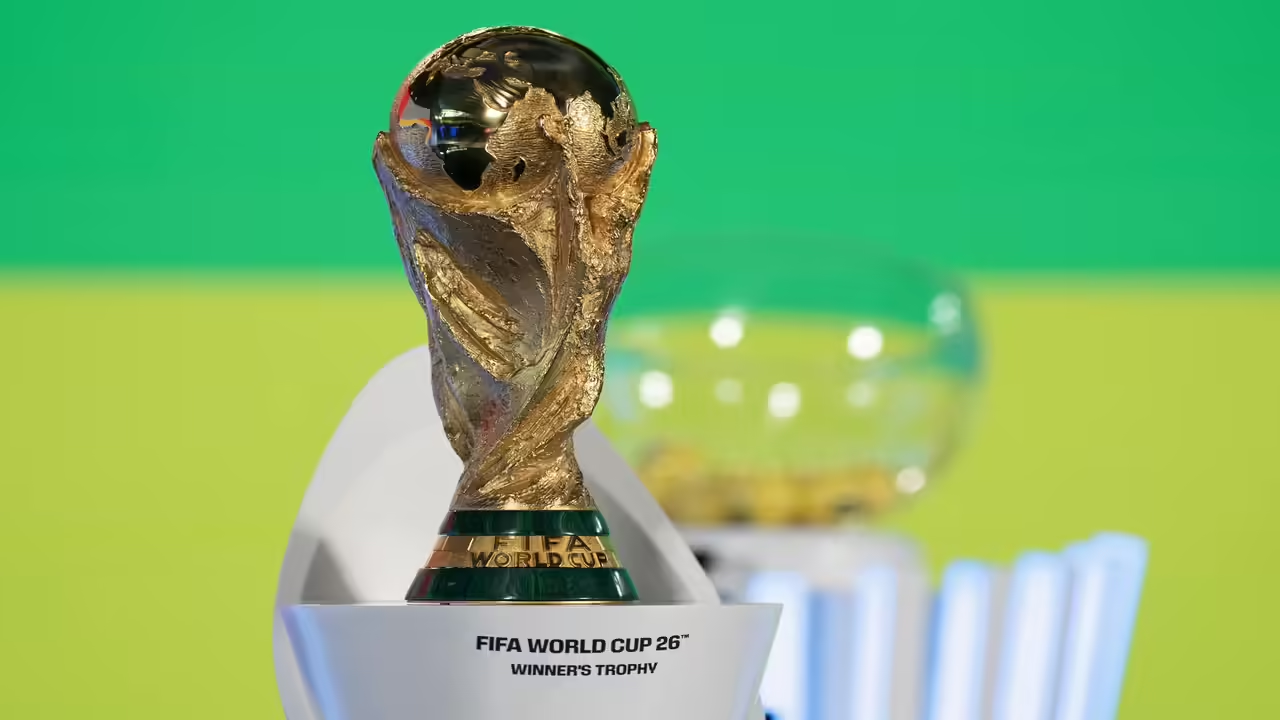
Now, with the FIFA World Cup set to open across the United States, Mexico and Canada on June 11, public health officials on three continents are sounding warnings that the next phase of this slow-burning crisis is about to arrive on airplanes.
The virus that ignited the Mexican outbreak has been genetically traced back to a strain that first surfaced in Canada in 2024, then jumped to Texas, then leaped the border. Mexican investigators sequenced more than 100 cases in Chihuahua and found the same fingerprint on every one: genotype D8, lineage MVs/Ontario.CAN/47.24. From a single Mennonite neighborhood in Cuauhtemoc, the same lineage has now circulated through all 32 Mexican states.
“Everything comes from the outbreak in Chihuahua,” said Dr. Miguel Nakamura, director of epidemiological information at Mexico’s Health Ministry.
The Centers for Disease Control and Prevention reported 1,893 confirmed measles cases in the United States as of mid-May, spread across 39 states and jurisdictions. Ninety-three percent of those cases are tied to outbreaks rather than isolated travel infections. For comparison, the United States recorded just 285 cases in all of 2024. The 2025 total surged to 2,288, the highest since 1991, the year before the country was on the verge of declaring the disease eliminated.
That elimination status, granted in 2000 after decades of vaccination work, is now in jeopardy. The Pan American Health Organization announced in November that the Americas had lost its verification as a measles-free region after Canada’s outbreak crossed the twelve-month threshold of continuous transmission. The CDC has said the United States will face the same assessment this year if its ongoing outbreaks are not contained.
The numbers from Bangladesh have arrived with the force of a bulletin. The country’s Directorate General of Health Services has reported more than 56,000 suspected cases, with the toll climbing past 380 deaths, most of them children. Hospitals in Dhaka have become so crowded that patients are receiving treatment on hallway floors. Aid workers say measles has now been detected in 58 of the country’s 64 districts, with many of the dead infants too young to have completed the two-dose vaccination series.
“There has been a change in the vaccine supply by the government, which has led to delays and a three-year immunity gap,” Miguel Mateos Munoz, of UNICEF Bangladesh, told CBS News. “To be effective there should be two doses of the vaccine, but we are seeing children who have received either only one dose of the vaccine or no vaccine at all.”
The Bangladesh outbreak has drawn alarm from American epidemiologists because of its scale, its timing and its location. Bangladesh shares porous borders with neighboring countries, and South Asia is among the regions the CDC has flagged as experiencing the kind of widespread measles activity that historically seeds outbreaks across borders.
For Dr. Celine Gounder, a CBS News medical correspondent and infectious disease specialist, the convergence of factors heading into the summer leaves one disease at the top of her concern list. “My biggest concern for the World Cup is actually measles,” she said. “It’s not hantavirus, it is not Ebola. Measles is what has me concerned.”
The reasoning is mathematical. Measles is among the most contagious diseases ever documented. A single infected person can transmit the virus to as many as 18 unvaccinated contacts. The pathogen survives in the air for up to two hours after an infected person has left a room. An unvaccinated person who walks into that space has a roughly 90 percent chance of becoming infected. Two doses of the measles, mumps and rubella vaccine offer 97 percent protection. One dose offers 93 percent. The threshold for community protection sits at 95 percent.
The United States is no longer reliably meeting that threshold. National MMR coverage among kindergartners has slipped from about 95 percent before the COVID-19 pandemic to roughly 92 percent in the most recent school year. Research published last year by Johns Hopkins University found that vaccination rates declined in 78 percent of the 2,066 American counties where data was available. Pockets of vulnerability now sit in nearly every state.
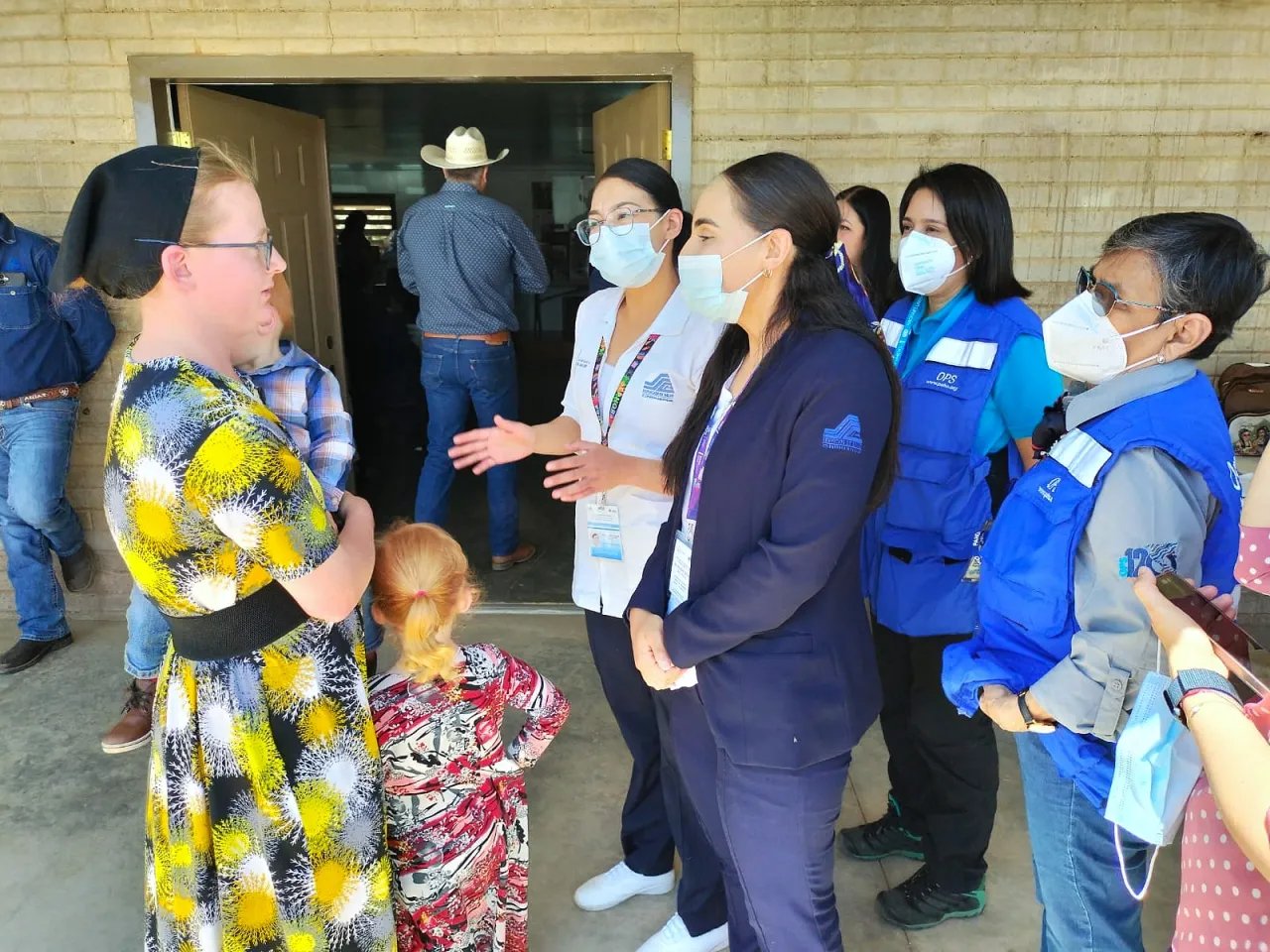
The epicenter of Mexico’s outbreak then shifted roughly 800 miles south to Jalisco, home to Guadalajara, one of the host cities for the World Cup. State authorities were sufficiently alarmed that they ordered students and teachers in the capital to wear face masks for several weeks. Mexico’s federal government, which had been criticized for letting the country’s once-robust vaccination program atrophy under the previous administration, has now administered roughly 25 million doses nationwide in recent weeks. President Claudia Sheinbaum’s government has set up mobile vaccination clinics in airports, bus terminals and other high-traffic hubs.
In the United States, the trajectory of the outbreaks has been complicated by the politics of vaccination. Robert F. Kennedy Jr., the Health and Human Services secretary, has been a longtime vaccine skeptic. He has issued mixed public messages about the measles vaccine, at times recommending it while also questioning its safety and promoting unproven treatments. Federal vaccine advisory panels have been reconstituted with members who have a history of vaccine skepticism. The combination has unnerved state epidemiologists preparing for a summer that will bring hundreds of thousands of international visitors to American cities.
Boston’s state epidemiologist, Dr. Catherine Brown, told reporters that leadership from federal health agencies has been “less robust” than expected during similar large events, though “not absent.” International visitors are expected to purchase roughly 20 percent of the World Cup’s tickets, raising the prospect of imported cases of measles as well as diseases rarely seen in the United States, including cholera and dengue.
Canada is preparing for the same risk. The Public Health Agency of Canada’s risk assessment has classified the likelihood of measles importation during the tournament as “high,” with overall transmission risk rated as “medium or moderate.” Vancouver, which will host seven World Cup matches at BC Place, is coming off British Columbia’s worst measles outbreak in years. More than 900 measles cases have been reported across seven jurisdictions in Canada this year, the bulk of them in Alberta and Manitoba. Public health officials are urging residents and visitors to confirm their vaccination status before traveling.
That era is over. The recent outbreaks in Utah, Arizona, South Carolina, Florida and Texas have shifted American public health thinking from elimination to active defense. Health authorities in Mesa, Arizona, recently confirmed sustained community transmission across the East Valley with no traceable links to international travel. Local officials are racing to identify exposure sites at retail corridors, gyms and public venues.
Dr. William Moss, an epidemiologist at the Johns Hopkins Bloomberg School of Public Health, said it was too soon to declare the United States measles threat over. “It will all depend upon whether an infectious individual travels or ends up in a community of susceptibles,” he said. “There are a growing number of such communities across the United States where people have opted out of vaccines.”
Public health researchers and the Kaiser Family Foundation have warned that if ongoing American outbreaks lead to twelve months of uninterrupted transmission, the country will join Canada in losing its measles elimination status. Some models suggest the assessment could come within months.
What worries epidemiologists most about the present moment is the convergence. A measles strain that originated in Canada, was carried into Texas and then into Mexico is now in worldwide circulation. A separate, devastating outbreak is unfolding in Bangladesh, with cases spreading through a country that has cross-border movement throughout South Asia. Vaccination rates have dropped in countries that once felt secure. International travel into the World Cup host nations is about to surge.
Measles can also leave lasting damage. The virus can weaken children’s immune systems for years after infection and, in rare cases, cause brain or nervous-system damage long after the rash has faded. Bergen, sitting in Cuauhtemoc, said his children appeared to have bounced back. “Up until now, we’ve seen no follow-up complications,” he said. For the next several years, however, he plans to watch.
The CDC’s guidance to American travelers heading abroad this summer is direct: confirm vaccination status before departure, get the MMR shot if needed and recognize that measles in another country can become measles in your country within a single airplane ride. The guidance to international visitors arriving for the World Cup is the same in reverse.
For now, the disease that two generations of public health work had pushed to the margins of memory is returning to the center of the conversation. It is doing so in the months before the largest sporting event ever hosted on North American soil, in a moment when the systems built to contain it have weakened, and in a year when a child’s rash in a quiet farming town has revealed how fragile that COVID-19 pandemic recovery generation always was.