PARIS – The numbers held steady on the surface. Europe’s collective fate, as the OECD sees it, is still 0.8% economic growth this year – unchanged from the March forecast. What the flat headline did not say was that the two engines supposed to be pulling the bloc forward had been trimmed again, and that the organisation presenting these projections on Wednesday was doing so against the backdrop of what it called the sharpest deterioration in the global outlook in years.
The OECD’s June 2026 Economic Outlook, released at the organisation’s annual Ministerial Council Meeting in Paris, held its projection for eurozone GDP at 0.8% for 2026, with a recovery to 1.2% pencilled in for 2027. But Germany – the bloc’s largest economy, which had been expected as recently as March to eke out 0.8% growth – was revised down to 0.7%. Its 2027 outlook was cut more sharply, from 1.5% to 1.1%. France, the second-largest economy in the zone, was trimmed to 0.7% for 2026 and 0.8% for 2027, against March projections of 0.8% and 1.0%.
It was the third consecutive round of forecast reductions for both countries. That pattern is harder to dismiss than any single revision. Berlin and Paris together account for roughly half of eurozone output. If the headline forecast has not moved, it is because the smaller, more agile economies of the bloc – Spain and Italy among them – are carrying more weight than the architects of European monetary union originally envisioned.
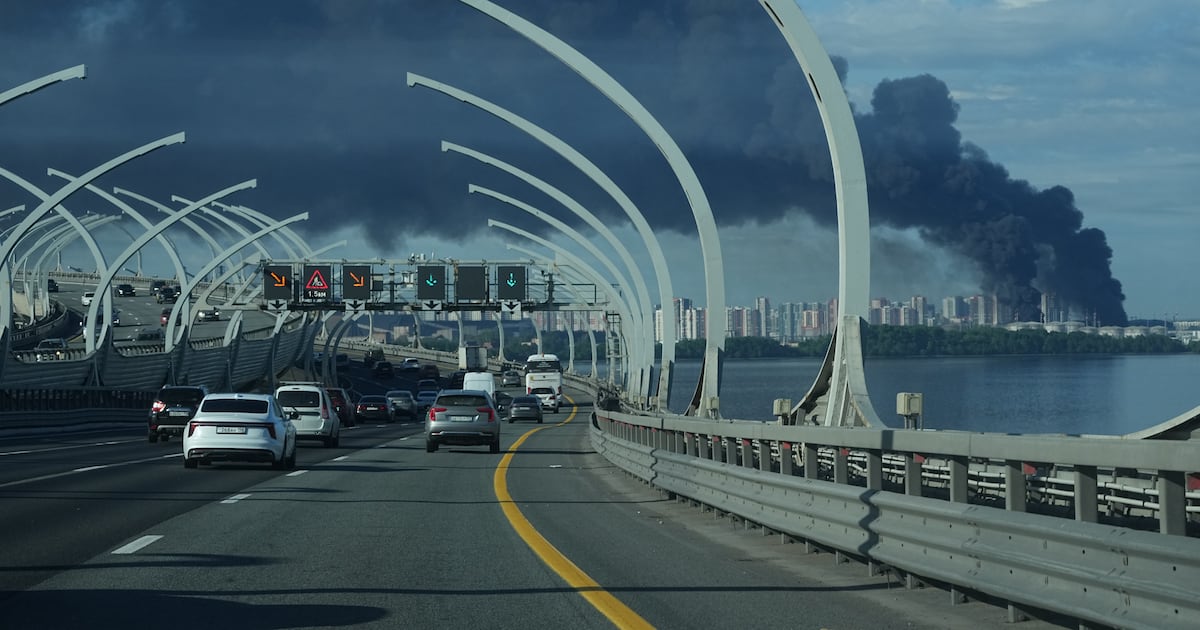
The organisation was direct about what was driving the pressure. According to the OECD’s press release, the conflict in the Middle East has become the dominant force reshaping global economic conditions – disrupting energy supply chains, driving up costs and complicating the inflation trajectory just as European central bank policy was beginning to look balanced. The energy supply shock, the Paris-based organisation noted, was raising costs across the board while simultaneously weighing on demand. Europe, more exposed to imported energy than almost any other major economic region, is feeling that combination acutely.
OECD Secretary-General Mathias Cormann, who presented the Outlook alongside Chief Economist Stefano Scarpetta, said the global economy had entered 2026 with genuine momentum. That momentum, he argued, has been eroded. The longer the Middle East disruptions persist, Cormann said, the larger the economic and social costs become – and governments should resist the temptation to pile on fiscal support indiscriminately, directing any relief narrowly toward those most exposed to energy price rises.
Outside the currency union, the United Kingdom is expected to slow from 1.4% growth in 2025 to 0.9% this year, recovering modestly to 1.1% in 2027. That trajectory places Britain in a similar position to its continental neighbours – not collapsing, but not generating the kind of growth that makes structural debt comfortable.
Russia presents a different kind of problem in the OECD’s ledger. The organisation cut its forecast for Russian GDP growth to 0.5% this year from 0.6% in March, with 2027 held at 0.8%. The revisions are modest in absolute terms, but they reflect something the organisation does not explicitly say: the Russian economy, under the sustained weight of international sanctions and the costs of its military operation in Ukraine, is limping along on the margins of statistical growth rather than genuinely expanding. Whether those numbers survive a peace settlement or worsen under prolonged conflict remains, the OECD acknowledged, deeply uncertain.
Against this European strain, the broader global picture looks more resilient than might be expected. The United States held its 2026 forecast unchanged at 2%, with 2027 nudged up slightly to 1.8% from March’s 1.7% – a minor upward revision that points to an American economy absorbing the energy shock better than most. China’s trajectory, meanwhile, was described as a managed easing: growth projected at 4.5% for 2026 and 4.3% for 2027, according to the OECD’s March Interim Outlook, with the June update holding China’s forecast broadly stable.
That divergence – a broadly stable global aggregate alongside a Europe that is being squeezed from two directions simultaneously – is the underlying tension in Wednesday’s Outlook. Trade disruptions stemming from American tariff policy had already complicated European planning through late 2025. The energy shock layered on top of that is a second blow arriving before the first had fully resolved. Germany, whose industrial model is perhaps more sensitive than any other major economy to energy input costs, is absorbing both at once.
The OECD’s Ministerial meeting theme – “Getting Industrial Policies Right for Open Markets, Growth and Prosperity” – was chosen months before the present projections were finalised. There is a certain irony in that framing: the organisation is asking governments to design industrial policy for openness at the precise moment when the dominant forces on growth are supply disruptions and conflict risk, neither of which yield to industrial policy in any near-term timeframe.
What the OECD does not yet know is whether the Middle East disruption will prove temporary or sustained. Its baseline projections assume the former. The organisation sets out a second scenario, one it does not call its base case: if energy prices remain elevated well into 2027, OECD-area growth falls to just 0.9% this year and 0.5% next. Corporate balance sheets across the Atlantic entered 2026 already stretched. In that scenario, the 0.8% eurozone figure stops being a plateau and starts being the last data point before something considerably worse.
—Inputs from RIA Novosti, Sputnik.