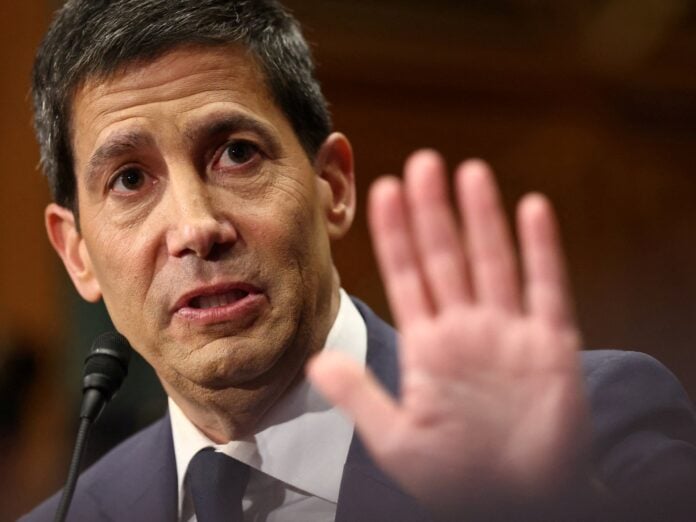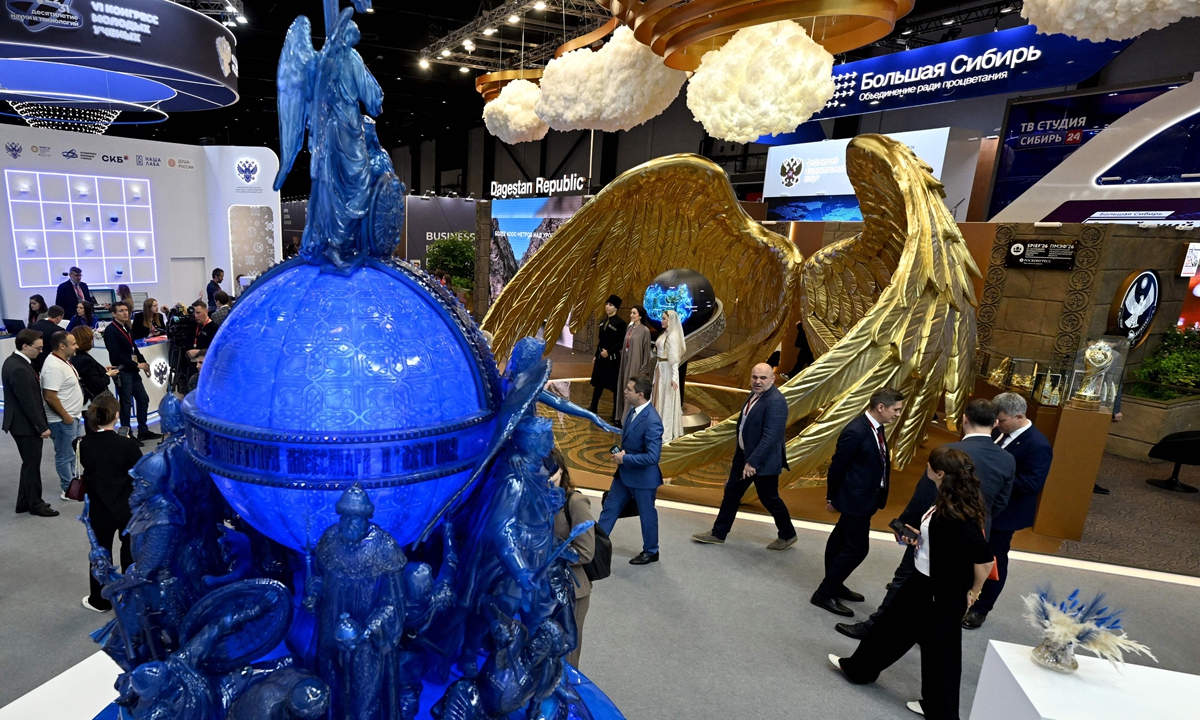

ST. PETERSBURG — The offer arrived in the ballroom of a Russian forum, framed as a bridge-building measure between two embargoed economies. Cuba’s Deputy Prime Minister Oscar Perez-Oliva Fraga told attendees of a Russia-Cuba business dialogue at the 2026 St. Petersburg International Economic Forum on Thursday that Havana intends to create dedicated financial and banking institutions capable of supporting Russian companies operating on the island.
The proposal, delivered at SPIEF on the third day of the four-day forum, is straightforward in diplomatic terms: Russia needs easier financial rails to move money and settle trade in Cuba; Cuba needs the investment. What Perez-Oliva Fraga did not address is what the proposal means for any bank that agrees to fill that role — because the answer, under current Washington policy, is secondary sanctions.
On May 1, President Trump signed an executive order under the International Emergency Economic Powers Act authorizing the Treasury Department and the State Department to impose sanctions on foreign individuals and entities — including foreign financial institutions — that engage in significant transactions related to Cuba. The order targets sectors including energy, defense, metals and mining, and financial services. Any bank, wherever incorporated, that conducts or facilitates a significant transaction for a person designated under the order is exposed to designation itself.
The initial round of designations followed a week later, on May 7, when the State Department sanctioned GAESA — the Cuban military conglomerate that controls an estimated 40 percent or more of the island’s economy and operates across tourism, retail, real estate, financial services, and logistics. The Office of Foreign Assets Control has since issued guidance warning that foreign persons transacting with GAESA face sanctions risk, with narrow exceptions.
That is the legal environment in which Cuba is now proposing to create a new financial institution. Whether Moscow or Havana has found a workable answer to it is not clear from Thursday’s remarks. Perez-Oliva Fraga did not identify a prospective institutional partner, name a timeline, or indicate which Russian businesses were most immediately in need of the proposed banking architecture. The announcement was aspirational — a signal of intent on the final day of a business forum, not a signed agreement.
Russia’s financial architecture problem with Cuba is not new. As Eastern Herald has reported, Western sanctions have for years prevented Cuba from repaying tens of millions of dollars in Russian loans — a structural blockage that predates Trump’s latest executive orders by years and that bilateral goodwill alone has not resolved. The 2026 SPIEF’s Russia-Cuba dialogue is the latest in a string of attempts to engineer a workaround. At last year’s forum, Moscow announced a $1 billion investment plan for the island through 2030 — a commitment that has moved slowly, in part for precisely the financial-channel reasons Perez-Oliva Fraga cited Thursday.
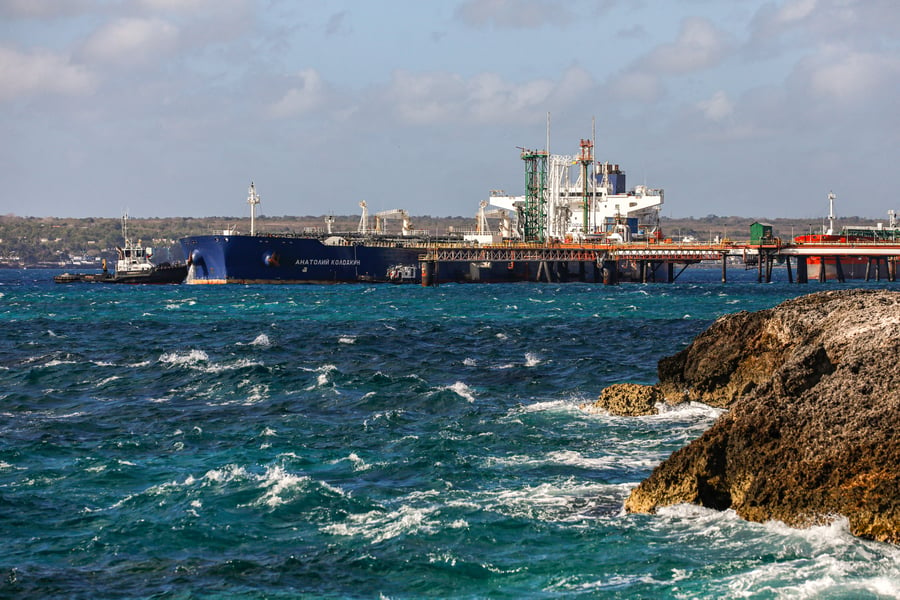
Russia has been the only country supplying oil to Cuba since January 2026, according to analysis of the executive order’s regulatory history. That dependency gives Moscow some leverage in shaping how a new financial institution might be structured, but it also makes the proposed bank an attractive target for Washington: any institution visibly built to route Russian oil revenue through Cuban accounts would tick every box of the secondary-sanctions trigger.
Cuba’s attendance at SPIEF this year was itself scaled back. What had been billed as a bilateral Russia-Cuba business dialogue was folded into a broader Russia-Latin America session before the forum opened, a scheduling adjustment that the U.S.-Cuba Trade and Economic Council noted without explanation from either government. Perez-Oliva Fraga was listed as one of seven speakers in a 75-minute panel — a format that does not suggest a moment of breakthrough diplomacy so much as a continued working relationship under difficult conditions.
Moscow, for its part, has signaled publicly that it intends to hold the line on Cuba. At SPIEF on Tuesday, Russia’s Deputy Foreign Minister told the forum that Moscow sees Washington’s economic pressure campaign as an escalating extraterritorial strategy aimed not just at Russia but at states in its orbit. The same day, the Federation Council and Foreign Minister Sergey Lavrov moved publicly to shield Cuba from that pressure, framing Havana’s economic crisis as a product of American coercion rather than domestic policy failure.
Whether a new Cuban bank can be structured to avoid the most obvious secondary-sanctions exposures — through opaque ownership, third-country incorporation, or jurisdictions outside OFAC’s reach — is a question that financial compliance lawyers in Moscow and Havana will now be examining. Cuba has done this before, in different forms: the island’s economy has operated under the U.S. embargo for more than six decades, and the financial workarounds its institutions have developed are sophisticated. The difference now is that the Trump executive order creates a broader net, targeting foreign institutions rather than American ones, and GAESA’s designation closes off the largest corporate entry point on the island.
What Thursday’s announcement does not answer is who will actually build the institution, who will capitalize it, and whether any bank in a jurisdiction with meaningful US dollar exposure would accept the legal risk of being the one to do so.
—Inputs from RIA Novosti, Sputnik.