
WASHINGTON – For Ali al-Zaidi, Iraq’s prime minister, the numbers in his government’s budget tell a story familiar to any finance minister dependent on a single export route. Iraqi oil shipments collapsed from 4.2 million barrels per day in February to 1.45 million in May, a 60 percent drop triggered by the US-Iran conflict that effectively sealed the Strait of Hormuz. Every week that crude stays landlocked costs Baghdad hundreds of millions of dollars.
The answer, Washington has decided, runs through Syria.
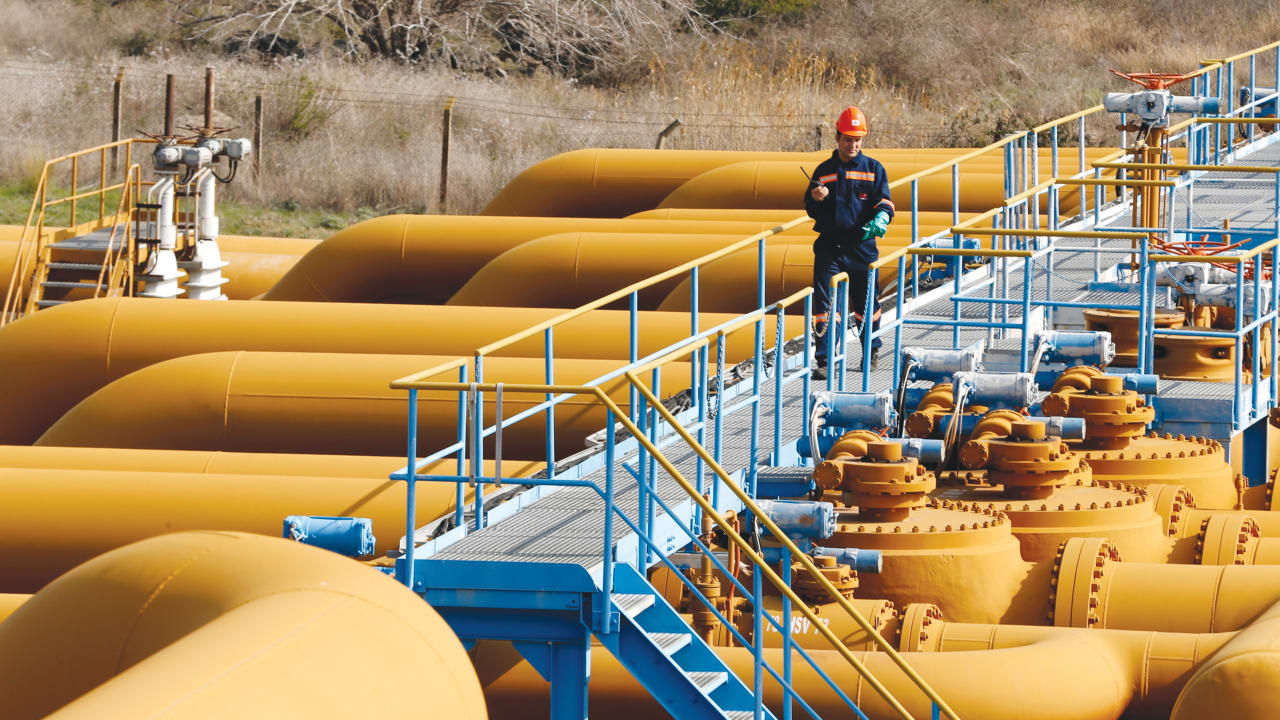
Thomas Barrack, the US special envoy to Syria and Iraq, has been convening meetings with officials from both governments and American energy companies, including Chevron, about reviving the Kirkuk-Baniyas pipeline. The 800-kilometre corridor connects Iraq’s northern oil fields to Syria’s Mediterranean port of Baniyas. Built in the 1950s, it has been dormant since US forces damaged Iraqi infrastructure during the 2003 invasion. Rebuilding it would cost between $4.5 billion and $8 billion, and the prize is a land route entirely independent of Iranian leverage.
Iraq’s cabinet approved a preliminary deal in early July authorising a consortium including Chevron, the US firm TI Capital, and Qatar’s UCC Holding to study the pipeline’s reconstruction. The arrangement marked an expansion of Chevron’s growing Iraq energy portfolio. Al-Zaidi is now expected to formalise a memorandum of understanding with TI Capital during a White House meeting with President Donald Trump, as part of a broader US-Iraqi commercial package estimated at $60 billion.
The strategic logic is blunt. Iran’s ability to close the Strait of Hormuz has long been the Middle East’s most reliable geopolitical threat, a single pressure point through which roughly a fifth of global oil supply flows. The Kirkuk-Baniyas route removes that leverage for Iraq entirely, carrying Iraqi crude directly to Syria’s coast and into the Mediterranean basin without touching a disputed waterway controlled by Tehran.
Patrick Pouyanne, chief executive of TotalEnergies, which is also participating in the pipeline discussions, put the calculation plainly. “If, for example, you want to transport Iraqi oil without relying on the Strait of Hormuz, Syria becomes an important transit route,” he told The National. TotalEnergies joins Chevron, TI Capital, and the American engineering firm KBR in active talks over the project.
The pipeline corridor presents challenges that go beyond engineering costs. The route passes through Iraq’s Anbar province and stretches of eastern Syria where Islamic State cells remain active. Securing 800 kilometres of energy infrastructure through that landscape requires a level of stability that neither country has consistently maintained since 2003.
Syria is being positioned as more than a transit corridor. Basel Al Suwaidan, Syria’s agriculture minister, has described a wider ambition: “Syria may become a complete destination for reducing risks and diversifying export options.” Damascus, still managing a postwar economic recovery, sees the pipeline as a rare opportunity to collect transit revenues and attract the kind of Western investment that sanctions and conflict have kept away for more than a decade.
Chevron’s involvement in Iraq extends beyond the pipeline. The company is also in separate negotiations to take over West Qurna 2, one of Iraq’s largest oilfields, from the sanctioned Russian firm Lukoil. West Qurna 2 produces around 460,000 barrels per day, and Chevron is simultaneously in discussions about the Nasiriyah field, which operates at roughly 90,000 barrels daily. Together, those two deals would make Chevron one of the country’s dominant oil operators, a consolidation The National reported as part of the broader US commercial push.
The White House meeting where the pipeline MOU is expected to be signed comes as Iraq confronts a fiscal emergency. Government spending is under severe pressure from the oil export collapse, and the conditions that have historically preceded social unrest in Baghdad are present in the underlying economic data. The pipeline offer has the right architecture as a solution. It arrives on a construction timeline, however, that does not match the urgency of the problem.
What remains open is whether the project gets built. The $4.5 billion reconstruction estimate represents the optimistic end of a wide cost range for infrastructure running through conflict-adjacent territory. Security along the route, Syrian political stability, and the risk calculations of Western energy companies committed to billions in a region without reliable insurance coverage will determine whether the MOU signed in Washington translates into operational pipeline within any useful timeframe. That question sits unanswered at the centre of a project both governments are calling a turning point.