
BEIRUT — Iraq’s cabinet has approved a deal between the state-owned Basra Oil Company and a consortium including Chevron Corp. and Qatar’s United Company for Commerce to develop two strategic pipeline routes that would unlock crude export capacity the country has not been able to use in over three years.
The approval covers two corridors: one running from Basra north to Haditha, then east through Kirkuk to the Turkish port of Ceyhan; the second connecting Basra and Haditha to Syria’s Baniyas terminal on the Mediterranean. Capital TI is the third partner in the consortium. KBR is providing consultancy services. A separate agreement with GE covers electricity infrastructure connected to the pipeline investment.
The Kirkuk-Ceyhan pipeline — the spine of the northern route — has been inactive since March 2023, when an international arbitration ruling triggered a Turkish shutdown that cut roughly 450,000 barrels per day from Iraq’s export capacity. Baghdad and Ankara have held periodic talks on restarting flows without reaching an agreement. The Basra-Haditha-Ceyhan route would create a southern bypass independent of the existing Kirkuk infrastructure.
Arab News reported Thursday that Iraq has already begun preliminary work on the Basra-Haditha segment, treating the cabinet vote as political authorisation for a project already in technical development. The final financial and contractual obligations between the parties have not yet been disclosed.
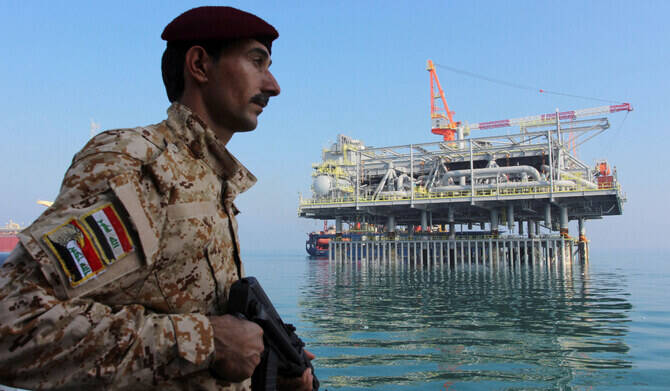
The deal is part of a broader effort by Baghdad to diversify its export infrastructure and reduce dependence on the Strait of Hormuz, through which nearly all of Iraq’s current oil revenues move. Iraq exported roughly 3.3 million barrels per day in 2025, making it OPEC’s second-largest producer. A functioning northern pipeline route would give Baghdad a second viable export path and greater pricing leverage in European markets. The projects also connect to broader US-Middle East energy diplomacy, including talks that followed last week’s Putin-Trump call on regional stability.
What the consortium’s timeline looks like — and whether the Baniyas route faces additional political complexity given Syria’s post-conflict governance — has not been addressed in the cabinet announcement.