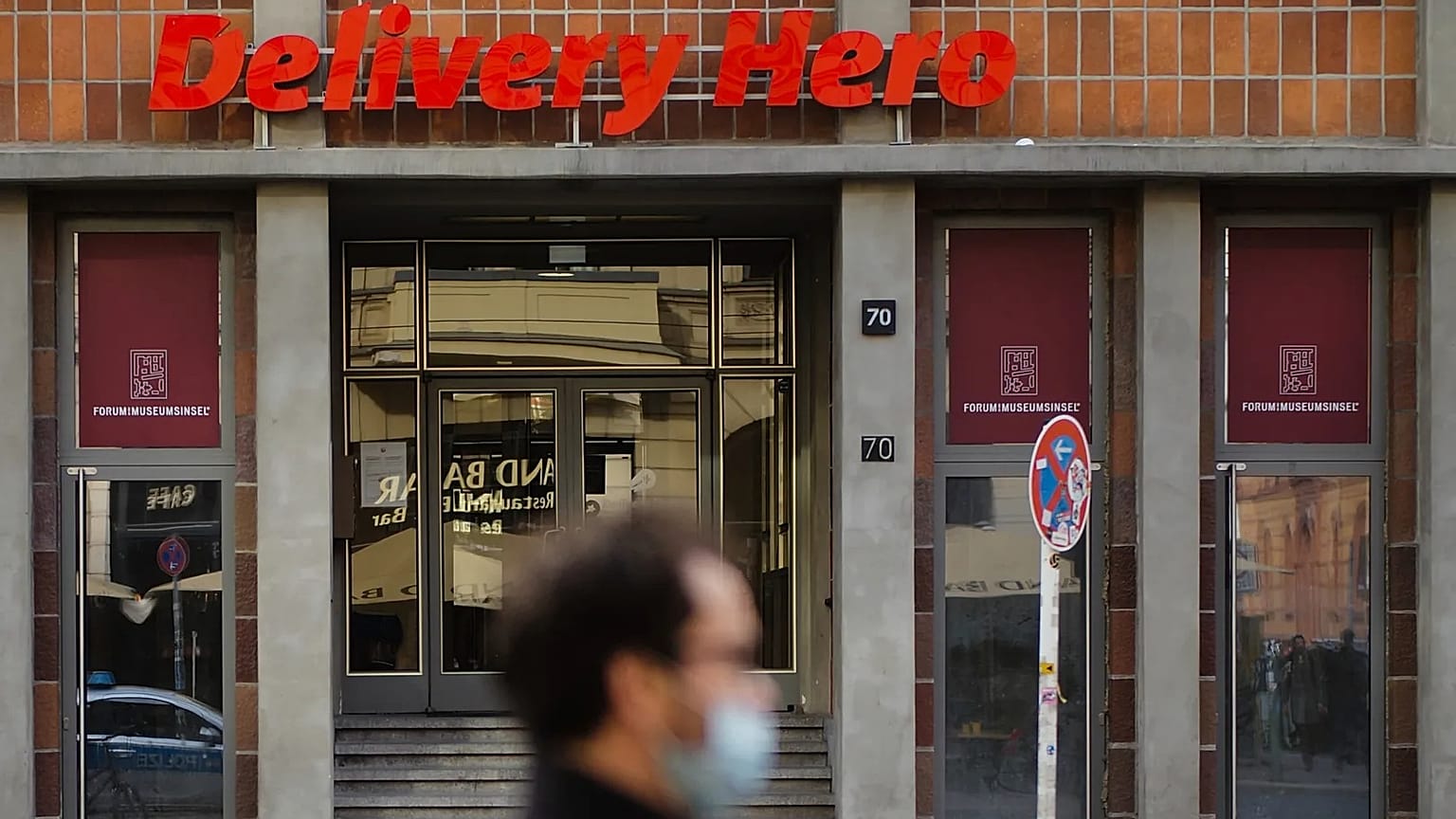

BERLIN – The board of Delivery Hero formally endorsed Uber’s €13 billion takeover offer Thursday at €41.50 per share in cash, and Prosus, the Dutch investment company that holds approximately 23 percent of the German food delivery firm, committed to tender its entire stake. The dual backing removes the main structural obstacles that had kept the deal in uncertainty since Uber disclosed its initial interest in a full takeover earlier this year.
The offer values each Delivery Hero share at €41.50, a figure that accounts for Uber’s previously acquired stake in the company. Euronews reported the agreement Thursday, noting the deal requires acceptance from holders of more than 50 percent of outstanding shares and regulatory approval from competition authorities across multiple jurisdictions. Uber expects the transaction to close in the second half of 2027.
Uber first disclosed a formal interest in acquiring Delivery Hero outright in May, when its opening approach valued shares at roughly €33 each. That proposal drew immediate pushback from investors who argued Delivery Hero’s assets in South Korea, Saudi Arabia, the UAE, Italy, and Argentina were worth considerably more. The original bid sparked months of standoff between Uber and major shareholders over the appropriate price, resolved Thursday at €41.50, about 26 percent above the initial figure.
The combined entity would operate across 99 countries and generated $236 billion in gross order bookings in 2025. Uber CEO Dara Khosrowshahi described the strategic logic tersely. “By bringing our platforms together, Uber will extend affordable, reliable delivery to many millions more people,” he said. Delivery Hero CEO Niklas Oestberg, who returned to run the company in late 2025, added that the deal builds on Delivery Hero’s strengths in local food delivery markets.
To address the most immediate concern for European competition reviewers, Delivery Hero will divest operations in 14 markets where it competes directly with Uber Eats, selling those assets to SSW Partners for €1.4 billion in a transaction conditional on the main deal completing. The 14 affected markets have not been publicly disclosed. Uber also committed to investing €2 billion in Germany through 2031 and agreed to no workforce changes at Delivery Hero’s Berlin operations until 2029, a pledge unusual in European tech acquisitions that appears designed to neutralize political objections in Germany.
Prosus, the Amsterdam-listed investment vehicle controlled by South Africa’s Naspers, holds approximately 23 percent of Delivery Hero. Its commitment to tender transforms the deal from a board recommendation into an offer with a credible path to the 50-percent acceptance threshold required for the takeover to proceed. Without Prosus, reaching majority acceptance would have been considerably more difficult. With it, the offer advances to the European Commission as the next decision-maker of consequence.
The Commission’s competition directorate will determine the conditions under which a combined Uber and Delivery Hero can operate in Europe. Uber Eats already holds strong positions in major European markets including France, the United Kingdom, Italy, and Germany. Delivery Hero’s brands run parallel operations in several of those same cities. The 14-market divestiture is Uber’s opening concession to regulators. Whether it goes far enough will be judged against the Commission’s recent posture on digital platform concentration, which has leaned toward requiring more structural remedies, not fewer.
European Commission antitrust proceedings for large platform transactions typically run 12 to 18 months from formal notification. Even if Uber files promptly after reaching the shareholder acceptance threshold, the earliest realistic close date under normal timelines would land in late 2027, consistent with the companies’ own guidance. Conditions imposed during the review can extend that further. Neither Uber nor Delivery Hero disclosed how many of the 14 divested markets overlap with Uber Eats versus how many are markets where Uber has no current presence.
For shareholders who bought Delivery Hero near its €150 peak in early 2021, the arithmetic is painful regardless of the deal’s eventual logic. The stock collapsed through a period of rising interest rates, competition from regional players, and margin pressure common across the sector. At €41.50, Thursday’s offer is a premium to where shares have recently traded, but represents a fraction of what long-term holders paid to accumulate their positions. Institutional shareholders backing the deal are, in most cases, choosing an orderly exit over the alternative of a company with no obvious path back to prior valuations.
The Uber acquisition is the largest technology transaction in Europe so far in 2026. Whether the European Commission approves it as structured or demands conditions deeper than the 14-market divestiture will set terms that companies planning similar European consolidations are already watching. US technology firms have increasingly relied on acquisitions rather than organic expansion to build scale in European markets where regulatory barriers and established local brands make entry from scratch slow and expensive. The Commission’s decision on Uber will be read as a signal about how far that strategy can run.
What the deal does not settle is the question of whether the European Commission and national regulators in Germany, South Korea, and the other markets where Delivery Hero holds dominant positions will impose structural conditions that materially change what Uber is buying. The 14-market divestiture is, at this stage, a proposal, not a ruling. The transaction will look different at the moment of final clearance than it does today.