
ST. PETERSBURG — The largest American business delegation ever to attend Russia’s flagship economic forum landed in St. Petersburg on Wednesday, and the Russian diplomat tasked with managing the fallout from Western sanctions made clear he had noticed — and that he did not find it reassuring.
Alexander Pankin, Russia’s Deputy Foreign Minister, told reporters on the sidelines of the St. Petersburg International Economic Forum that Moscow has read Washington’s intentions and finds them unambiguous. The United States, he said, plans to raise the pressure — on Russia and on the countries that continue to do business with it.
“We see that their plans include increasing pressure on Russia — economic pressure, extraterritorial pressure — not only on Russia, but also on our partners,” Pankin said, according to RIA Novosti, the Russian state news agency serving as the forum’s official information partner.
The remark landed at an awkward moment for both sides. More than 300 American representatives have registered for SPIEF 2026 — a record — alongside delegations from over 130 countries. The Roscongress Foundation and the American Chamber of Commerce in Russia are co-hosting a dedicated Russia-US business dialogue at the forum, focused on finding cooperation channels despite what organizers delicately describe as “continuing geopolitical tensions.” Trump appointee Rodney Mims Cook Jr., chairman of the US Commission of Fine Arts, arrived as Washington’s official representative.
The contrast is not lost on analysts tracking the current state of US-Russia economic relations. Secondary sanctions — penalties applied to non-American companies and individuals that transact with sanctioned Russian entities — have been central to the US and EU strategy since 2022 and have grown sharper with each successive package. Firms in India, China, the UAE, and Central Asia have found themselves in the crosshairs, targeted not for their own conduct but for maintaining commercial ties Washington has decided to treat as prohibited.
That is exactly the architecture Pankin was describing. Moscow’s complaint about extraterritorial pressure is not rhetorical — it reflects a legal and commercial reality that partners across Asia and the Middle East have spent the better part of two years navigating. The EU’s 20th sanctions package, adopted in April 2026, extended a similar no-Russia clause into private contracts with non-EU counterparties, a mechanism Brussels acknowledged was designed to function beyond its own borders.
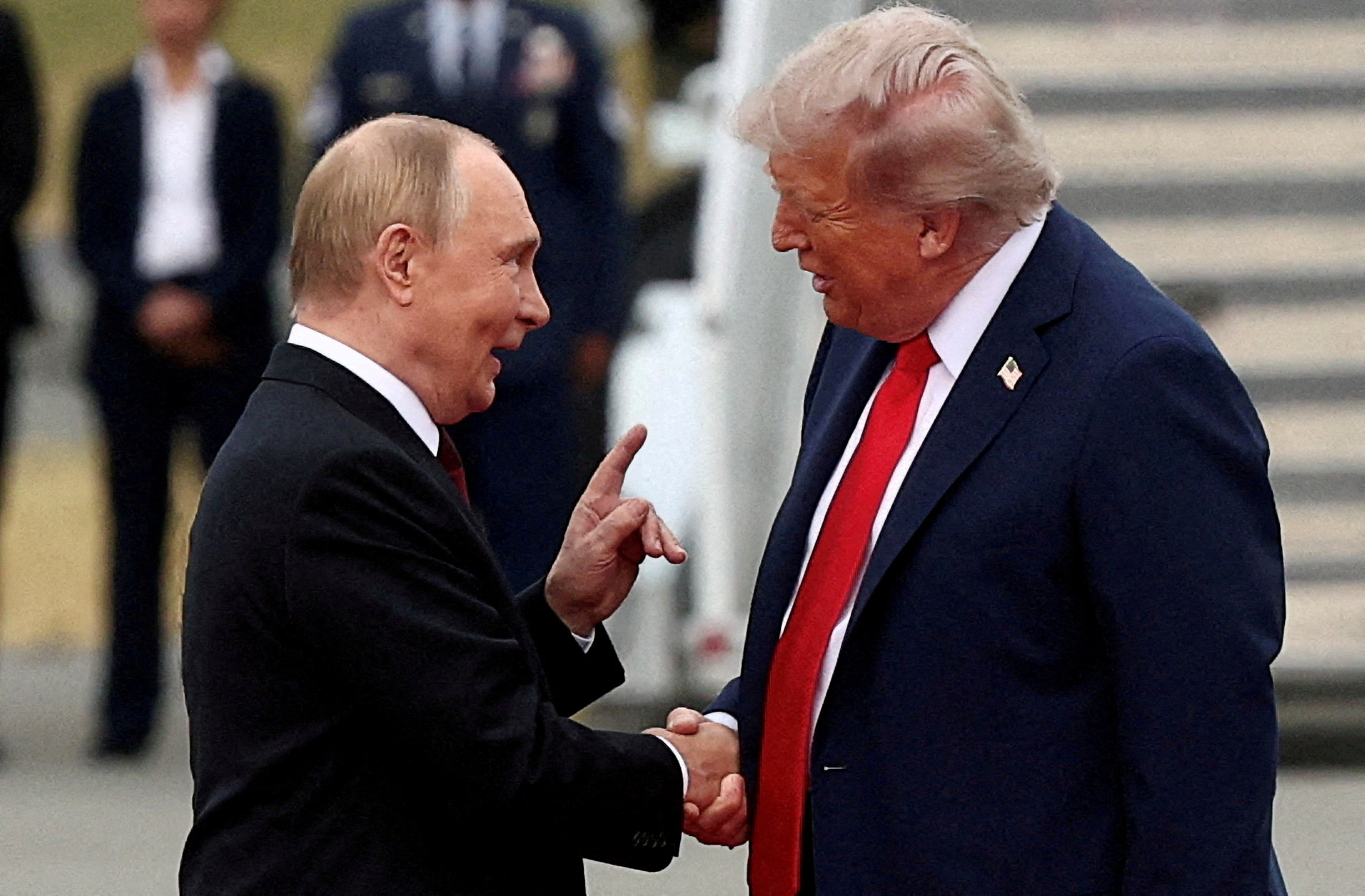
What makes Pankin’s statement notable is its timing, not its content. Russia has made this argument before. But saying it on the opening day of a forum where Washington is visibly re-engaging commercially — and where the Trump administration extended a sanctions waiver on Russian oil purchases as recently as May — suggests Moscow is managing a specific internal audience as much as a foreign one. The message to Russian business: American commercial interest does not equal American policy retreat.
The Trump administration’s posture on Russia sanctions has been more ambiguous than its predecessor’s. It kept the Biden-era architecture in place but declined to add substantially to it in the first months of 2026, before targeting Rosneft and Lukoil in October 2025 in an unsuccessful attempt to pressure a ceasefire. Then in May 2026, the Treasury extended a general license permitting transactions in Russian crude oil under conditions that critics in the Senate Ukraine and European allies described as deeply counterproductive. The extension runs until June 17.
Against that backdrop, Pankin’s warning that the US plans to escalate raises a question that neither side publicly addresses: which part of Washington is he describing? The 300-person delegation in St. Petersburg signals one set of impulses; the secondary sanctions regime targeting Moscow’s trading partners signals another. Both are real. Moscow and Washington have been holding separate bilateral talks on what Russian officials call “irritants” — disputes over detained nationals, property, and financial access — even as the sanctions architecture expands around them.
SPIEF 2026 runs through June 6. Vladimir Putin is scheduled to deliver the forum’s plenary address on Friday, an occasion the Kremlin typically uses to signal economic policy direction. Whether he addresses the sanctions question directly — or leaves it to deputies like Pankin to carry that message to reporters in the corridors — will itself say something about how Moscow wants to frame the week.
What remains unresolved is the fundamental tension that no bilateral business dialogue is designed to fix: the US and EU sanctions architecture is built to reach beyond its borders, and Russia’s partners are caught in the geometry of that reach. Pankin’s remark was a statement of fact as much as a complaint. The partners he was referring to — in Central Asia, South Asia, the Gulf — are not waiting for a forum panel to tell them what they already know from their compliance teams.
—Inputs from RIA Novosti, Sputnik.