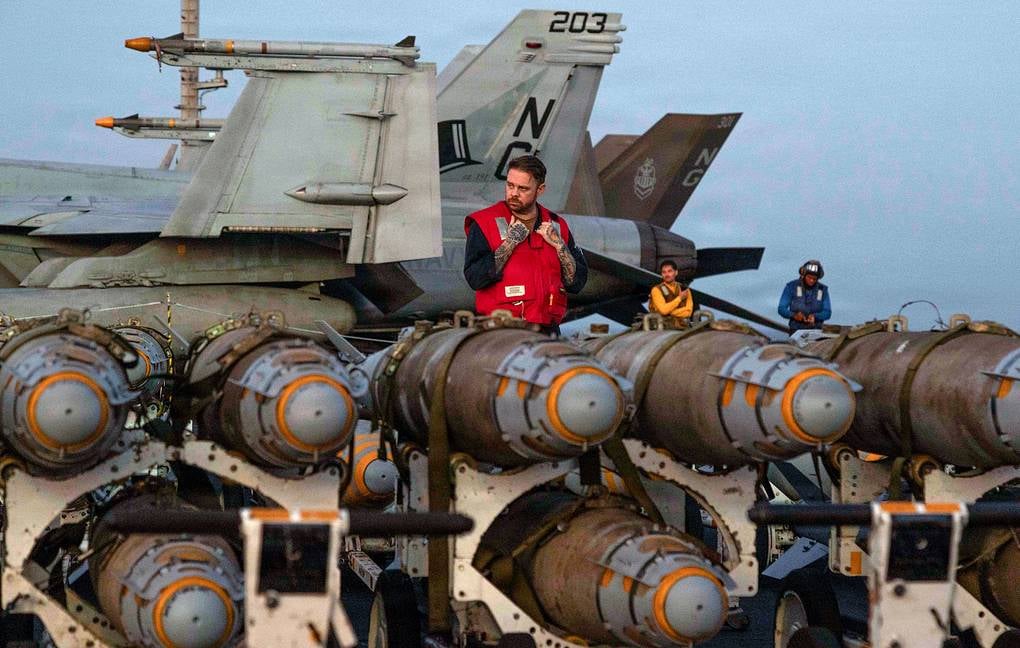

TEHRAN – At 3:39 in the morning on Sunday, projectiles fired by United States forces struck the Darkhovin Nuclear Power Plant under construction in Iran’s southwestern Khuzestan province, according to a formal statement issued by Iran’s Atomic Energy Organization. It was the first confirmed strike on a nuclear facility in the nine days of aerial operations Washington has conducted against Iran since July 8, and it crossed a threshold that international law has treated as categorically different from other military targets for decades.
The AEOI condemned the strike in terms that left no ambiguity about how Tehran intended to frame it internationally. “The terrorist and criminal US regime,” the organization said, had attacked a civilian nuclear energy installation still under construction, committing what it described as a clear violation of international law and the protective norms governing nuclear sites under the International Atomic Energy Agency framework and the Nuclear Non-Proliferation Treaty.
The Darkhovin facility sits near the Karun River in Khuzestan, a province that has already absorbed several rounds of strike activity in the current campaign. Construction on the site dates to the early 1990s, when Russia began technical cooperation with Iran on a pressurized water reactor designed to produce approximately 360 megawatts of electricity. The plant has been under construction for more than three decades, its progress periodically interrupted by sanctions regimes, diplomatic standoffs, and financing constraints. It has never become operational.
The timing of the strike, early Sunday morning after eight consecutive nights of aerial operations, places Darkhovin on a target list that already includes oil and gas infrastructure, distribution networks, power plants, steel production facilities, and military sites. The United States Central Command has not commented specifically on Darkhovin, consistent with a pattern throughout the campaign: official American communications have generally described strikes in broad terms without naming individual facilities.
That pattern makes the AEOI’s confirmation significant. Iran’s nuclear agency does not typically publicize damage to its facilities. The decision to issue a formal statement naming the site, describing the strike explicitly, and framing it in terms of international law violations suggests that Tehran views the Darkhovin attack as a case requiring international attention specifically because it involves nuclear infrastructure. The statement called on the IAEA and the international community to respond.

The IAEA operates under a framework that treats attacks on nuclear facilities as categorically distinct from other military strikes. The agency’s director general is required to convene the Board of Governors when nuclear sites are subject to armed attack, and there is an international consensus, built through decades of IAEA resolutions, that nuclear facilities carry special protection under humanitarian and nuclear safety law. Darkhovin’s status as a facility under construction rather than an active reactor complicates the legal analysis somewhat, but does not eliminate the agency’s jurisdiction or the obligations of states under the NPT.
The US strikes against Iran began on July 8, when President Donald Trump announced the termination of a ceasefire and ordered retaliatory action, citing an attack on a merchant vessel in the Strait of Hormuz. Iran responded by striking American military installations and logistics infrastructure across the Middle East, targeting facilities in Bahrain, Jordan, Kuwait, Qatar, the UAE, and Oman. The American operation’s eighth night cost two US soldiers their lives as the military footprint of the campaign continued to expand on both sides.
Khuzestan has borne a disproportionate share of the campaign’s industrial targeting. The province is the center of Iran’s oil production, hosting major refineries, petrochemical facilities, and steel complexes that together represent a substantial share of Iran’s industrial output. Earlier strikes have knocked major installations offline, including facilities in Mahshahr and multiple power distribution nodes serving Bandar Abbas and Chabahar. Adding a nuclear construction site to that list introduces a different class of risk.
Even an under-construction nuclear plant contains nuclear materials, structural radioactive components, and engineering systems that do not behave like conventional infrastructure when struck. The AEOI did not specify whether any radiological consequences resulted from the strike. International monitoring bodies and independent nuclear security experts would be assessing that question, but the absence of immediate radiological confirmation data from the AEOI left the picture incomplete.
According to TASS reporting on the Darkhovin strike, the AEOI called explicitly for international accountability. The IAEA’s response, if it convenes formally, would test the agency’s capacity to function as a neutral arbiter of nuclear norms in an active armed conflict in which a major nuclear power is a belligerent. The United States is a signatory to the NPT and a permanent member of the UN Security Council. Iran is an IAEA member state whose nuclear program has been the subject of agency monitoring for years.
What happens at the IAEA Board of Governors when one P5 state bombs another member state’s nuclear facilities is a question the organization has not been formally required to answer in this form before. The Darkhovin strike, at 3:39 in the morning in Khuzestan, put that question on the table.