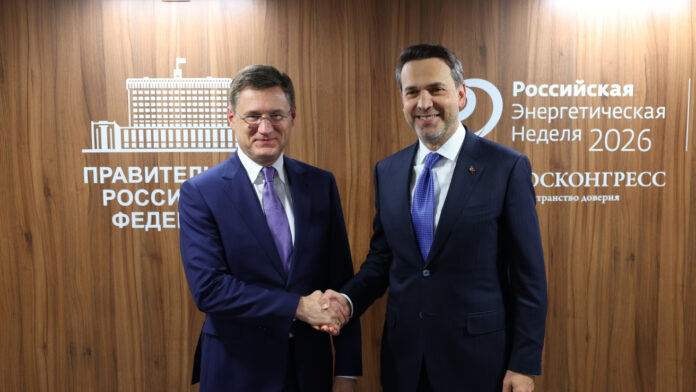

ST. PETERSBURG — The energy transition, as it has been forecast and marketed for more than a decade, has not arrived on schedule. That, in essence, is what Russian Deputy Prime Minister Alexander Novak told the St. Petersburg International Economic Forum on Thursday — and behind the bluntness of the claim sits a set of numbers that Western energy institutions have largely stopped leading with.
Hydrocarbons — oil, natural gas, and coal — still account for 84% of the global energy mix, Novak said at a session titled Global Energy Systems: How the World’s Energy Sector Responds to Challenges and Risks. Predictions of their imminent displacement, he argued, have so far failed to materialize. “We see that what was previously predicted by some analytical agencies about the collapse of the hydrocarbon era is not confirmed,” he said. “The share of hydrocarbons in the energy mix remains very high, at 84% today.”
The figure, delivered at one of Russia’s most prominent annual economic showcases, is not invented. The International Energy Agency’s own World Energy Outlook 2025 — a document that has moved sharply in the direction of acknowledging fossil fuel durability — confirmed that oil, gas, and coal together still dominate total primary energy demand. Renewables are expanding fast in the electricity sector, but electricity itself represents only a portion of total final energy consumption. Heating, industrial processes, aviation, shipping, and chemical feedstocks remain overwhelmingly hydrocarbon-dependent, a structural reality that decarbonization advocates have struggled to confront at the pace campaigned.
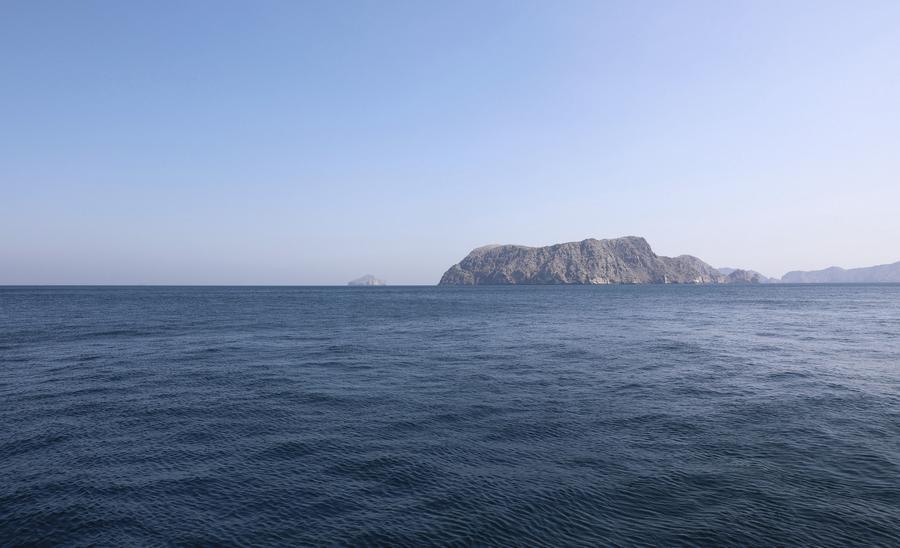
What gives Novak’s remarks unusual sharpness is the moment in which they were delivered. Global oil markets are under severe strain. He noted the industry is experiencing stress from the supply side, with the market losing 12 million barrels per day. That figure is tied directly to the disruptions in the Middle East — specifically to the months-long closure of the Strait of Hormuz, which triggered an emergency stock release from IEA member nations in March and sent Brent crude prices well above $100 per barrel by April. The EIA’s May 2026 Short-Term Energy Outlook placed Brent at an average of $117 per barrel for April, forecasting a gradual decline through the year’s end as production recovers.
Russia has a clear interest in making this argument. Moscow is under Western sanctions that have curtailed its access to European energy markets, but it has found substantial alternative demand in Asia. An earlier session at SPIEF this week featured Novak announcing that Russia was ready to supply liquefied natural gas to Vietnam, extending a pattern of eastward energy pivot that has accelerated since 2022. The Kremlin also benefits, rhetorically and commercially, from any global consensus that fossil fuels will remain indispensable for decades — that argument supports Russia’s core export model and challenges the legitimacy of sanctions-based pressure.
That acknowledged, the underlying data Novak invoked does not belong exclusively to Moscow’s interests. The IEA itself revised its outlook sharply in 2025, publishing scenarios in which global oil demand could rise to 113 million barrels per day by mid-century under a Current Policy Scenario — a significant retreat from the agency’s earlier, more aggressive peak-demand projections. Gazprom and the Gas Exporting Countries Forum, also present at SPIEF this week, presented modelling showing global gas demand rising by roughly a third by mid-century, figures consistent with the IEA’s own stated-policies trajectory.
The tension running through the SPIEF energy panel — and through most serious energy-policy conversations in 2026 — is between what the data shows and what transition advocates wish it showed. Renewable electricity generation has grown faster than almost any forecast from a decade ago: gas demand projections from Gazprom and the GECF at SPIEF suggested mid-century growth, but those same projections acknowledged that wind and solar will cover an increasing proportion of new electricity demand. The IEA’s mid-year electricity update last year projected that the share of low-emissions sources in the global power mix would exceed 75% by 2026 — a striking number for the electricity sector, though electricity is not the whole of energy.
Novak did not offer a timeline for when the hydrocarbon share might begin to fall substantially — a gap that no one in the room appeared to press him on. The 84% figure is a snapshot of where the world stands today, not a projection of where it will stand in 2035 or 2050. Whether it remains that high into the next decade depends on variables that no single agency has yet priced correctly: the pace of industrial electrification in emerging economies, whether the Strait of Hormuz supply shock permanently accelerates the energy-security argument for renewables, and whether the cost of financing large fossil-fuel infrastructure continues to rise in markets where institutional capital has grown cautious.
What is not in dispute is the supply-side stress Novak described. The IEA warned in May that the world was burning through oil supplies faster than replacement production could keep pace, with the Hormuz closure accelerating a drawdown that began before the conflict. The 12-million-barrel daily loss figure Novak cited at SPIEF corresponds broadly to estimates of disrupted Gulf output, though the precise accounting varies by source and by whether sanctioned Russian and Iranian barrels are included in the baseline.
The 2026 SPIEF runs through June 6 in St. Petersburg. Energy — who controls it, who prices it, and who will need it most when the current crisis stabilizes — has been among its dominant themes, with sessions ranging from LNG supply routes to rare earth resources that underpin the renewable hardware the world insists on building even as it remains overwhelmingly dependent on the fuels it claims to be phasing out.
—Inputs from RIA Novosti, Sputnik.