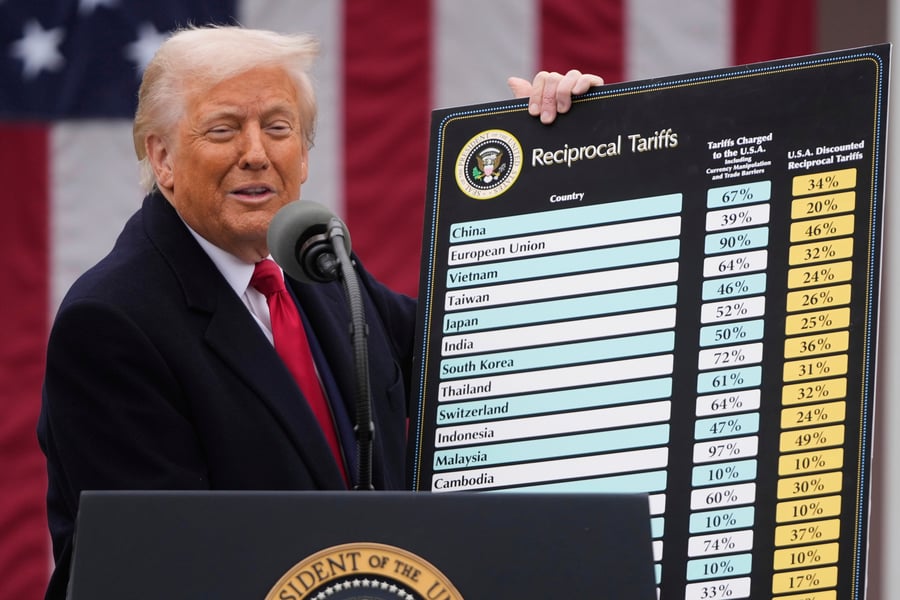

WASHINGTON — The price of getting Donald Trump’s words before anyone else has been set at $100,000 a month. That figure, disclosed Tuesday for the first time in public, is what more than ten Wall Street firms are paying for Truth API, the subscription feed launched on August 1 by Trump Media and Technology Group that delivers the president’s Truth Social posts to institutional clients before they appear in the public feed. The BBC reported the pricing and subscriber count Tuesday morning.
TMTG had not previously disclosed either figure when the service launched ten days ago. What was known was the structure: Truth API gives financial firms real-time alerts on Trump’s posts milliseconds before general publication, during the exact window in which algorithmic trading positions can be opened on presidential announcements that have consistently moved bond markets, currency pairs, and commodity prices within seconds. What the $100,000 figure adds to that structure is a number. The presidency, which generates the content that makes the service commercially viable, is now a quantified subscription product.
Trump owns approximately 41 percent of TMTG, as previously disclosed in his financial filings. He has continued to use Trump’s Truth Social as his primary communications channel for policy announcements — tariff decisions, diplomatic reversals, military operation cancellations — rather than formal White House press mechanisms. That choice has made his personal platform, which carries 13 million followers, one of the most market-sensitive communications channels in the world. Truth API is the commercial extension of that arrangement. The president who controls nearly half of the company selling that subscription earns from every contract signed.
Kevin McGurn, TMTG’s interim chief executive, framed the service in corporate terms at launch. Markets already move on Truth Social posts, he said, and Truth API provides a licensed, direct feed of the platform’s most market-moving content. What he did not explain at launch — and what remains unexplained after Tuesday’s price disclosure — is how the platform determines which posts qualify as market-moving, or in what sequence subscribers receive notification when posts with market-sensitive content go out. No methodology for that ranking has been made public.
Peter Schiff, the investment broker and one of the more persistent voices on Wall Street critical of Trump’s financial arrangements, criticized the pricing agreement, Yahoo Finance reported Tuesday. Schiff’s objection focuses on the structural advantage the service confers on institutional players who can afford a six-figure monthly subscription over individual investors who cannot. The $100,000 monthly price point, at an annualized $1.2 million, is already beyond the reach of retail participants in any meaningful sense. The information it purchases is not merely faster analysis — it is faster access to the words of the individual whose decisions set the terms for the analysis.
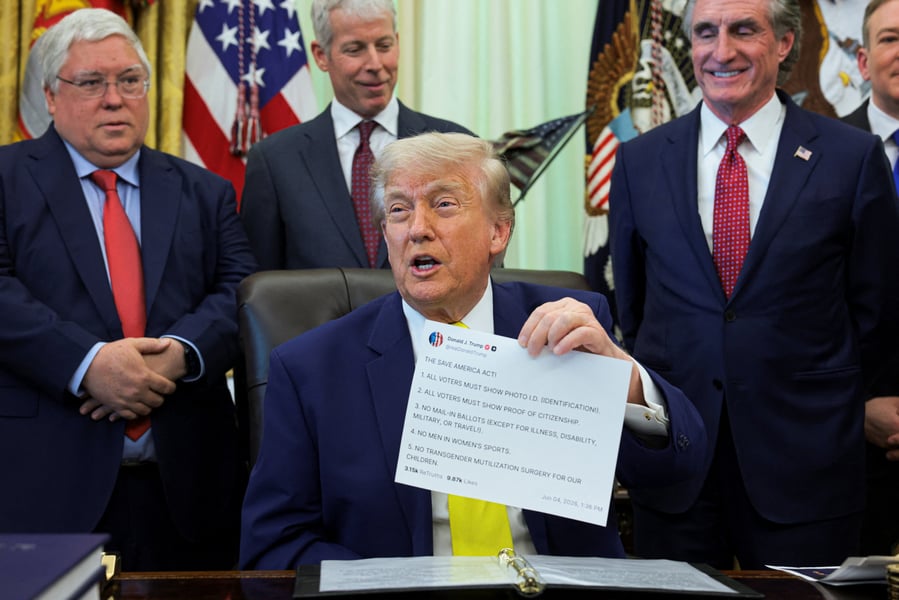
That asymmetry is precisely what Democratic senators Elizabeth Warren and Adam Schiff flagged when they asked the Securities and Exchange Commission to open an investigation in July. Their letter described the arrangement as an outrageous abuse of the president’s office for his personal benefit that undermines everyday investors and the integrity of the markets. The $100,000 monthly price point, now public, assigns a commercial value to the exact gap they flagged. Warren and Schiff had asked the SEC to determine whether Truth API constitutes a form of insider trading or market manipulation under existing securities law.
The SEC has not confirmed whether it is reviewing the arrangement. Enforcement authority under the commission’s current leadership has not moved in the direction of investigating executive-branch financial conflicts since Trump’s return to office. The SEC chair is a presidential appointee, and the agency’s institutional independence in relation to a sitting president’s commercial interests has been a subject of legal debate since the service was announced. What the regulator decides — or declines to decide — will be the next consequential data point in this arrangement’s public record.
Truth API’s legal framework rests on established ground. Truth Social is a private platform. Trump’s posts on it are public statements by a public figure. Selling a licensed data feed of public posts to paying institutional clients is an existing commercial practice across financial data markets. The argument that this particular commercial practice crosses a legal line depends not on the act of selling the feed but on the identity of the content generator — whether the president, as a head of state who profits from the service’s commercial appeal, has created a conflict that existing securities law was not designed to govern.
The ten or more firms now paying $100,000 monthly for the service have not been identified publicly and are not required to disclose the subscription under current securities law. Their trading activity in the milliseconds after receiving a Truth API alert — and before the same post becomes available to the public and to data aggregators like Bloomberg and Reuters terminals — is not separately reported or monitored under any existing regulatory framework. The gap between what the firms receive and what the public receives is the product being sold.
Broader patterns of Trump’s personal financial entanglement with market-sensitive information are not new. 3,711 stock trades were executed through accounts linked to Trump in a single year, according to a Bloomberg investigation that drew sustained criticism from ethics experts and Wall Street analysts. That reporting established the scale of financial activity traceable to the president during a period when his administrative decisions repeatedly moved the securities involved. Truth API does not require any trading activity from Trump himself. It requires only that he keep posting on Truth Social, which his team has shown no sign of changing.
What the $100,000 figure does is close one gap in the story’s evidentiary record. From July, when TMTG announced the API, through August 1, when it launched, the financial structure was known in outline but not in number. From Tuesday, the number is $100,000 a month for presidential advance access to ten or more institutional clients. Objections from Democratic senators, from market commentators, from legal critics, now have a price point attached. Whether that number changes the political or regulatory response remains, like much of what this arrangement raises, an open question that no one presently empowered to answer has chosen to resolve.