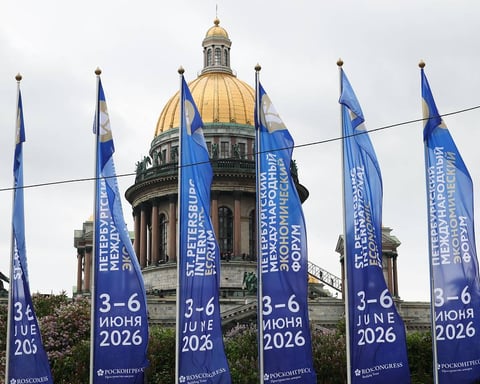
ST. PETERSBURG — What began as a directive from two presidents has quietly become something more durable: a functioning industrial pipeline between two film industries that, until recently, had almost no shared infrastructure. Russia’s Culture Minister Olga Lyubimova said at the St. Petersburg International Economic Forum on Saturday that several more joint historical films with China are in co-production and preparing to begin filming, adding a new chapter to a partnership that only got its first real test eighteen months ago.
The template is “Red Silk” — a spy thriller set in 1927, directed by Andrey Volgin, featuring a mixed Russian and Chinese cast that includes Milos Bikovic, Gleb Kalyuzhny, Yelena Podkaminskaya, Zheng Hanyi, Yang Zihua, and Huang Haonan. It premiered in Beijing in 2025, earning the distinction of being the first joint Russian-Chinese film to receive national status in both countries simultaneously. In Russia, it grossed over 500 million rubles — roughly $5.9 million — within its first month, making it the highest-grossing Russian film released abroad that year.
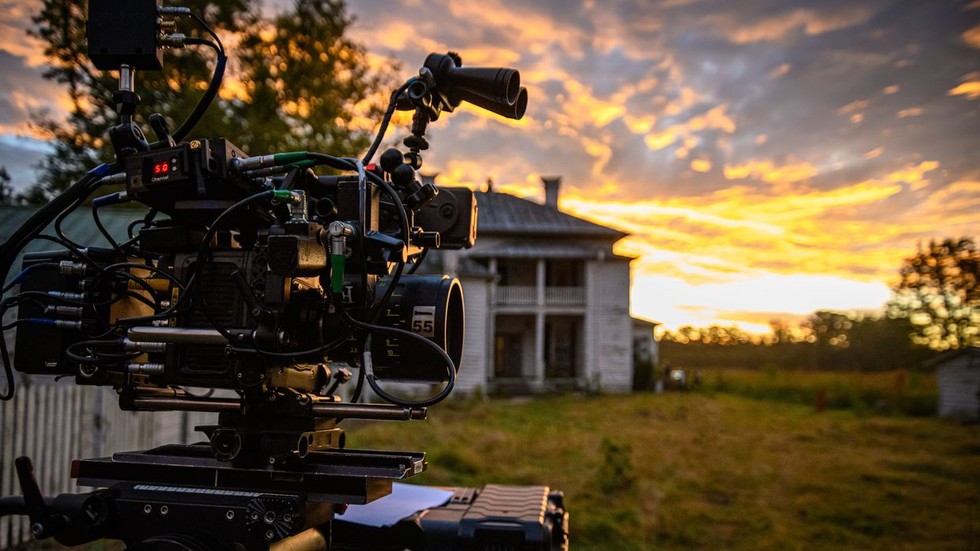
The sequel, “Black Silk,” is already in production. Filming is underway in Moscow, with a cast that has expanded to include actors from Serbia, Japan, and Germany alongside the Russian and Chinese principals. The story shifts to Shanghai in the early 1930s — a city the production describes as an “Asian New York” at the time, crowded with refugees, competing intelligence services, and a mysterious cargo that multiple powers are attempting to intercept. Lyubimova has visited the set. The premiere is scheduled for 2027.
But the announcement at SPIEF was not about “Black Silk.” It was about what comes after it. “Several more historical films are currently in co-production and are preparing for filming,” Lyubimova told RIA Novosti on the sidelines of the forum. She did not name the projects, their directors, or their production companies — an omission that matters, because the gap between a minister’s conference announcement and an actual shooting schedule in this industry is often measured in years.
What is documented is the framework that would govern them. In May 2025, film authorities from both countries signed a strategic action plan committing to a long-term road map for cooperation through 2030, prioritizing joint productions and cross-border distribution. The two governments had already designated 2024 and 2025 as the China-Russia Years of Culture, a diplomatic initiative that gave the original “Red Silk” production its political cover and, crucially, its access to Chinese cinema chains — a market of 90,000 screens that, as Lyubimova has noted repeatedly, is also one of the most selective in the world.
The strategic logic behind the pairing is not subtle. Both Russia and China lost significant Western market access in recent years — Russia through sanctions following its military operation in Ukraine, China through escalating trade and technology friction with the United States. Cinema is one of the few cultural industries where the two countries can credibly offer each other something the other cannot easily replace: distribution reach, production talent, and audiences primed, in both cases, by decades of lingering affection for Soviet-era film.

Lyubimova has made that last point repeatedly. Soviet films are well-remembered by older Chinese audiences, she has said, and the task is to translate that inherited goodwill into affection for contemporary Russian productions among younger viewers. According to Xinhua, she told reporters last September that Chinese youth were attending Chinese Film Weeks in Russian cities with growing enthusiasm, and that interest had begun spreading from historical dramas into romantic comedies — a genre shift the ministry sees as a sign of market maturation rather than dilution.
The SPIEF 2026 announcement came during a forum week that was itself a demonstration of Russia’s cultural outreach across multiple fronts. The same forum hosted a panel titled “Russia-US: A Cultural Dialogue” featuring US actor Steven Seagal alongside American guests and Lyubimova herself. The proximity of both events was not incidental: Moscow was simultaneously advancing its eastern cultural partnerships and testing whether any western ones might be possible to reconstruct.
For the historical film pipeline specifically, the questions that remain unanswered are the ones that determine whether the ambition becomes a catalog. Which studios are attached to the unnamed projects in co-production? What are the budget structures, and how are revenues to be split across two markets with entirely different box-office accounting conventions? And — the question that the 2030 road map cannot answer by design — will the political conditions that made “Red Silk” possible still hold by the time its successors are ready to screen?
The formula for the original film worked partly because the timing was right: two presidents had publicly mandated it, two cultural years gave it diplomatic momentum, and the story itself — set in 1927, the year of the Chinese Communist Party’s near-destruction in Shanghai — was one that both governments could call historically meaningful without it becoming politically inconvenient. Whether the unnamed films in development carry the same structural advantages is a question the ministry did not address at SPIEF.
Russia’s SPIEF 2026 closed Saturday after four days. According to Eastern Herald’s reporting, agreements totaling $89.57 billion were signed with delegations from 142 countries attending despite the sanctions environment. The film cooperation announcement occupied a different register from the energy and finance deals that dominated the headline numbers — but it pointed toward the same ambition: a Russia that can build durable institutional ties with partners it believes will outlast the current pressure from the West. Cinema, in that framing, is not entertainment. It is infrastructure.