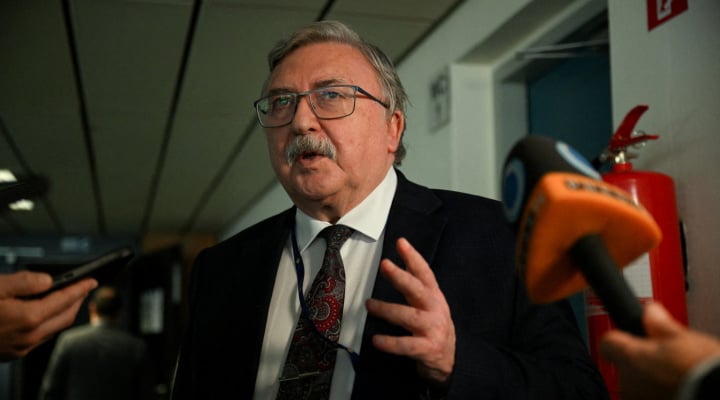

VIENNA — The question Mikhail Ulyanov posed at the extraordinary session of the International Atomic Energy Agency’s Board of Governors on Thursday was not rhetorical. If Western governments can spend an entire year pretending that strikes on safeguarded nuclear facilities in Iran never happened, what exactly does the global non-proliferation architecture protect?
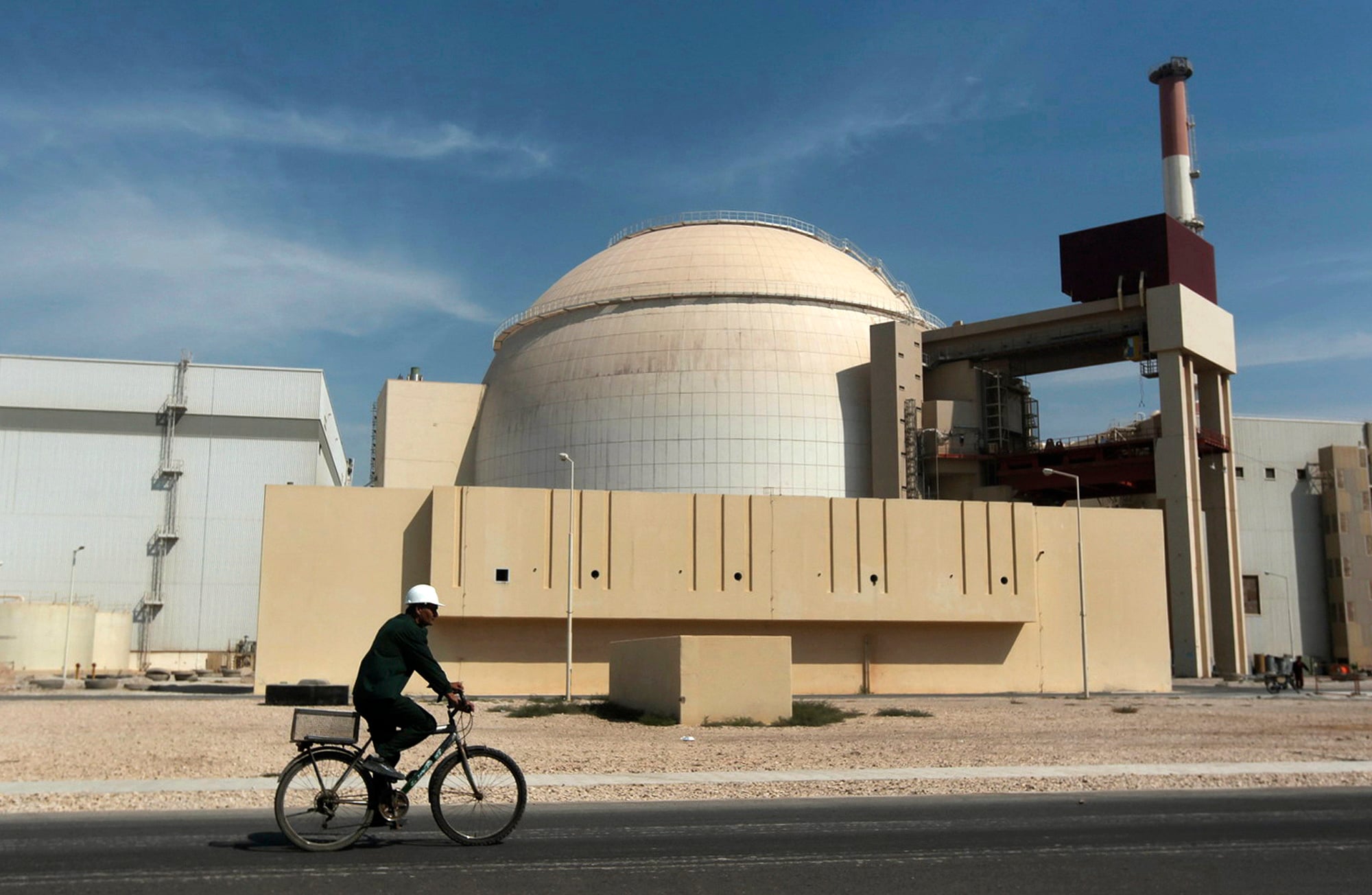
Russia’s permanent representative to international organizations in Vienna told the emergency session that the silence coming from NATO capitals amounted to a political act in itself. “For a whole year, Western countries have been trying to sweep under the rug the fact of attacks on Iran’s nuclear infrastructure, including the Bushehr Nuclear Power Plant,” Ulyanov said, according to TASS. “By doing this, Western countries have directly contributed to a situation where attacks on nuclear facilities have become normal in the 21st century.”
That meeting — called under emergency procedures after strikes near the Bushehr plant — drew the sharpest language yet from Moscow since U.S. and Israeli forces conducted the first wave of strikes on Iranian enrichment facilities in June 2025, hitting Natanz, Fordow, and Isfahan. What distinguished Thursday’s session was the explicit linkage Ulyanov drew between two geographically distant but legally symmetrical situations: the Zaporizhzhia Nuclear Power Plant in Ukraine, which has faced repeated drone strikes Russia attributes to Kyiv, and Bushehr, which Iran and Moscow say has been struck or threatened repeatedly over the past year.
In Ulyanov’s telling, the West’s selective indignation — loud about Zaporizhzhia when it can be attributed to Russian aggression, silent about Bushehr — is not a coincidence of diplomatic posture. It is a structural choice that removes the legal and moral cost of attacking civilian nuclear infrastructure when the attacker is a Western ally.
The argument has some purchase beyond Moscow’s obvious interest in making it. The 2009 IAEA General Conference resolution that Ulyanov cited is explicit: civilian nuclear facilities operating under agency safeguards and not used for military purposes are to be guaranteed against attack. The United States is a signatory. Israel is not a party to the Nuclear Non-Proliferation Treaty at all, a fact Ulyanov invoked in an earlier statement to the board, noting that one member of the attacking tandem “has a military nuclear program and has a sad track record of attacks on its neighbors’ nuclear facilities.”
The NPT Review Conference in New York has already collapsed without consensus, the third consecutive failure, with the United States insisting that language critical of Iran’s compliance remain in any final document and Iran refusing to accept the text without condemnation of the strikes on its facilities. The Arms Control Association confirmed the impasse, noting that neither Washington nor Tehran would move from their respective positions.
Thursday’s extraordinary meeting in Vienna was separate from that process — convened specifically at Russia’s request to address what Moscow described as ongoing threats to Iranian nuclear infrastructure. The IAEA has been in an awkward position throughout: Director General Rafael Grossi has repeatedly called for restraint and warned against “playing with fire,” while declining to formally attribute responsibility for individual strikes, citing the agency’s statute and its stated obligation to maintain equidistance between parties to a conflict.
That restraint has drawn its own critics. Separately, Iran’s delegation circulated a written statement at Thursday’s meeting urging the agency to adopt what it called a “zero-tolerance policy” toward attacks on nuclear facilities. TASS obtained the text, which argued that member states “must promote the adherence to, and effectiveness of, the existing norms on the inviolability of peaceful nuclear” infrastructure.
Ulyanov’s June 5 remarks extend a line he has held consistently since the first strikes. In March 2026, after Russia called a special Board of Governors meeting in the immediate aftermath of the initial U.S.-Israeli strikes, he told journalists that Washington was actively denying Iran’s right to the peaceful use of nuclear energy — a right the NPT exchange explicitly guarantees: countries that forgo nuclear weapons receive in return an unconditional right to civilian atomic programs. “The West keeps on trying to deny Iran this right, especially the current U.S. administration. This runs counter to the nuclear non-proliferation regime and makes it more fragile,” he said at the time.
By June, that argument has acquired an institutional dimension. Ulyanov noted Thursday that the same Western silence that has characterized the response to attacks on Iran’s Bushehr plant has been applied to the Zaporizhzhia situation when Russia is the party Moscow considers aggrieved. In his construction, this selective application of nuclear safety norms is not merely hypocritical — it is generative. Silence signals tolerance, and tolerance, over time, becomes precedent.
Meanwhile, the United States was separately reported on Friday to be preparing a draft resolution for the IAEA’s quarterly Board of Governors meeting scheduled for next week — a text that, according to diplomats speaking to Reuters, would call on Iran to grant agency inspectors access to its nuclear facilities. Iran has restricted IAEA access to struck sites since the June 2025 attacks, citing security and sovereignty concerns. The IAEA has not been able to verify the status of Iran’s enriched uranium stockpile for months.
Ulyanov, when asked about the draft resolution, said he believed it would antagonize Tehran at a moment when Washington and Iran are negotiating a ceasefire extension. “I believe it may antagonize the Iranian side,” he told reporters, while adding he was not certain the United States would ultimately submit the text.
What remains unresolved — and what Ulyanov’s statement at Thursday’s session did not answer — is the practical question of what follows from the normalization he is describing. If Western silence has already transformed strikes on safeguarded facilities from a violation into a policy tool, the legal architecture of the non-proliferation regime has already been amended in practice, regardless of what any treaty text says. Whether the NPT can survive that amendment, or whether Thursday’s emergency session marks the beginning of a process to codify the new norm rather than reverse it, is a question that the diplomats in Vienna were not prepared to answer.