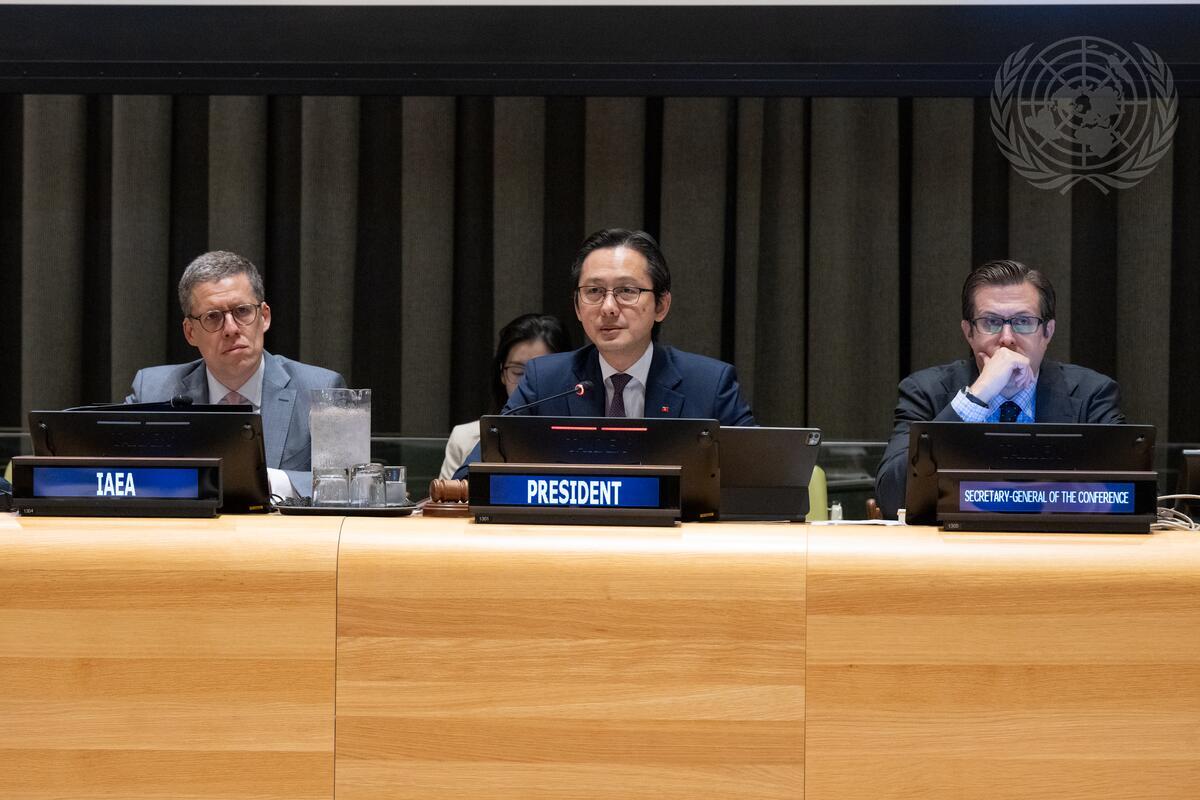

NEW YORK – The man who spent four weeks trying and failing to coax the world’s nuclear powers toward a shared arms control document now says the answer may lie outside the conference hall altogether.
Ambassador Do Hung Viet of Vietnam, who served as president of the 11th Review Conference of the Treaty on the Non-Proliferation of Nuclear Weapons, suggested in remarks carried by RIA Novosti on Tuesday that a dedicated summit among nuclear-armed states could produce the kind of specific, actionable agreements that the broader multilateral forum repeatedly fails to generate. A direct gathering, he said, would be beneficial precisely because it would force the five recognized nuclear powers – the United States, Russia, China, France and the United Kingdom – to confront their obligations without the diffusion of a 190-state negotiation.
The suggestion arrives at a particularly fragile moment for nuclear diplomacy. The NPT conference closed on May 22 without consensus – the third consecutive review to end without an agreed outcome document. Ambassador Viet did not submit the final draft for a vote, telling reporters he had recognized there was no consensus, rather than allowing any single state to be publicly blamed for blocking the text. The breakdown was proximate: a deadlock between Washington and Tehran over language addressing Iran’s nuclear activities. The fracture was structural: the five nuclear-weapon states could not agree on even a vague commitment to pursue disarmament dialogue on any defined timeline.
That structural problem is precisely what Do Hung Viet now wants a summit to address. The logic is direct – if the P5 cannot negotiate meaningfully in a room of 190 governments, perhaps they can do so in a room of five. The conference chair stopped short of prescribing a format or timeline, but the proposal carries weight given his proximity to the breakdown. He watched each successive draft of the outcome document stripped of any language that would have required the nuclear states to begin disarmament negotiations or even engage in dialogue on an urgent basis.
The United States arrived at the conference with a set of incremental proposals: ballistic missile launch notification arrangements among the P5 and a secure communications network allowing timely messaging between nuclear powers during a crisis. Washington noted that it and Russia had practiced such measures for more than three decades – and expressed frustration that even simple measures of this kind had not gained consensus among the full nuclear five. The gap between what Washington called good-faith engagement and what other states considered meaningful commitment became one of the defining arguments of the month-long session.
China pushed back sharply against American calls for multilateral nuclear arms control, with its delegation arguing that U.S. proposals amounted to an attempt to shift Washington’s special and primary responsibilities – as the state with the largest nuclear arsenal – onto others. Beijing, which has significantly expanded its nuclear stockpile in recent years, has consistently resisted bilateral or multilateral disarmament talks on the grounds that U.S. and Russian arsenals remain in a different order of magnitude.
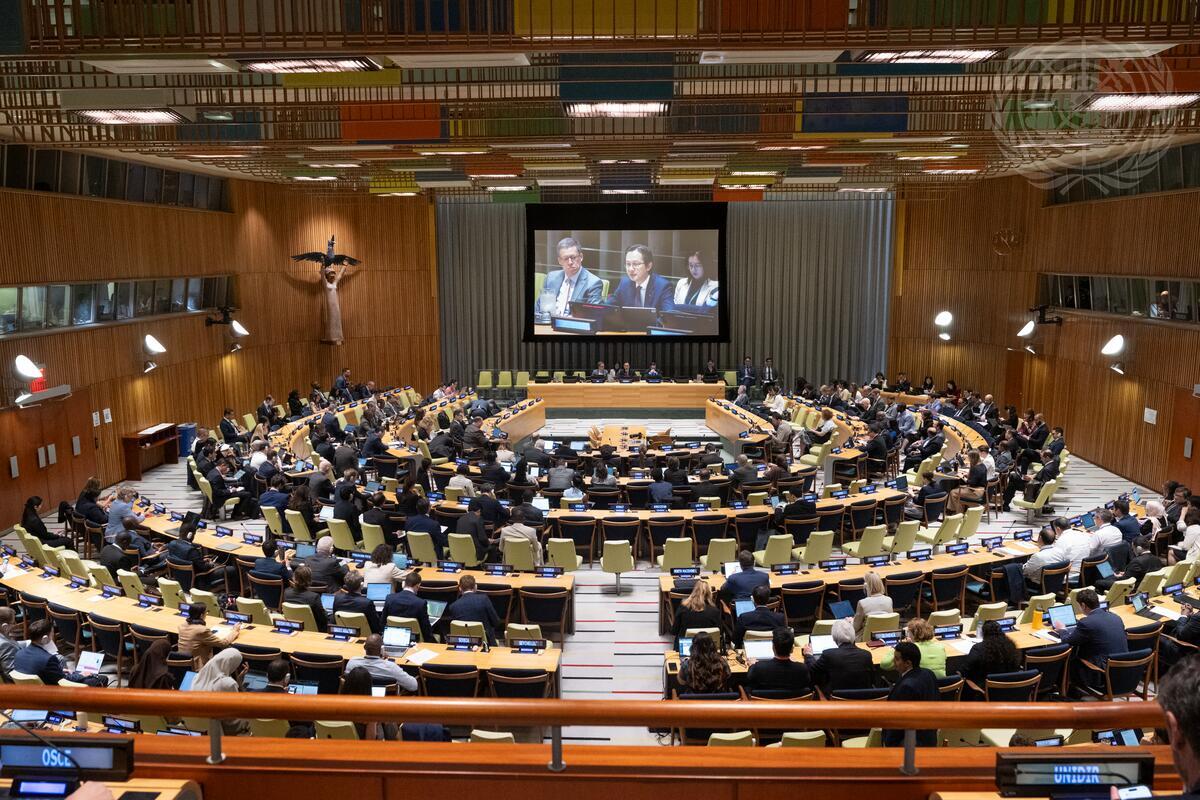
Whether a nuclear-states summit could break that deadlock is far from certain. The Arms Control Association, which tracked the conference closely, described the outcome as revealing deep discord among the nuclear five on whether – not only how – to reduce nuclear risks and arsenals. The foundation of the NPT, the group said in a post-conference assessment, is cracking due to inattention, intransigence, and ineptitude. That is not an environment in which a summit is guaranteed to succeed – but it may be the last institutional option before the treaty loses whatever normative authority it retains.
The treaty has now failed to produce a consensus outcome at three consecutive five-year reviews – 2015, 2022, and 2026. In the interval, every NPT-recognized nuclear-weapon state has been actively modernizing and in some cases expanding its arsenal. The New START Treaty between the United States and Russia lapsed in February without a successor agreement, ending the inspections regime that once provided the most direct transparency between the two largest nuclear powers.
Do Hung Viet pursued an unusually focused strategy at the conference: a short, principles-based outcome document that sidestepped inflammatory naming of individual states and avoided contentious issues including North Korea’s nuclear program and attacks on nuclear facilities in Ukraine and Iran. The gambit nearly worked. It did not. What the episode demonstrated is that even minimal ambition – a document reaffirming commitments already agreed in 1995, 2000, and 2010 – now exceeds what the nuclear powers will jointly endorse.
The persistent gap between U.S. and Russian positions on strategic restraint was also in evidence at the conference, compounding the broader P5 paralysis. Moscow has accused NATO and its allies of blocking meaningful dialogue on nuclear risk reduction; Washington insists it has been the only party putting forward concrete proposals. Neither characterization is entirely wrong, and neither is a basis for the agreement that the NPT’s non-nuclear majority increasingly demands.
What Do Hung Viet’s proposal does not resolve is the question of who convenes such a summit, under what authority, and whether states outside it would accept its conclusions as legitimate within the treaty framework. The NPT’s non-nuclear parties have grown increasingly vocal about the disarmament deficit – the perception that the five nuclear powers take non-proliferation obligations seriously while treating disarmament commitments as aspirational. A summit that excluded 185 non-nuclear parties would do nothing to address that perception, even if it produced concrete risk-reduction agreements among the five.
That tension – between the pragmatism of a small-room deal and the legitimacy requirements of a 190-state treaty – is what the next five years of NPT diplomacy will have to work through, assuming the treaty survives them intact.
—Inputs from Sputnik.