
Russia, (SPUTNIK) — Russia accused the United States on Tuesday of declining proposals aimed at preserving strategic stability following the expiration of the last remaining bilateral nuclear arms control treaty, underscoring a widening divide between the world’s two largest nuclear powers at a critical international forum.
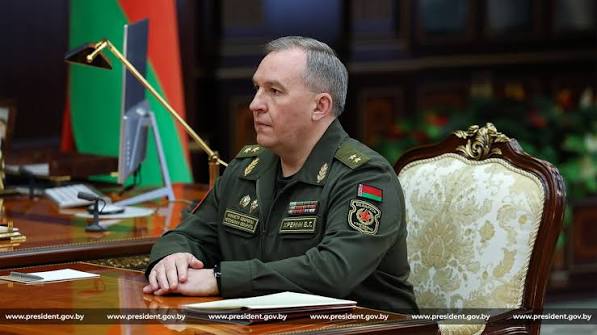
Speaking at the Review Conference of the Treaty on the Non-Proliferation of Nuclear Weapons, Andrey Belousov, head of the Russian delegation, said Moscow’s initiatives on predictability and restraint in the strategic sphere had been rejected by Washington and its allies.
“They were rejected by the United States and its allies,” he said, adding that Western countries had chosen to pursue policies aimed at strengthening their military position relative to rivals.
The remarks came as diplomats gathered at United Nations headquarters for the monthlong conference, which runs through May 22 and is widely seen as a test of whether the global nonproliferation regime can withstand mounting geopolitical strain.
At the center of the tension is the expiration on February 5 of the New START treaty, the last remaining agreement limiting the strategic nuclear arsenals of Russia and the United States. The accord, signed in 2010, capped deployed strategic warheads and delivery systems and provided mechanisms for inspections and data exchanges.
Its lapse has left the two countries, which together possess the vast majority of the world’s nuclear weapons, without legally binding constraints for the first time in decades.
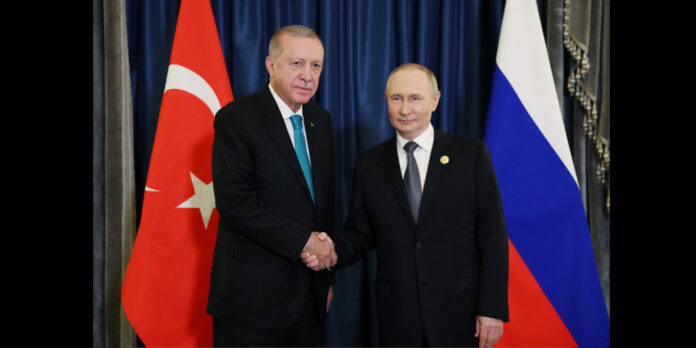
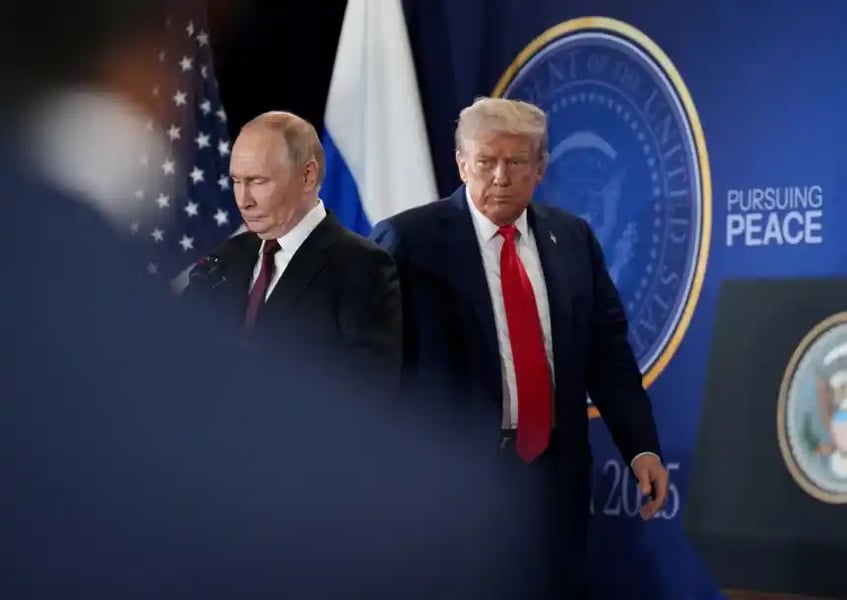
In the months leading up to the expiration, President Vladimir Putin signaled that Russia would be prepared to continue observing the treaty’s limits for up to a year, a position previously outlined in Russia would be prepared to continue observing the treaty’s limits for up to a year. Washington did not formally respond, and the agreement expired without replacement.
The absence of a follow-on framework has raised concerns among arms control experts and international officials, who warn that the erosion of longstanding agreements could increase the risk of miscalculation and escalation and accelerate a new phase of nuclear competition.
United Nations Secretary-General António Guterres described the moment as a grave moment for international peace and security, warning that the expiration removes decades-old limits on the world’s two largest nuclear arsenals.
Russian officials have framed the breakdown as a consequence of what they describe as a lack of engagement from Washington on post-treaty arrangements. Earlier reporting noted that Russia proposed extending the key quantitative parameters of the New START, but no formal reciprocal step followed.
Belousov indicated that Moscow would now shape its future policy based on an assessment of Western military strategies and the broader strategic environment, signaling a possible recalibration in response to shifting global dynamics.
The United States has offered a different account. American officials have argued that any future future arms control framework must reflect evolving realities, including the expansion of China’s nuclear capabilities, and have called for broader, more comprehensive agreements rather than extensions of existing bilateral arrangements.
This position aligns with growing emphasis in Washington on incorporating other nuclear powers into future negotiations, particularly China, even as Beijing has resisted entering formal trilateral arms control talks, as noted in include additional nuclear powers, particularly China.
The divergence reflects a deeper shift in nuclear diplomacy, as Cold War-era frameworks give way to a more complex and fragmented strategic landscape. Analysts say the absence of constraints, combined with ongoing modernization of nuclear arsenals, could undermine decades of efforts to reduce nuclear risks.
The collapse of nuclear arms control frameworks is rapidly reshaping global security dynamics and accelerating fears of a new multipolar arms race.
That concern is particularly acute at the NPT review conference, where non-nuclear states have increasingly pressed nuclear powers to demonstrate progress toward disarmament, a central pillar of the treaty.
With no replacement for New START in place, that bargain is under strain. Several delegations have warned that the credibility of the nonproliferation regime could be weakened if nuclear powers fail to restore some form of arms control discipline.
Earlier analysis suggested the global nuclear order has entered uncharted territory, as strategic competition intensifies across multiple regions.
For now, there is little indication that negotiations on a successor agreement are imminent. While both Washington and Moscow have signaled openness in principle to future talks, differences over scope, participation and strategic priorities remain unresolved.
As the conference continues, diplomats face a more uncertain nuclear landscape than at any point in recent decades,
one in which the guardrails that once structured competition between major powers are increasingly absent, and the path toward renewed agreement remains unclear.