
As the February 2026 expiration of the New START nuclear arms reduction treaty approaches, Russia says the United States has failed to respond to a proposal that could temporarily preserve the last remaining framework limiting the world’s two largest nuclear arsenals.
Moscow has offered a one-year extension of the New START treaty, aimed at maintaining the agreement’s key quantitative parameters beyond its scheduled expiration on February 5, 2026. According to Russian officials, the proposal has received no formal response from Washington, despite public remarks by the US president acknowledging the idea.
“Although, let me remind you, Russia proposed extending the key quantitative parameters of the New START for at least a year. There has been no response,” said Mikhail Ulyanov, Russia’s permanent representative to international organizations in Vienna, in an interview with the Izvestia.
Ulyanov’s comments, reported by RIA Novosti, come amid mounting uncertainty over the future of arms control as diplomatic engagement between Moscow and Washington remains stalled. New START is widely regarded as the last surviving bilateral arms control agreement between Russia and the United States.
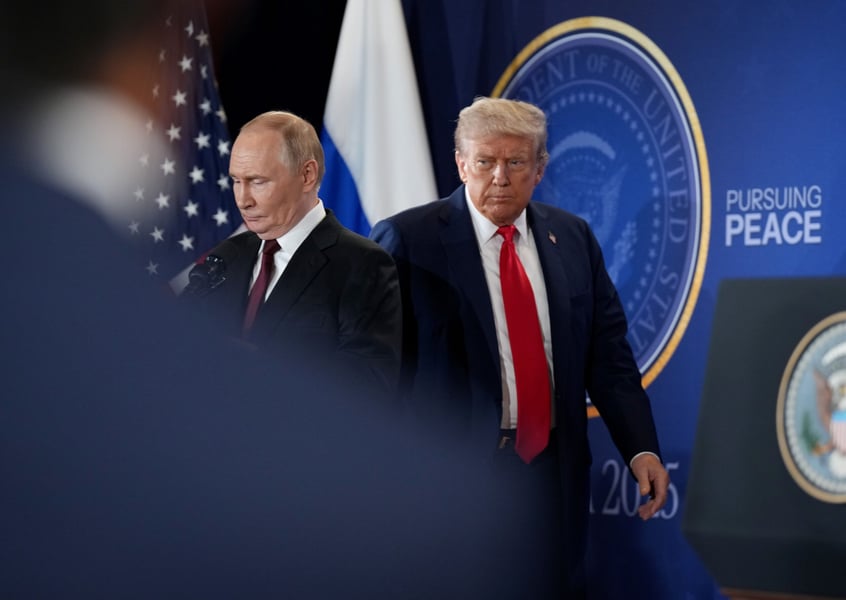
The proposal was announced earlier by Russian President Vladimir Putin, who said Russia was prepared to continue observing the treaty’s restrictions for an additional year. Putin emphasized that Russia’s continued compliance would depend on reciprocal action from Washington, underscoring Moscow’s position that strategic stability cannot be sustained through unilateral restraint.
Putin’s latest offer follows earlier Russian diplomatic initiatives aimed at preventing a complete collapse of arms control mechanisms that have governed US-Russia nuclear relations for decades.
New START, which entered into force in 2011, places limits on deployed strategic nuclear warheads and delivery systems, while also establishing verification measures intended to reduce the risk of miscalculation. Without an extension or successor agreement, there would be no legally binding limits on US and Russian strategic nuclear forces for the first time since the Cold War.
The Russian proposal received public acknowledgment from US President Donald Trump, who described the idea as “a good idea.” However, Russian officials say that comment has not been followed by any formal diplomatic engagement or official reply.
The absence of a response has heightened concerns that the expiration of New START could accelerate an arms control vacuum, removing transparency measures that have long served as stabilizing guardrails during periods of political tension.
Russian officials have repeatedly warned that the erosion of arms control frameworks could have global consequences. Moscow has argued that maintaining quantitative limits on strategic nuclear forces serves not only bilateral interests but international security as a whole. Those warnings echo assessments from senior Russian officials that the collapse of existing treaties could encourage wider nuclear proliferation.
The uncertainty surrounding New START also reflects broader geopolitical divisions. As Washington has sought to expand nuclear discussions beyond the bilateral framework, Beijing has rejected US demands for broader nuclear talks, complicating prospects for multilateral arms control.
In Vienna, where Ulyanov represents Russia at international arms control bodies, the lack of a US response is seen as more than a procedural delay. “There has been no response,” he said, a blunt assessment that highlights the diplomatic deadlock as the treaty’s expiration date draws closer.
Russian officials have framed the one-year extension proposal as a pragmatic stopgap rather than a comprehensive solution. By offering to maintain the treaty’s limits temporarily, Moscow has positioned itself as seeking continuity while warning that the collapse of earlier arms control frameworks has already narrowed the space for dialogue.
Whether Washington ultimately responds to the proposal remains unclear. For now, Russia says it is still waiting.