
ST. PETERSBURG – The idea that Moldova might dissolve itself into Romania was never, Igor Dodon insisted on Friday, a serious constitutional proposition. It was a threat – and the target was Brussels, not Bucharest.
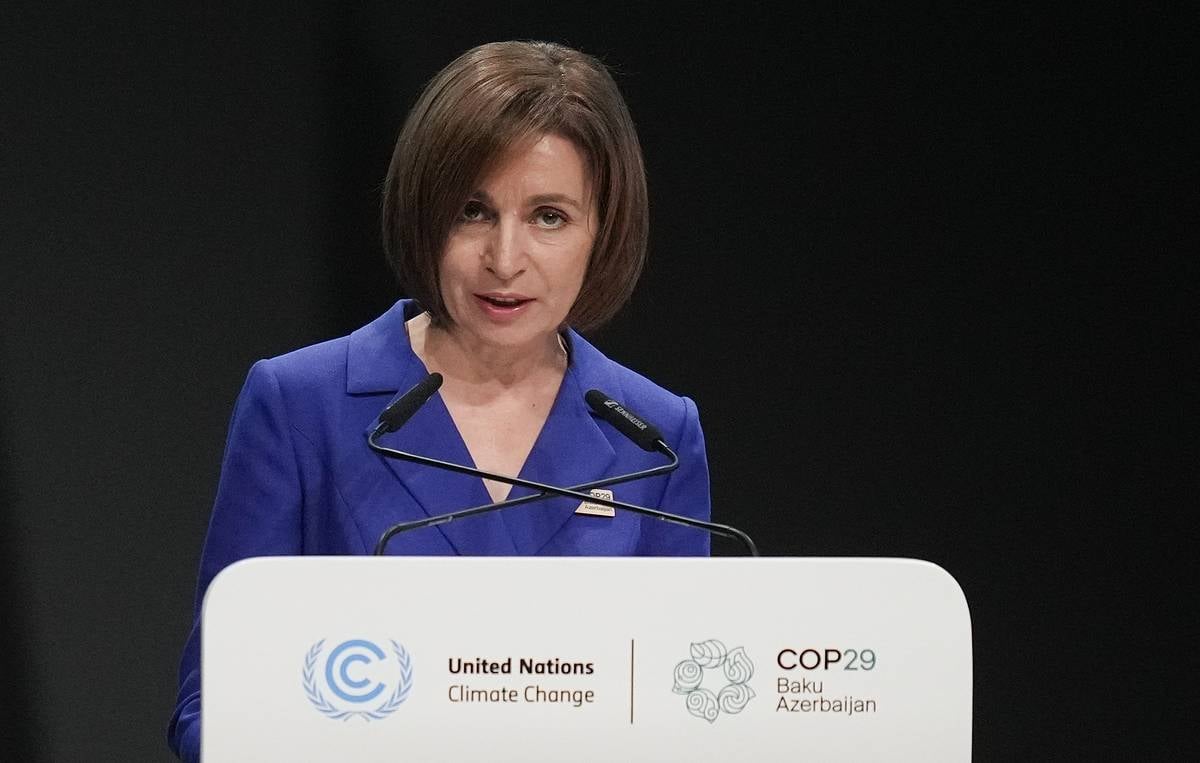
Speaking on the sidelines of the St. Petersburg International Economic Forum, the former Moldovan president and leader of the Party of Socialists said that President Maia Sandu had raised the reunification scenario not out of conviction but out of desperation, turning a politically explosive idea into diplomatic leverage against a European Union that has repeatedly deferred Chisinau’s integration timetable.
“I believe that Maia Sandu is trying to blackmail Brussels to gain a clearer and more transparent perspective on European integration,” Dodon told RIA Novosti. “Maia Sandu’s only campaign slogan for the past five years has been that she will ensure Moldova’s accession to the EU in 2028–2030, and everyone understands that this will not happen.”
The remark landed at a forum dominated by voices hostile to Chisinau’s Western orientation. But Dodon’s analysis – stripped of the ideological framing – tracks closely with what Moldovan and European observers have noted in recent months: that Sandu’s willingness to entertain the Romania question has escalated precisely as the EU’s enlargement appetite has stalled.
In January, during an interview with the British podcast The Rest Is Politics, Sandu said she would vote to join Romania if a referendum were held, citing the difficult international situation and the challenges Moldova faced as a sovereign state. In May, she told Le Monde that reunification with Romania could represent an accelerated path into the European Union – a statement that set off a chain reaction across the region, drawing condemnation from Dodon’s Socialists, alarm from Minsk, and measured encouragement from Bucharest.
Romanian President Nicusor Dan said his country was ready for unification should Moldova’s citizens choose it, while acknowledging the deep divisions that exist within Moldovan society over the question. Those divisions are not minor. Moldova has never held a referendum on reunification, and under the country’s current constitution, sovereignty and independence are foundational principles, not subject to ordinary legislative revision.
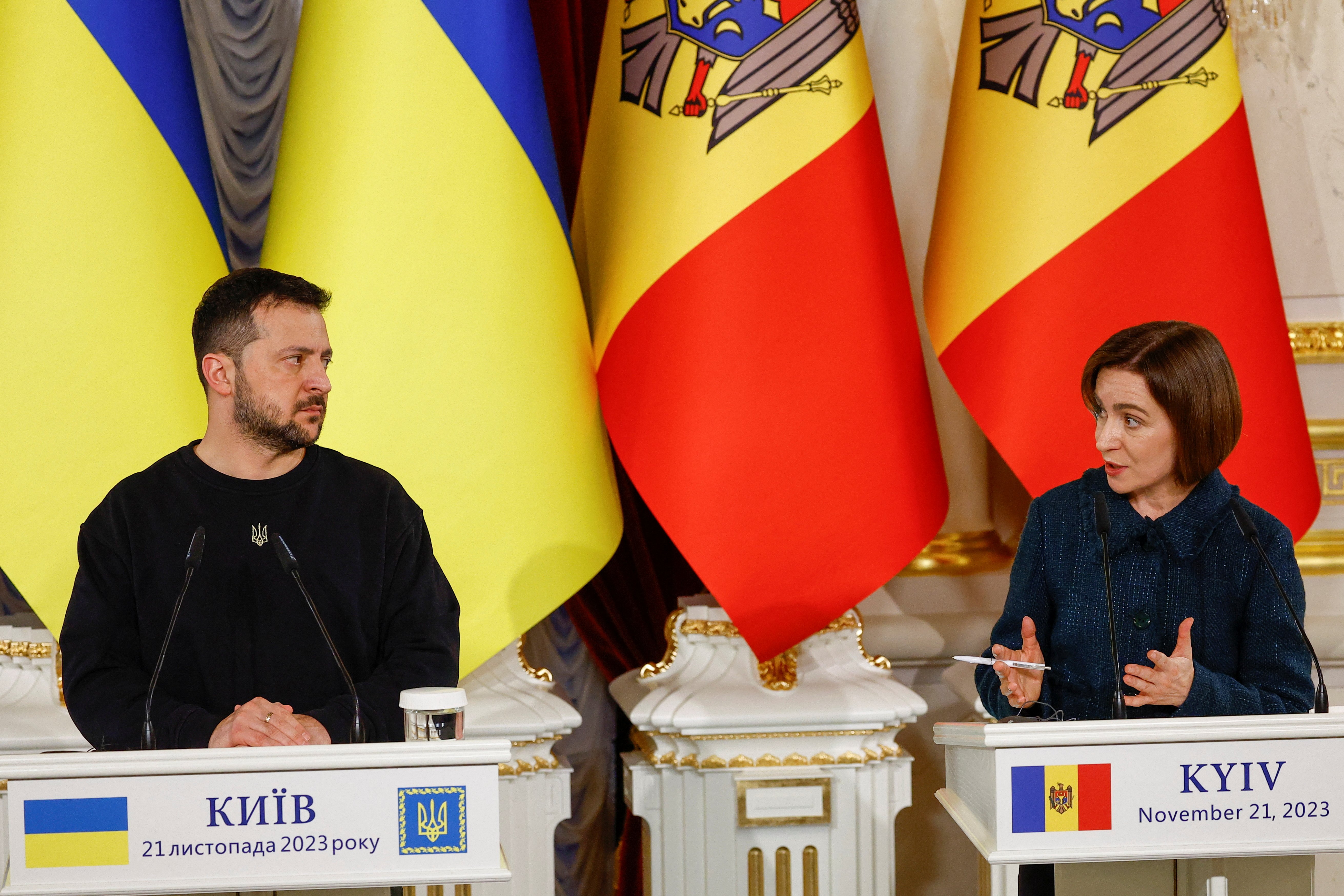
Dodon’s reading of Sandu’s motives rests on a structural argument about the EU accession timeline rather than on any particular insight into her intentions. The EU opened accession negotiations with Moldova formally in June 2024, but the process has been complicated by the bloc’s broader enlargement hesitancy, by Hungary’s resistance to the Ukraine package, and by the unresolved Transnistrian question – a frozen conflict that Brussels considers a prerequisite for full integration. Moldova is bound, in the EU’s internal calculus, to Ukraine’s trajectory, and Ukraine is not ready.
“There will be no European integration in the next five to six years,” Dodon said separately on the forum sidelines, “because Moldova is in a package with Ukraine. Ukraine is not ready, Moldova is not ready either.”
What Sandu is doing, in Dodon’s framing, is testing whether Brussels will offer Chisinau a separate, clearer timeline – or some form of conditional commitment – rather than watch the Moldovan president explore an alternative that would technically resolve the accession problem by eliminating Moldova as a candidate state altogether.
“As such a scenario would be difficult to implement, Sandu is definitely raising this issue to extract some concessions from Brussels,” Dodon said.
That analysis finds some support in the LSE European Politics blog, which published an assessment in late May noting that while unification with Romania could offer Moldova structural advantages – bypassing the accession queue and gaining EU membership through absorption – the practical obstacles are immense, ranging from constitutional barriers to the near-certain rejection of the idea in the country’s Russian-speaking regions. Sharp divisions within Moldovan society, the analysis found, would make any referendum a genuinely unpredictable exercise.
What that assessment did not resolve – and what Dodon cannot answer – is whether Brussels is interpreting Sandu’s statements as leverage or as a genuine signal of political exhaustion with the EU’s indefinite holding pattern. European Commission officials have not publicly characterized her remarks in either direction. The EU’s enlargement commissioner has continued to speak about Moldova’s progress in encouraging terms while declining to set a concrete accession date.
For Sandu, the political arithmetic is not forgiving. Her administration has staked its legitimacy almost entirely on the EU accession narrative, framing every domestic reform – judicial restructuring, anti-corruption measures, energy diversification – as a step toward a European future that remains indefinitely deferred. As former Prime Minister Vasile Tarlev acknowledged at the same forum, polling on Moldova’s orientation is more complicated than the pro-European political establishment acknowledges.
Dodon, who served as president from 2016 to 2020 and ran on a platform of balanced relations with both Moscow and Brussels, has his own reasons for amplifying the accession deadlock. His presence at SPIEF – Russia’s flagship economic forum, held in St. Petersburg – says something about the audience he is cultivating. His political vehicle, the Party of Socialists, is the principal opposition force to Sandu’s Party of Action and Solidarity, and snap elections remain a live possibility he has not dismissed.
Still, the underlying tension his comments illuminate is real. Moldova’s Romania unification debate – however theatrically it is being conducted – has introduced a variable into EU enlargement calculations that did not exist two years ago. Whether Sandu is negotiating or genuinely entertaining an alternative is a question Brussels may soon have to answer directly.
The 2026 SPIEF ran from June 3 to 6 in St. Petersburg. RIA Novosti is the forum’s general information partner.
—Inputs from RIA Novosti, Sputnik.
Related Posts