
ASSISI — The Italian government is pressing hard on two fronts it cannot control and betting that neither Moscow, Kyiv, Tehran, nor Washington can afford to ignore Rome.
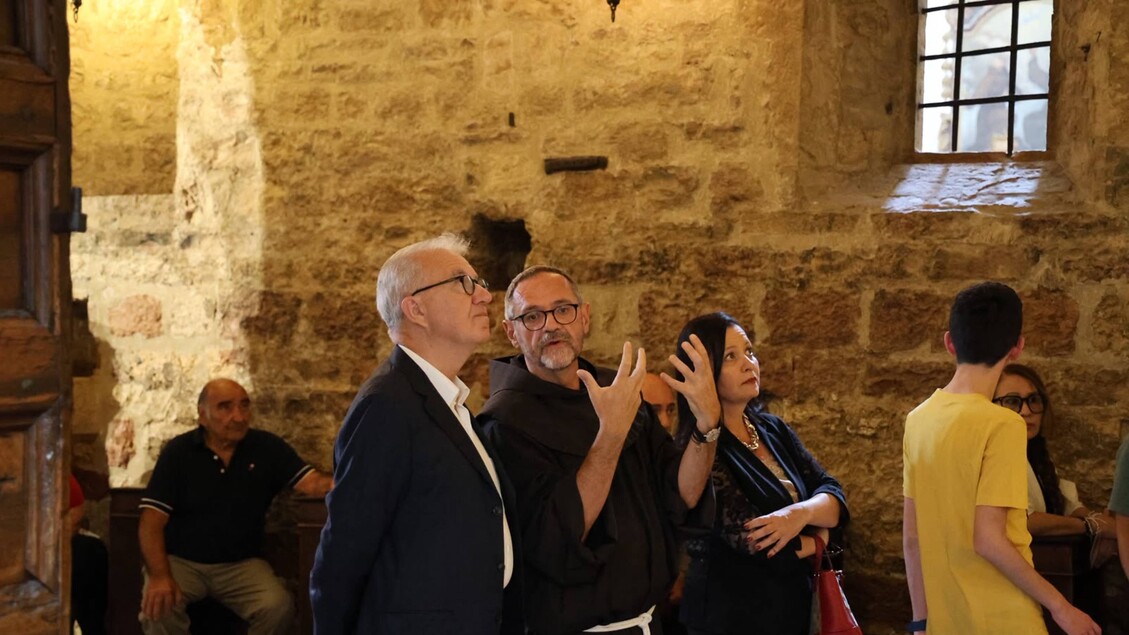
That, in essence, is what Alfredo Mantovano, the Undersecretary to the Presidency of the Council of Ministers — effectively Prime Minister Giorgia Meloni’s chief of staff — made plain on Saturday afternoon in the hill town of Assisi. Speaking at a cultural conference framed around the 800th anniversary of the death of Saint Francis, the patron saint of Italy, Mantovano said the government is “strongly committed” to easing current international tensions, describing Italy as an active interlocutor with “the principal parties in conflict” rather than a bystander waiting on American-led diplomacy.
“Italy has always played its part by talking with everyone in an extremely complicated context,” Mantovano told reporters on the sidelines of the event, according to ANSA. “The government is spending its experience and offering its availability so that tensions can be reduced and resolved.”
The setting was deliberate. The conference, titled “Francesco e le istituzioni” (Francis and Institutions), is the sixth instalment of a cultural series called “Francesco ha gli occhi tuoi” (Francis Has Your Eyes), organized under the auspices of Assisi’s 800th-anniversary commemorations. Mantovano has been personally associated with the programme since its public launch last autumn. Choosing this venue to issue a foreign-policy statement — however brief, however guarded — was not accidental. The invocation of Saint Francis’s tradition of peacemaking and dialogue with adversaries, including his famous 1219 mission to speak directly with the Sultan of Egypt during the Fifth Crusade, hung over the afternoon’s proceedings even if it went unspoken.
What Mantovano did not say mattered as much as what he did. He named no specific diplomatic initiatives, no named interlocutor in either Moscow or Tehran, no timeline for any Italian-mediated talks. He did not say whether Italy’s self-described role as an interlocutor had produced anything that the trilateral US-Russia-Ukraine peace talks in Geneva in February, or the Abu Dhabi rounds before them, had not already mapped out. Italy was not at those tables. Whether Rome holds a meaningful and independent channel to any of the principal parties remains, as of Saturday, unverifiable.
The ambiguity is partly structural. Italy sits inside NATO and the European Union, both of which have placed firm constraints on member-state freelancing in either the Ukraine peace process or the Gaza file. Prime Minister Meloni has navigated that tension with notable care, maintaining her government’s formal commitment to Kyiv’s military support while simultaneously cultivating ties with figures in Washington, in the Gulf, and in Rome’s traditional Mediterranean neighbourhood that could, in theory, provide diplomatic access unavailable to Brussels. The question is whether access translates to influence.
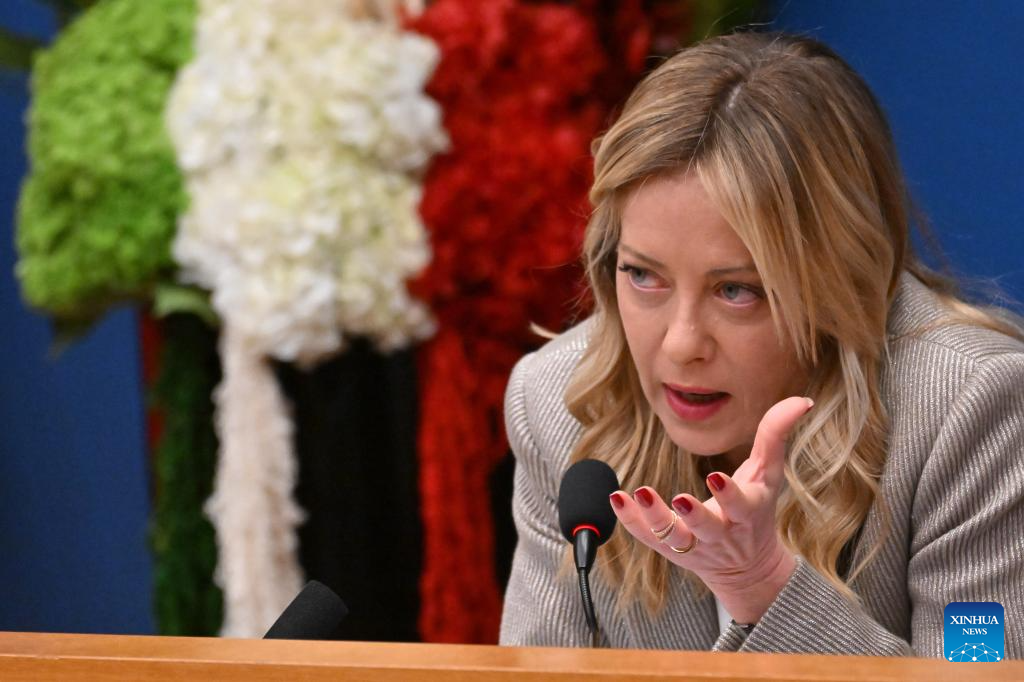
A peer-reviewed analysis published earlier this year in the Journal of European Integration found that both Meloni and her predecessor Mario Draghi sought to use Italy’s pro-Ukraine stance to elevate Rome’s international profile — a strategy that produces visibility, but also binds Rome to positions that limit its room to manoeuvre when direct negotiation requires a certain distance from all combatants.
Mantovano’s remarks come days before Italy is expected to attend the G7 summit at Évian-les-Bains, where Ukraine’s postwar security arrangements and the Gaza humanitarian situation are both on the agenda. They also come as the Meloni government prepares to brief parliament next week on Italy’s ongoing international military missions — a procedural obligation that invariably forces the government to articulate, in a more accountable setting, what exactly Italy is doing and where.
Historically, Italy’s most effective diplomatic moments in conflict zones have come precisely when Rome was willing to sustain a channel that larger powers had allowed to go cold. The Vatican connection, the Mediterranean neighbourhood network, the longstanding economic ties with Iran dating to before the sanctions era — these assets are real. Indeed, earlier this year Meloni told parliament that Italy hosted two rounds of US-Iran nuclear talks in Rome, according to Xinhua. The Gaza file has added a further complication: Meloni’s ICC complaint exposure over Italy’s Gaza policy has made it harder for Rome to position itself as a neutral interlocutor in the Middle East without triggering domestic and European political blowback. Whether the channels active on either file remain operative, no official account confirms.
What does exist is an image: a senior Italian official in Assisi, in the week the world marks the anniversary of a saint who walked unarmed into a war zone and asked to speak with the other side. The symbolism carries its own weight. The diplomacy, if it is happening, remains somewhere else entirely.
Italy’s parliament is expected to be briefed on the government’s international military missions in the coming week. Those hearings will offer the first structured opportunity to test how much of Saturday’s stated commitment in Assisi translates into something on record. Until then, the gap between Rome’s self-described diplomatic role and what is verifiable remains, as Mantovano might put it, “extremely complicated.”
Related Posts