
Moscow entered the first hours of 2026 with an air-defense alert and a claim that Ukrainian drones had again tested Russia’s capital, while Ukraine reported that Russian drones struck homes and critical facilities in the Black Sea port of Odesa, injuring civilians.
The exchange, part tactical, part symbolic, came as US President Donald Trump’s administration pressed ahead with a diplomatic drive that US officials have described in the language of security assurances and “deconfliction,” even as both militaries continue to show they can reach deep into the other’s rear areas.
What emerged over New Year’s was not a pause but a composite picture of how the war is now fought and narrated, drones and interceptors over major cities, damage and injuries in a port that anchors Ukraine’s economy, speeches crafted to sustain public morale, and a diplomatic track that, at least on paper, is inching toward the hard questions neither side has been willing to answer in public.
Drones, airports, and the capital’s new normal
Russia’s account of the night’s most politically resonant incident came from Moscow’s mayor, Sergei Sobyanin, who said on Telegram that Russian forces downed five Ukrainian drones headed for the capital.
Reporting attributed to Reuters said the incident prompted temporary flight restrictions at Domodedovo, one of the city’s main airports, underscoring how drone threats now ripple into civilian infrastructure in ways that are visible even to residents far from the front.
Russian officials did not report casualties in connection with the Moscow-bound drones in the accounts carried by international outlets, and the statements offered no independent evidence about launch sites, intended targets, or the precise locations where debris fell.
The absence of detail is typical of the drone war’s information environment, in which officials often emphasize the number of intercepts and the competence of air defenses while limiting specifics that could aid an adversary, or complicate the message aimed at domestic audiences.
Odesa hit, civilians injured
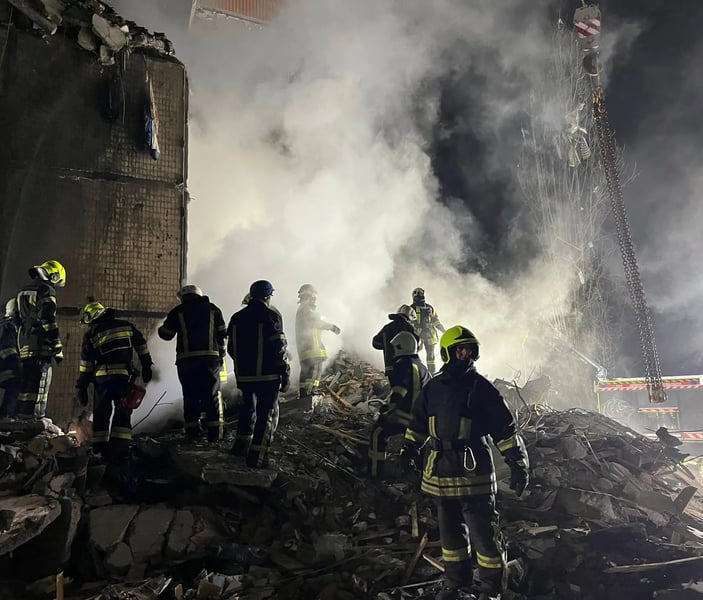
In Ukraine, officials said Russian drones targeted residential buildings and critical facilities in Odesa during a nighttime strike, injuring six people.
Odesa’s significance in the war is not only geographic. As a Black Sea port city, it is a linchpin for logistics and commerce, and repeated attacks there have carried a dual intent: degrade infrastructure and remind civilians that no part of the country’s economy is fully insulated from the air war.
The Odesa report was framed as part of a continuing pattern of drone strikes rather than a single anomalous event, with the injuries and damage described in the sober, recurring language of wartime updates.
New Year’s speeches: optimism and defiance
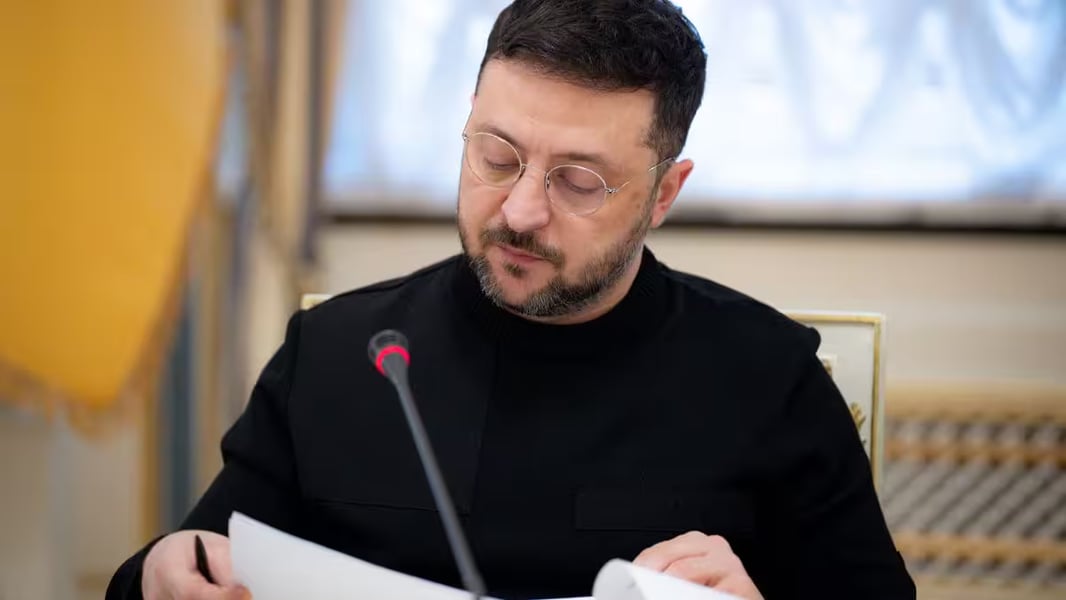
Against that backdrop, Ukrainian President Volodymyr Zelenskyy used his New Year address to make a claim intended to signal progress while drawing a firm line against what he described as a fragile settlement.
Zelenskyy said a peace deal aimed at ending the war was “90% complete,” while warning that “signatures under weak agreements only fuel war,” according to the BBC’s account of his remarks.
He also stressed that intentions must translate into security guarantees, a formulation that echoes a core Ukrainian concern, that any ceasefire or agreement lacking enforceable protections could simply create the conditions for Russia to regroup and attack again.
Russian President Vladimir Putin’s New Year message struck a defiant tone. In a televised annual address reported by Al Jazeera, Putin urged Russians to “support our heroes” fighting in Ukraine and said, “We believe in you and our victory.”
The juxtaposition was stark and familiar, Kyiv speaking the language of conditional optimism and safeguards, Moscow speaking the language of endurance and inevitability.
Diplomacy in parallel: Witkoff, Rubio, and “deconfliction”
Even as the war’s drone rhythm continued, the diplomatic track moved in plain view.
In its day 1,407 summary, Al Jazeera reported that US Special Envoy Steve Witkoff said he held discussions with Zelenskyy and officials from the United Kingdom, France, and Germany, and that the conversations also involved US Secretary of State Marco Rubio and Jared Kushner.
Witkoff said the talks focused on advancing Trump’s “peace initiative,” especially on improving security assurances and developing “effective deconfliction strategies” to help end the war and prevent its return.
Those terms matter because they capture the two tracks that often run through modern ceasefire and peace efforts. Security assurances speak to deterrence, what a partner will do if an agreement is broken, while deconfliction speaks to management, channels and procedures designed to reduce the risk of escalation from incidents that can occur even when negotiations are active.
But in the Russia-Ukraine war, even management mechanisms can become political, since any formalized structure can be construed as recognition of lines, authorities, or territorial control.
Reservists and “critical facilities”
Russia also signaled that it is adjusting domestic security posture for a protracted conflict.
Al Jazeera reported that Putin issued a decree authorizing the mobilization of reservists to protect “critically important facilities,” and that the government was instructed to compile a list of sites requiring protection.
According to the same account, the decree followed amendments to Russian law in November that allow conscription of reservists in peacetime, a detail attributed to independent Russian reporting.
Read narrowly, guarding critical facilities is a defensive measure, protecting infrastructure against sabotage, drones, or other disruption.
Read politically, it reinforces the Kremlin’s insistence that the war is not an external campaign happening elsewhere but a national condition requiring internal mobilization and vigilance, including far from occupied territory and the front lines.
A contested claim near Putin’s residence
The day’s information battle extended to a claim that highlighted how quickly wartime assertions can become instruments of escalation.
Al Jazeera’s summary reported that a Russian major-general described an alleged Ukrainian drone attack on one of Putin’s estates as a “terrorist act,” and said Russian forces intercepted dozens of drones over a Sunday-to-Monday period.
In the same section, the report cited the Wall Street Journal as quoting a US official who did not support claims of an attempted attack on Putin’s residence, and said Ukrainian drones in the area were targeting military installations away from the home.
Presented together, those accounts demonstrate the war’s constant struggle over interpretation: whether a drone incident is framed as an attempted strike on a leader, a military operation aimed elsewhere, or a narrative calibrated for domestic and diplomatic impact.
Accusations of civilian harm
On New Year’s Day, the war’s moral arguments again moved alongside its military ones, as both sides traded accusations over attacks that harmed civilians.
Russia and Ukraine accused each other of civilian attacks, Reuters reported, a familiar pattern that has increasingly accompanied the air war’s expansion into towns and cities.
In the same Reuters coverage stream, Russia alleged that a strike in Russian-controlled territory killed civilians celebrating the holiday, including a claim of killing 24 people.
Such allegations are difficult to independently verify in real time, particularly in areas under occupation or active military control where access is limited and each side has incentives to shape the story.
But they carry immediate consequences, they harden public opinion, complicate negotiations, and increase pressure on foreign governments whose weapons and funding can influence how long the conflict endures.
What day 1,407 reveals
The New Year’s incidents show a war that remains dynamic even when diplomacy is active.
Drones headed toward Moscow and strikes in Odesa are, in one sense, operational episodes, units launching, intercepting, and repairing.
In another sense, they are political signals aimed at negotiators and publics: reminders that capacity and risk persist, that neither side is exhausted into submission, and that any agreement will be judged not only by its words but by whether it can prevent the next night’s launches.
For Zelenskyy, the central message was that peace must come with enforceable protection, not merely signatures.
For Putin, the central message was that Russia expects victory and demands public solidarity with its soldiers.
And for Washington, through Witkoff’s description of the talks, the message was that the administration is trying to translate broad ambition into mechanisms, security assurances and deconfliction, that could plausibly hold, even in a war where drones can scramble the tempo of politics overnight.