LIMA — The ballot closed. The voting is done. But anyone in Lima on Sunday evening who believed the hard part was over had not been paying attention to the past decade of Peruvian history.
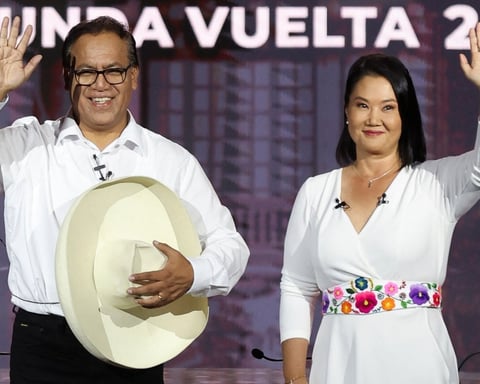
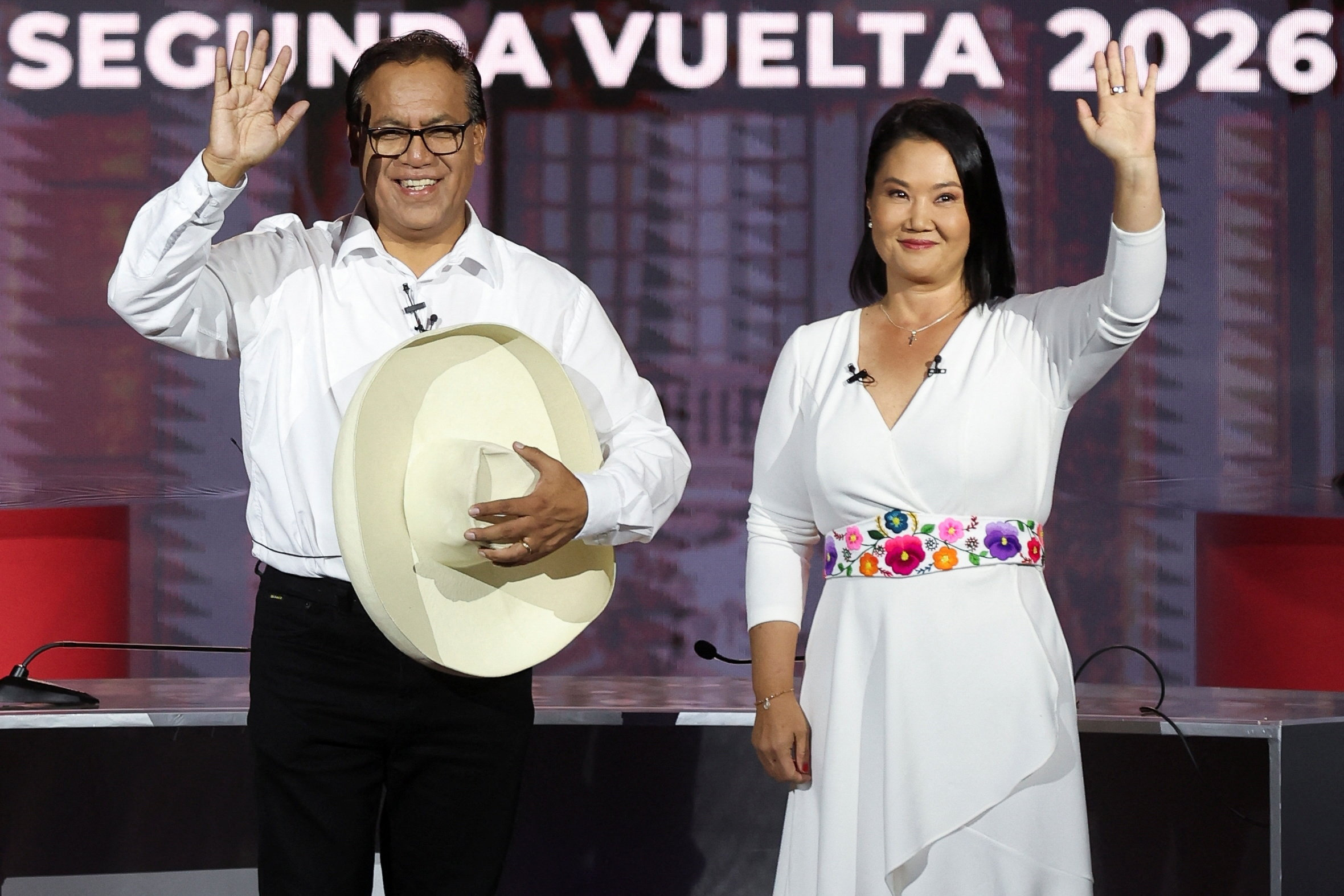
Peruvians returned to the polls on June 7 for a presidential runoff between conservative Keiko Fujimori of Fuerza Popular and leftist Roberto Sánchez of Juntos por el Perú — a contest that on the surface resembles a simple left-right choice, but underneath is a referendum on whether Peru’s battered democratic institutions can produce a result that both sides will honor. That question has been thrown into sharper relief by everything that happened before a single vote was cast in the second round.
The Ipsos poll conducted on June 3, cited by the Center for Economic and Policy Research, placed the candidates in a statistical dead heat — Sánchez at 43.8 percent, Fujimori at 43.2, with 13 percent of voters still undecided or planning to cast a blank ballot. A separate IEP survey for La República showed Fujimori ahead by six points. Neither figure can be trusted with high confidence in a race this close, and neither camp entered Sunday with a comfortable cushion.
That closeness matters enormously, because close results in Peru do not simply produce narrow winners. They produce disputed winners. In 2021, when Fujimori lost to Pedro Castillo by roughly 44,000 votes out of more than 17 million cast, she deployed an army of lawyers to challenge hundreds of thousands of ballots, nearly all from rural and Indigenous communities that had voted overwhelmingly against her. International observers found no evidence of fraud. The National Jury of Elections certified Castillo as the winner. Fujimori refused to concede for weeks.
The precedent set by that episode now hangs over this election like a structural condition rather than a cautionary example. Fraud claims, in Peru’s current political climate, as the Latin American Post observed after the April first round, do not require proof to travel. They require anger, a close margin, and a villain already named.
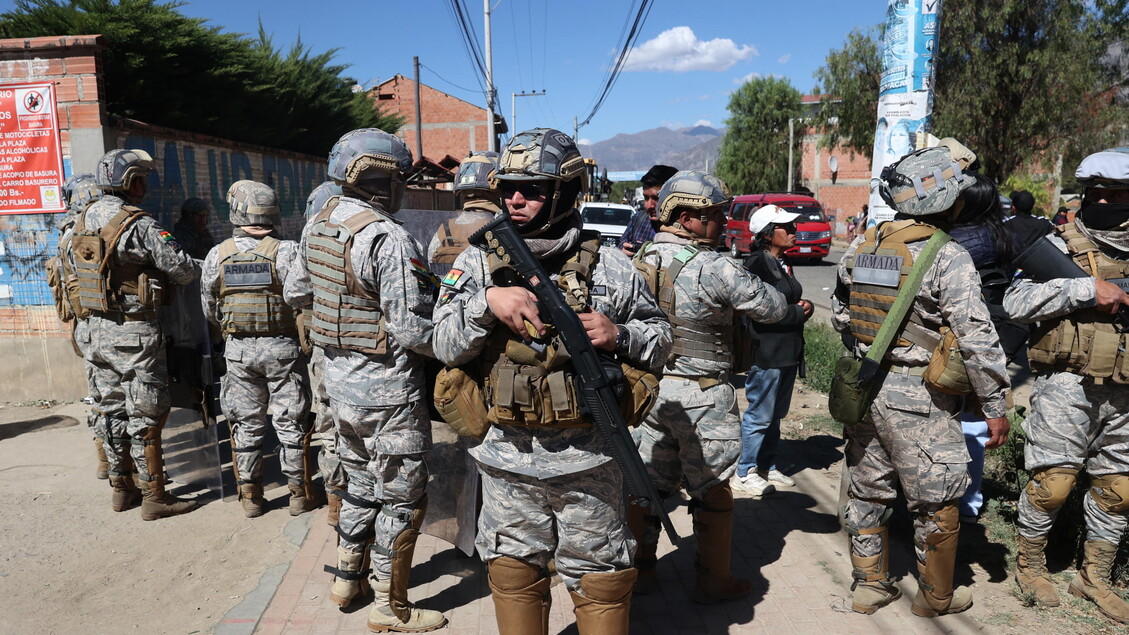
That villain was located early. Before the runoff campaign had properly begun, far-right first-round candidate Rafael López Aliaga — who missed the second round by roughly 23,000 votes — declared an “electoral coup” was underway, called on his supporters to mount a “civil insurgency,” and alleged that 1.5 million Peruvians had been prevented from voting due to deliberate irregularities. Electoral observers from the European Union dismissed the claims. Peruvian authorities did more than dismiss them: López Aliaga now faces criminal charges for alleged incitement of civil disorder. None of that has retracted the accusations from the public sphere, where they have continued to circulate ahead of Sunday’s vote.
The deeper fragility here is not Fujimori or Sánchez or even López Aliaga. It is the country they are running to govern. Peru has had nine presidents in ten years. Congress has impeached presidents, presidents have dissolved Congress, and the revolving door has spun so frequently that the question of who holds office has become almost secondary to the question of whether any institution retains enough public trust to enforce what it decides. Eastern Herald reported ahead of Sunday’s vote that whoever won would inherit not just a government but a decade of accumulated institutional damage that no single election result can repair.
Fujimori, 50, enters the runoff as the better-organized candidate. Her party, Fuerza Popular, has consolidated significant legislative power and is projected to hold roughly a third of congressional seats. She is running on a replication of her father Alberto Fujimori’s security policies from the 1990s — military deployment against organized crime, stricter immigration controls, harder prison conditions. Her name remains deeply polarizing: for many Peruvians, particularly in Lima and on the coast, it evokes the stability of an era of economic growth. For many others, particularly in Andean and rural regions, it evokes forced sterilizations, extrajudicial killings, and authoritarian suppression that her father is still formally convicted of.
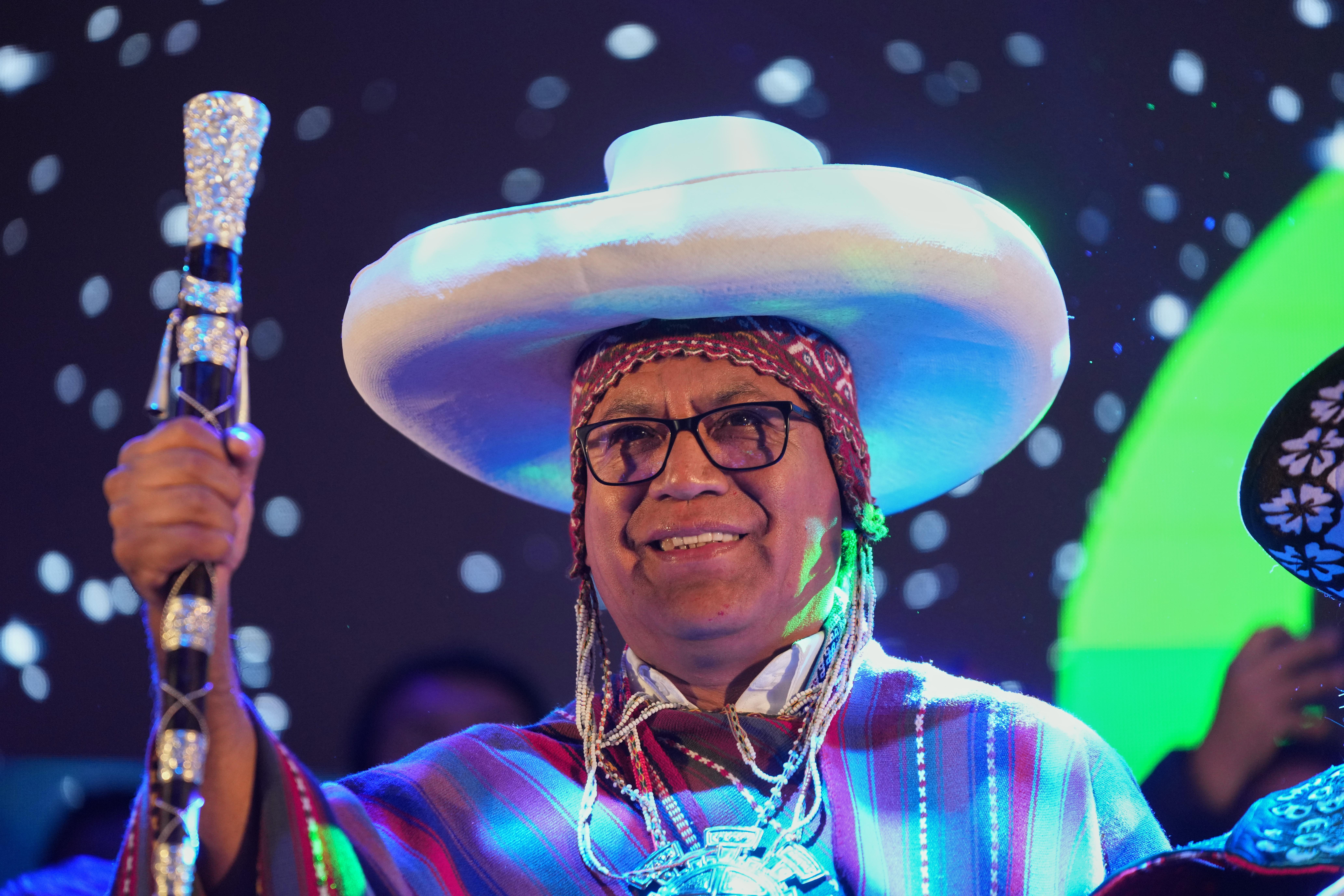
Sánchez, 57, a psychotherapist-turned-politician who served as foreign trade minister under Castillo, draws his strongest support from exactly those regions that have historically resisted Fujimorismo. But the association with Castillo — currently imprisoned after attempting to dissolve Congress and facing multiple corruption investigations — is a liability in swing districts where voters want change but not a return to the turbulence of 2021-2022. His campaign has had to simultaneously invoke the Castillo coalition without invoking Castillo himself, a balancing act that has never fully resolved.
Crime is the issue that cuts across both candidacies and, more than anything else, explains why neither candidate has been able to pull decisively ahead. AS/COA’s tracking of voter priorities shows security — not the economy, not corruption, not democratic stability — as the dominant concern, with both candidates offering versions of the same basic promise: that they will be the person who finally does something about it. More than 70 percent of voters did not choose either Fujimori or Sánchez in the first round, a figure that underlines how thoroughly the runoff represents an electorate holding its nose rather than making an enthusiastic choice.
What happens after the count closes is what no poll can measure. The National Jury of Elections, the ONPE, and the broader apparatus of Peruvian electoral administration enter Sunday’s count with institutional credibility already eroded by the chaotic April first round — ballot delivery failures that forced voting to extend into a second day, the head of the electoral agency resigning under pressure, and weeks of disputed tallies before a runoff was formally confirmed. International observers gave the process a qualified endorsement. That is not the same as robust public confidence in the institutions doing the counting.
If the result is close — and the polls suggest it very likely will be — the losers will face a choice their predecessors have consistently made in a particular direction. Whether the winner reaches July 28, the date set for inauguration under interim President José María Balcázar, without the country cycling into its tenth political crisis in a decade is the question that Sunday’s voters were actually being asked to settle. The ballot was simple. The answer almost certainly will not be.