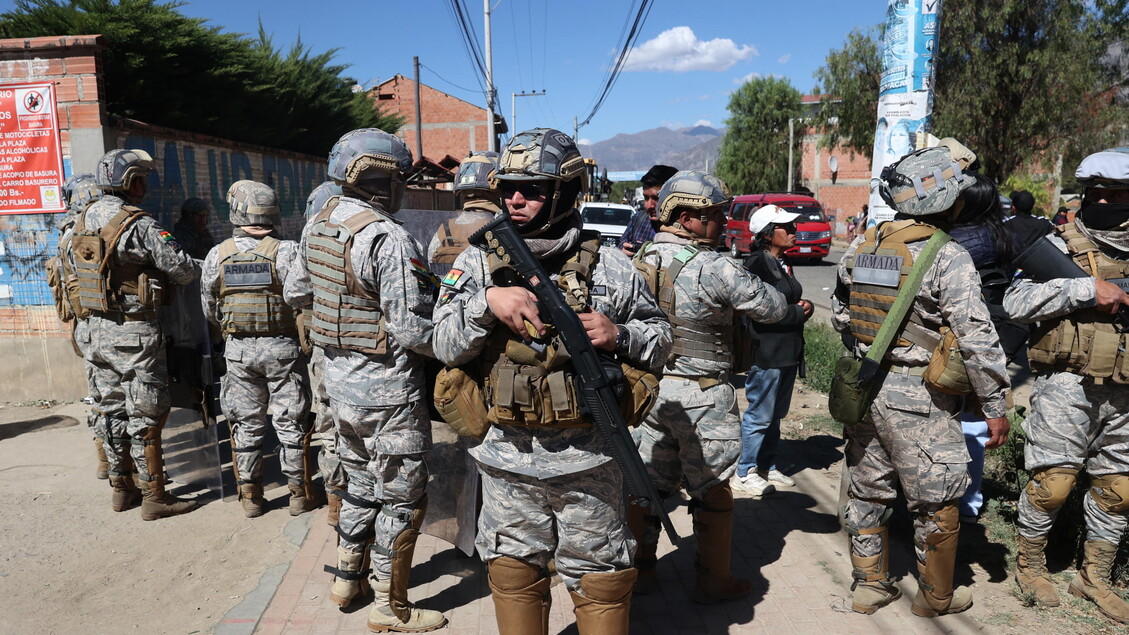

LA PAZ – The article that consumed Bolivia’s Chamber of Deputies for more than 13 hours was barely two pages long. But the provision buried in its fourth section is the one that matters most to the protesters who have been dying in the streets.
After an overnight session that stretched into Sunday, Bolivian lawmakers approved legislation granting President Rodrigo Paz sweeping authority to declare states of emergency – including, according to the bill’s most contested passage, a presumption of legality for police and military actions carried out during those emergencies. The bill now awaits Paz’s signature to become law.
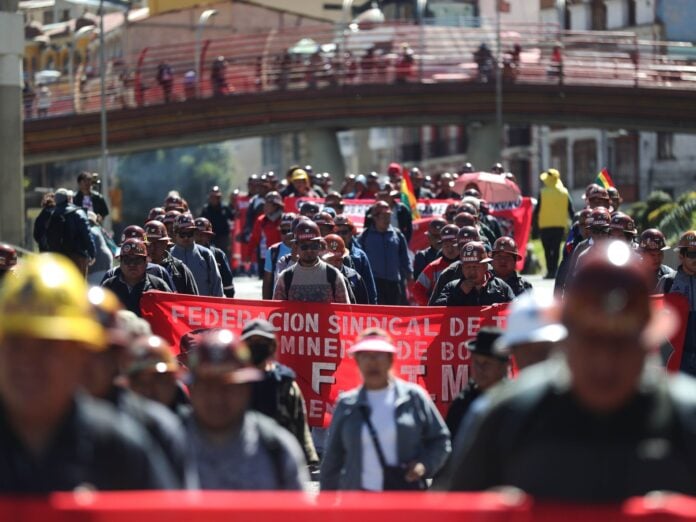
The measure arrives at a moment of acute political fragility. For over five weeks, protests and roadblocks organized by labor unions, Indigenous communities, rural teachers and organizations aligned with former President Evo Morales have paralyzed large sections of the country. At least 10 people have been killed in clashes since May, 37 have been injured, and 365 have been arrested, according to figures cited by Bolivian authorities and international human rights monitors.
Under the new law, a state of exception can last up to 90 days and can be extended – but only with parliamentary authorization. The president may define the duration, territorial scope and which security forces are responsible for enforcement through executive decree. That flexibility is precisely what critics say makes the bill dangerous.
Opposition lawmakers spent much of the overnight session attacking the presumption-of-legality clause. Its defenders argued that security forces needed clear legal protection to act decisively against blockades that have cut fuel, food and medicine supplies to several regions. Its opponents argued something simpler: that a law written to constrain protest also removes the clearest tool for holding soldiers and police accountable when they use force against civilians.
“This is the mechanism they intend to use to justify killing people,” Bolivian opposition senator Patricia Arce told reporters outside the legislative chamber early Sunday, without providing further specifics on the clause’s legal language.
The bill passed with the backing of more than two-thirds of deputies – a margin significant enough to signal genuine cross-party support for some form of emergency framework, even among legislators who represent constituencies that have seen roadblocks and unrest firsthand.
This is the second major piece of emergency legislation to clear Bolivia’s plurinational assembly in two weeks. At the end of May, both chambers approved in less than 48 hours the repeal of Law 1341, the so-called “Eva Copa Law” passed in 2020 in the aftermath of the Jeanine Áñez coup era. That earlier law had required the executive to submit emergency decrees for legislative review and imposed a 60-day ceiling on states of emergency. Reuters reported at the time that its repeal effectively cleared the constitutional path for Paz to deploy the armed forces against domestic unrest.
What Sunday’s vote adds is a formal statutory framework – a replacement architecture rather than simply a repeal. The difference is not merely technical. Paz has repeatedly described military deployment as an option of last resort, and his government is under significant pressure from business groups and urban residents who have watched supply chains collapse for more than a month. The Federation of Private Business Entities of Bolivia has warned that road blockades continue to inflict daily losses that, according to Latin Times reporting citing Bolivian business organizations and the Ombudsman’s office, have already exceeded $1.6 billion nationally, with Cochabamba alone recording more blockade-related damage in 2026 than in all of 2025.
The protests’ origins trace to early May and a land mortgage law that Paz quickly annulled when demonstrations first broke out. But annulling the law did not end the movement. Within days, the demands had widened – encompassing wage increases, opposition to closures of loss-making state enterprises, and eventually the one demand Paz cannot legislate away: his own resignation. Morales, who ruled Bolivia for 14 years as the country’s first Indigenous president before leaving office in 2019, has publicly framed the choice confronting Paz in stark terms. Militarization, he has written, is a “suicidal decision.” Early elections, he has argued, are the only exit.
Paz has not indicated publicly whether or when he intends to sign the emergency-powers law or formally invoke a state of exception under it. His government has said it remains open to dialogue. The Vice President, Edmand Lara, issued a public letter last week calling for immediate national negotiations without preconditions. Whether the passage of a law that grants the executive broad emergency authority is compatible with that offer of dialogue is a question neither the government nor its opponents have yet answered.
Bolivia’s economic crisis, which multiple independent analysts have described as the country’s worst in four decades, was already visible before the protests began. Energy production has declined for years, and a shortage of US dollars has disrupted the import of essential goods including fuel – the same fuel whose absence at the pump became the proximate trigger for demonstrations now in their sixth week. France’s government has confronted similar fuel-price pressures from its own citizens, though through very different political mechanisms, as the wider disruption to global energy supply chains ripples outward from conflict zones in the Middle East.
What the new law does not resolve is the underlying negotiating impasse. Paz’s government has granted no concrete economic demands since annulling the land mortgage law in mid-May. Protesters have not backed down. Roadblocks reported by ANSA and UPI remain in place across multiple departments. And the 365 people detained since the unrest began – some on terrorism charges, including the executive secretary of the Bolivian Workers Central – have become a secondary grievance that will need its own resolution before any broader settlement is possible.
The Inter-American Commission on Human Rights has been tracking the casualty data since the crisis began. What it has not yet done – and what neither the government nor the opposition has requested – is dispatch an on-the-ground monitoring mission. That absence is itself a data point about how the region is watching Bolivia right now: with concern, but without enough alarm to intervene. Washington has been preoccupied with its own Latin American policy calculations elsewhere, having moved simultaneously on Cuba sanctions and aid arrangements in May. How much attention the Paz government can count on from its stated international backers remains an open question that the emergency-powers vote alone cannot close.
For the families of the 10 dead and the hundreds detained, Sunday’s parliamentary session produced a law that is simultaneously too broad and too vague to answer the question they have been asking since the first deaths in May: what rules govern the use of lethal force, and who is accountable when those rules are broken?
The new emergency-powers legislation does not answer that question. It moves the legal framework one step closer to a formal state of exception. Whether Paz uses it – and whether its use ends the crisis or deepens it – is the only story that matters in Bolivia right now, and it has not yet been written.