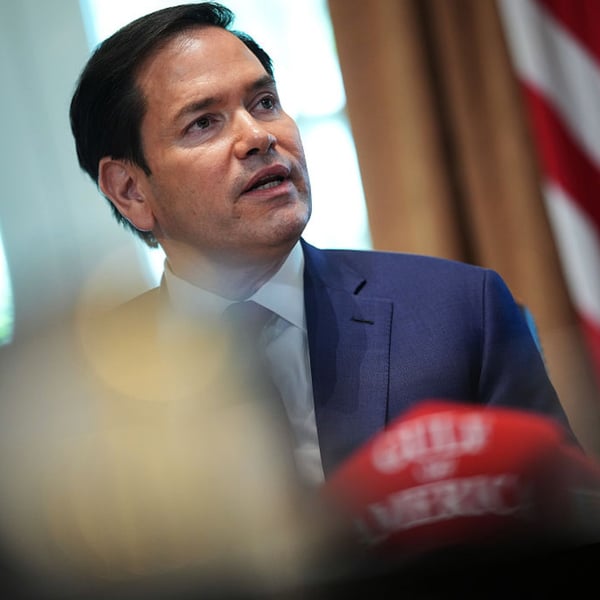

US Secretary of State Marco Rubio said Cuba has accepted a $100 million humanitarian assistance proposal from Washington, signaling a potentially significant development in the increasingly tense relationship between the Trump administration and Havana. However, Rubio cautioned that implementation remains uncertain, particularly over how the aid would be distributed and whether Cuban military-linked institutions would be excluded from the process.
Speaking to reporters on Thursday, Rubio claimed Cuban authorities had indicated their willingness to accept the humanitarian package, which Washington insists must be delivered through the Catholic Church and independent humanitarian organizations rather than state-controlled entities linked to the Cuban military conglomerate GAESA.
“They say they’ve accepted it,” Rubio said, while also expressing skepticism over whether the arrangement would ultimately materialize under Washington’s conditions.
The humanitarian proposal comes at a time when Cuba is facing one of its most severe economic crisises in decades. The island has been struggling with prolonged blackouts, fuel shortages, inflation, shortages of food and medicine, and increasing social unrest. Cuban authorities have blamed US sanctions and what they describe as an energy blockade imposed by Washington for worsening the country’s economic collapse.
The Trump administration, however, argues that corruption, economic mismanagement, and the dominance of military-controlled business structures are primarily responsible for the deteriorating living conditions inside Cuba. Rubio, one of the administration’s most vocal critics of Havana, accused the Cuban leadership of enriching itself while ordinary Cubans suffer through worsening shortages.
Washington’s latest humanitarian assistance proposal was first publicly announced earlier this month after reports emerged that large parts of Cuba were experiencing extended nationwide power outages due to fuel shortages. The State Department said the aid package would include food, medicine, and direct humanitarian support aimed at helping Cuban civilians.
According to Rubio, the Catholic Church confirmed during discussions at the Vatican that it was prepared to help oversee the distribution of aid across the island. Several independent humanitarian organizations already operating in Cuba were also reportedly willing to participate in the delivery process.
The involvement of the Catholic Church has become a central element of Washington’s strategy. US officials argue that routing aid through religious and non-governmental institutions would ensure assistance reaches civilians directly rather than being absorbed into state-controlled systems dominated by GAESA. The military-run conglomerate controls major sectors of the Cuban economy, including tourism, retail, transportation, and financial services.
Cuba initially reacted angrily to the US proposal. Cuban Foreign Minister Bruno Rodriguez dismissed Rubio’s statements earlier this month as a “fable” and accused Washington of hypocrisy, arguing that the same government offering humanitarian aid continues to tighten sanctions that are crippling the island’s economy.
Havana later softened its tone, saying it would consider any assistance offered “in good faith” and clarifying that Cuba had not formally rejected the proposal. Cuban President Miguel Diaz-Canel subsequently suggested that the government would not obstruct genuine humanitarian assistance if it respected Cuban sovereignty and international norms.
Despite the apparent diplomatic opening, relations between Washington and Havana remain deeply strained. The Trump administration has intensified pressure on Cuba in recent months by imposing additional sanctions, targeting oil shipments to the island, and threatening penalties against foreign entities supplying fuel to Havana.
Cuban officials say those measures have sharply worsened electricity shortages and contributed to the country’s economic crisis. Diaz-Canel recently warned that US hostility toward Cuba had reached “unprecedented levels,” while Cuban officials accused Washington of pursuing regime change under the guise of humanitarian assistance.
Rubio has openly framed the humanitarian offer as part of a broader effort to bypass Cuba’s political leadership and build what he described as a new relationship directly with the Cuban people. In a Spanish-language message delivered earlier this week, he blamed the island’s communist leadership for widespread shortages and accused GAESA of controlling billions of dollars in assets while ordinary citizens face worsening hardship.
The administration’s rhetoric has coincided with a broader escalation in tensions. This week, US authorities announced criminal charges against former Cuban leader Raul Castro linked to the 1996 downing of civilian aircraft operated by the Miami-based humanitarian group Brothers to the Rescue. The move marked one of Washington’s most aggressive legal actions against Cuba’s leadership in years and further inflamed diplomatic tensions between the two countries.
Meanwhile, protests linked to electricity outages and shortages have continued to emerge across parts of Cuba. Demonstrators in several Havana neighborhoods reportedly took to the streets in recent days demanding restoration of power as blackouts spread across the island.
Analysts say the humanitarian aid dispute reflects a larger geopolitical struggle between Washington and Havana, where humanitarian concerns are increasingly intertwined with sanctions policy, political leverage, and regime pressure. While the proposed $100 million package could provide temporary relief to ordinary Cubans, uncertainty remains over whether both sides can agree on the conditions necessary for delivery.
Rubio himself acknowledged that the chances of a broader negotiated agreement with Cuba remain “not high,” underscoring how fragile the current opening may be despite Havana’s apparent willingness to consider the aid proposal.
—Inputs from Sputnik.