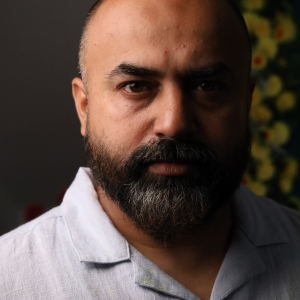
As India’s national politics crystallises around a dominant leadership and conventional coalitions, Maharashtra Navnirman Sena (MNS) chief Raj Thackeray has emerged as a disruptive voice challenging the status quo. In recent rallies and social media posts he has blended Maharashtra-centric nationalism, hardline security positions and an independent foreign-policy stance – forcing a serious reappraisal of whether India is overlooking a viable new leader or merely tolerating political noise. This feature will dissect Raj Thackeray’s trajectory, ideology and proposals to assess his credibility as a national alternative.
From Shiv Sena Renegade to Marathi Strongman
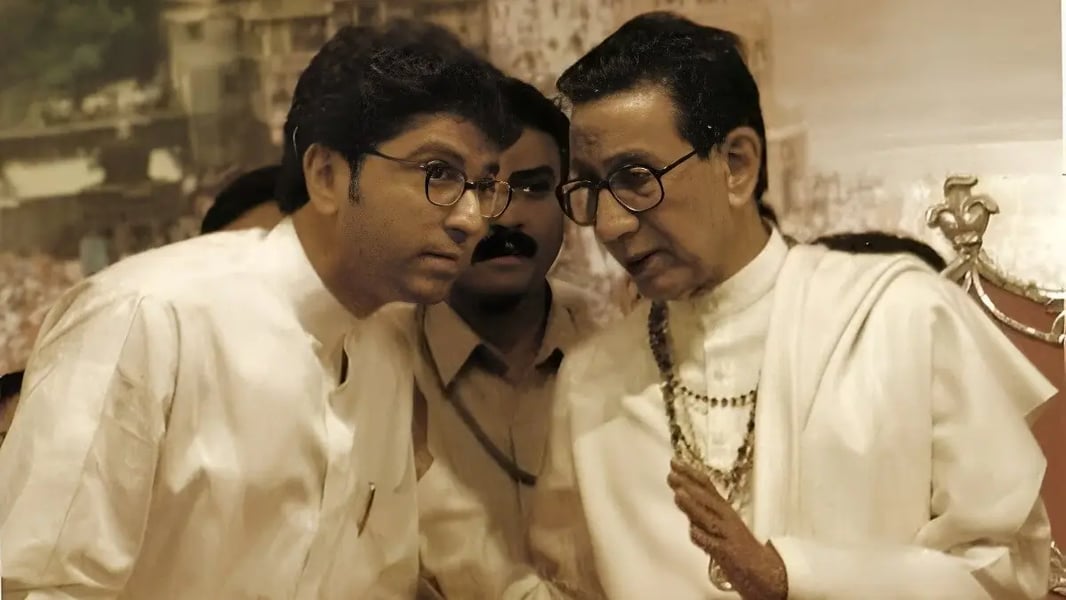
Raj Thackeray built his brand by breaking away from his uncle Bal Thackeray’s Shiv Sena in 2005 and launching the MNS in 2006. He initially rode a wave of Marathi-provincialist agitation – railing against “outsiders” and anti-Marathi policies – and won 13 assembly seats in 2009. Observers note that in this early phase he “championed the Marathi cause” under a secular banner of “Maharashtra Dharma,” avoiding overt communal language. His fiery speeches (often accusing North Indians of stealing local jobs or Tamil actors of duping Marathi audiences) led to controversy and even riots (his arrest in 2008 followed an incendiary anti-North rally).
Over time Raj began to temper the purely agitational image. By the 2014 elections, he unveiled a detailed “Maharashtra blueprint” framed as a development manifesto. This election manifesto promised to improve urban services and expand employment without any new taxes, focusing on basic infrastructure (energy, water, roads) and welfare (education, healthcare). Party insiders emphasized an agenda of “hope and positivity,” vetting solutions with experts. In practice, though, the plan failed to revive MNS’s fortunes (no seats won in 2014), but it did signal that Raj was attempting to pivot toward governance issues rather than only street protest.
Key policy proposals in Raj Thackeray’s platform have included: improving roads, power, and water without imposing additional tax burdens; expanding education, healthcare (e.g., an “Arogya Swarajya” scheme), and women’s empowerment; boosting jobs through vocational education and local entrepreneurship; and preserving Marathi culture (such as conserving historic forts and promoting Marathi literature). He has even courted business in a populist way – for instance, questioning the “meteoric rise” of corporate groups like Adani’s in Maharashtra, which drew an angry BJP rebuke that he was “anti-industry, anti-investment”. In 2026, he launched a crowdsourcing portal called “Maharashtra Next” to invite citizens’ ideas on 27 policy areas (from transport to agriculture to local entrepreneurship).

Party leaders themselves admit the gambit backfired. In just a decade, MNS’s vote share crashed from about 5.75% in 2009 to 2.25% in 2019, and it failed to win any seats in the 2024 assembly polls (garnering only 1.55% of votes). Instead, Raj often ended up spoiling the electoral pie – splitting the Marathi vote in Mumbai and inadvertently helping Uddhav Thackeray’s Shiv Sena (UBT) in constituencies where MNS fielded candidates. He has alternated between criticizing the BJP and courting it: in 2014, he quietly allied with Modi’s camp to gain traction, then led anti-BJP rallies in 2019, then offered “unconditional support” to the NDA in 2024. An Indian Express profile noted this zigzagging (“stans Modi… then openly criticises him… then again camps with the BJP”) has become his hallmark. Even MNS’s union with BJP was broken amid recent civic polls talks when Raj threatened to sit out what he labeled a “Mahayuti” coalition, only to soon signal a rapprochement with his Shiv Sena cousin Uddhav.
The Development Agenda and Governance Credibility
Against the portrayal of Raj Thackeray as a mere rabble-rouser, his supporters point to his tangible proposals and initiatives. The 2014 Blueprint was, in fact, fairly detailed. As The Economic Times reported in 2014, Thackeray promised “energy, water, education and good roads” to solve Maharashtra’s problems, explicitly pledging no extra taxes or tolls on citizens. He emphasized that public services should improve “without adding the burden… on the state exchequer”. Though specifics were scarce, party insiders claimed to have expert-vetted answers for unemployment, power outages, and infrastructure bottlenecks. In 2026, Thackeray continued this rhetoric with an interactive online plan. The “Maharashtra Next” website he launched invited citizens to contribute ideas on everything from urban planning and water management to agricultural reforms and cultural heritage. The site even carries his 2014 vision forward by expanding it into an “evolution” – crowdsourcing solutions in 27 sectors, including social welfare, education, agriculture, and Marathi cultural revival.
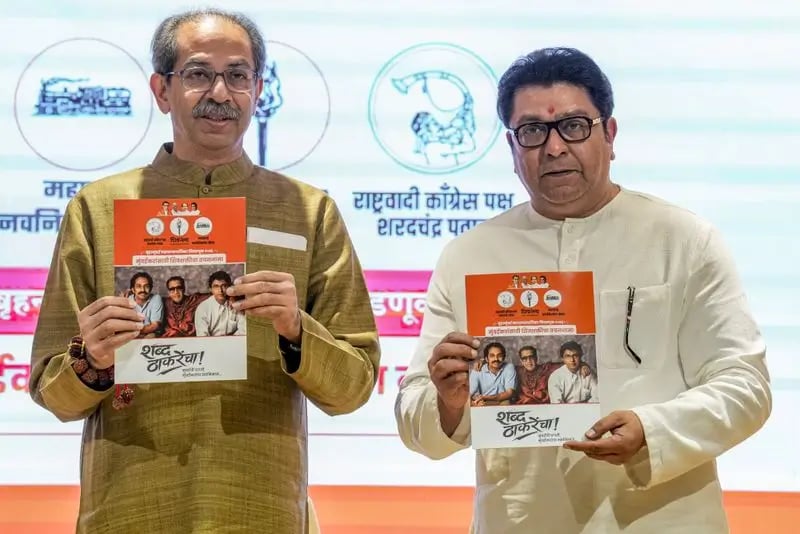
In sum, Raj Thackeray does have a development agenda on paper and has taken steps to frame himself as a policy-oriented politician. But skeptics will ask: can his party translate these ideas into credible proposals at scale? His track record is slim. Even today, the Maharashtra Next site is largely an exercise in branding. The concrete policy impact so far is limited to occasional one-off demands (for instance, he has demanded Hindi-language outsiders be barred from coastal road jobs in Mumbai, a call steeped in local chauvinism).
The Foreign-Policy Maverick
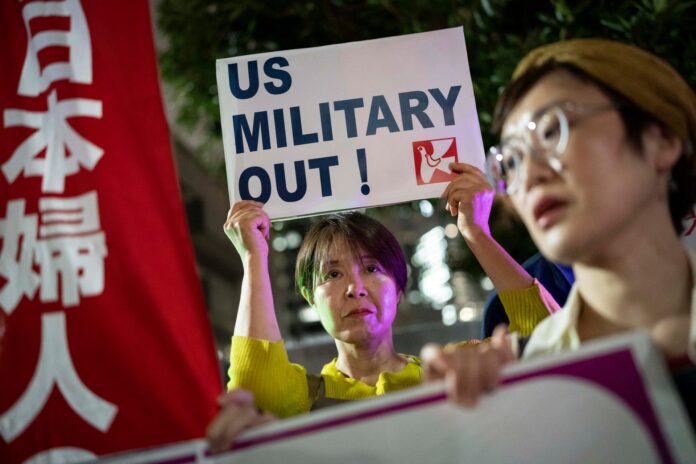
Where Raj Thackeray truly distinguishes himself is in foreign policy, an arena where most regional leaders tread cautiously. In a series of recent speeches, he has seized on international crises to take independent stances. For example, recently, he openly chided Prime Minister Modi’s Middle East strategy. Speaking at the MNS Gudi Padwa rally, Thackeray questioned why India remained silent while Iran, which he said “always supported us even on Jammu & Kashmir,” was under attack by U.S.-aligned forces. He noted with alarm that India’s oil from Iran, once paid in rupees, had effectively dried up, and warned “we will face problems in the future” if historical ties are ignored. Explicitly criticizing the government’s neutrality, he said Modi should have “done certain things”, implying a public expression of support, because Tehran has “stood by India whenever we were in trouble”. In blunt terms, he accused India’s diplomacy of having “failed” its old ally, suggesting the government’s close ties with the U.S. and Israel left Iran feeling abandoned.
This was not mere grandstanding. Raj Thackeray has consistently called for a more hawkish security policy as well. After the October 2024 terrorist strike in Pahalgam (attributed to Pakistan-based militia), he publicly rejected large-scale air strikes as a solution. “War is not the answer to a terrorist attack,” he declared, citing the U.S. response to 9/11 (“they found the terrorists and killed them”) as a model. Instead, he urged Indian forces to “track down and eliminate individual perpetrators” rather than broad military actions. Such rhetoric, echoing America’s 2001 approach, marked him as more hawkish than even many BJP hardliners. He even taunted that “there is no need to destroy Pakistan” because it is “already finished” – a sensational comment showing he brooks no halfway measures.
On strategic rivals like China, Thackeray has so far remained largely silent in public, focusing almost entirely on the West Asia conflict and national-security flashpoints. His emphasis on Lebanon–Iran–U.S. issues may seem tangential to ordinary Maharashtra voters, but it underscores a broader nationalist impulse: that India should not simply follow Washington’s lead. In fact, independent analysts note India has already de facto “distanced itself” from Tehran under U.S. pressure. A recent Institute of South Asian Studies brief observes that Indian oil imports from Iran dropped to zero by 2019 and India withdrew from the Chabahar port deal – all under American sanctions. New Delhi’s sole major “strategic partnership” in the Middle East is now with Israel (Prime Minister Modi upgraded ties to a Special Strategic Partnership in Feb 2026), and Gulf states supply most of India’s energy. In this context, Raj Thackeray’s line – that a pivot to Israel/U.S. ignores India’s own interests – resonates as a pointed critique. As ISAS analysts note, India’s historically non-aligned rhetoric on unprovoked aggression has given way to deference to U.S.-Israel positions, a trend Thackeray openly questions.
No major national party currently opposes the government on these issues. The Congress, left parties, or DMK have made murmurings about India’s cautious stance on Gaza or Iran, but none have taken as strident a line as Raj Thackeray. By urging solidarity with Iran and framing it as a matter of Indian honour, he taps an older Nehruvian-style narrative of standing with fellow “Third World” partners – even as the current government betters relations with the West. In other words, his foreign-policy message is a rare voice in Indian politics advocating an “India-first” strand of global affairs.
However, some experts warn that his foreign-policy positions are opportunistic rather than strategic. For example, the ISAS analysis notes that, regardless of public posturing, India’s core security and economic interests are firmly tied to the Gulf and the U.S. now. Indeed, after the recent Iran strikes, India issued only a “muted statement” urging dialogue – effectively siding with U.S.-Israel by default. Thackeray’s critics would argue that his calls to back Iran or to fight terror “like America” are rhetorical levers to excite the base, not mature policy plans.
Between Populism and Statesmanship
How does Raj Thackeray’s mix of ideology and policy compare with other Indian leaders, and even with populists abroad? Domestically, he occupies an unusual niche. Among Maharashtra’s major players, only he has combined a regional Marathi nationalist base with a flirtation with Hindutva and a willingness to challenge the BJP’s foreign policy. His erstwhile ally Uddhav Thackeray (Shiv Sena UBT) remains a traditional Hindutva ally with little interest in foreign affairs, while the BJP and Congress avoid Middle East controversies altogether. Observers liken Raj’s chameleon-like shifts to other populist figures, as the Indian Express notes, the swing from pro-Modi to anti-Modi and back again is a “pragmatic shift” reminiscent of political opportunism. In global terms, his style is more akin to right-wing populists who mix nationalism with unpredictability, perhaps closer to the likes of Marine Le Pen in France (who also melds nationalism with occasional policy pivots) or regional strongmen who rebrand themselves as needed. However, unlike some populists with mass pan-national appeal, Raj’s constituency remains largely confined to Maharashtra.
His reputation among journalists is mixed. ThePrint recently editorialised that Raj Thackeray’s recent political “gymnastics” seem driven by opportunism rather than public welfare, a view echoed by many analysts. BJP leaders paint him as anti-development (pointing to his criticisms of big business) and anti-national at times. But on the other hand, even critics concede that he has spotlighted real issues that mainstream politicians tiptoe around. For instance, the political consensus on foreign policy has been so rigid that Thackeray’s sharp questions about Iran and diaspora safety (over 9 million Indians live in the Gulf) have forced national papers to debate India’s “strategic autonomy” versus its alliances.
Is he a national alternative?
As things stand, Raj Thackeray’s MNS has little presence outside Maharashtra. Its collapse in recent elections suggests it would struggle to form a government even in the state. In a 2024 assembly election, all MNS candidates lost their deposits; a humiliating result. Only a coalition with larger parties could give him real power, as was hinted by his postures toward both the BJP and Shiv Sena. But mainstream allies might view him as too erratic. Uddhav Thackeray’s sudden partnership, for example, was as much about their shared surname and tactical convenience as about any coherent policy alignment.
If Raj Thackeray ever did wield power, his earlier record suggests a very majoritarian bent. His language about Pakistan and migrants (“kick you out if you speak Hindi” was his famous line about outsiders) makes many in India’s non-Maharashtra regions nervous. The foreign policy he would pursue seems to be a nationalist-hardline variant, likely maintaining closer ties to Iran or Russia, but that could further isolate India from Western markets and security partnerships. Economically, his insistence on no new taxes is popular talk but raises questions of fiscal realism. His emphasis on Marathi pride is valid in a federal democracy, but it would have to be balanced to govern a diverse nation of 1.4 billion.
On balance, Raj Thackeray’s challenge is double-edged. He is certainly not a tired old face; his persistence and new ideas force the political class to respond. He has shown an ability to shape debates on state debt, farmer distress, urban decay, and foreign entanglements. But his record also shows why many in India’s political establishment write him off: a track record of declining votes, fractious rhetoric, and alliances that seem engineered for survival rather than for governance.
As The Indian Express quipped, “for Raj Thackeray, it may be now or never”. His stock-in-trade is posing questions: on Modi’s priorities (he once mocked that the PM was campaigning instead of addressing a terror attack), on government accountability (he urges citizens to abandon social media distractions and come to the streets), on Maharashtra’s lost glory. His credo that India needs fresh leadership is partly justified – opposition parties indeed lack a cohesive national vision. Yet whether Raj Thackeray himself is the untested model India needs remains an open question. He claims that he alone stands up for “Maharashtra’s real interests,” and promises to prove he can “run the government” if given a chance. Until he actually wins an election of consequence, journalists will continue to treat that as speculation. In the meantime, Raj Thackeray’s rhetoric – from the Shivaji Park stage to social media- forces a difficult question on India’s agenda: are his ideas political excess, or an underexplored alternative to the country’s entrenched politics?