
NEW DELHI – K Annamalai spent four years building something the Bharatiya Janata Party had never had in Tamil Nadu: a credible independent presence. He grew the party’s vote share to 11 percent without alliance partners, made himself the most recognizable BJP face south of the Vindhyas, and told the national leadership that seven more years of independent work would deliver a genuine breakthrough. The leadership gave him an AIADMK alliance instead. In the 2026 Tamil Nadu assembly elections, the alliance won one seat out of 234.
On June 5, Annamalai submitted a five-page resignation letter to BJP national president Nitin Nabin. “Our views do not align regarding Tamil Nadu,” he wrote in the letter, after what he described as 18 months of persistent disagreements with the central leadership. He had first informed party headquarters of his decision on December 4, 2025, six months before making the break public. Nabin accepted the resignation the same day.
Within 24 hours, 1.4 million people had registered for his new political venture. Within three days, the number hit 1.7 million. The organization he called “We The Leaders” attracted more sign-ups in 72 hours than the BJP Tamil Nadu unit had managed to build in four decades of existence.
Annamalai, 42, is an IPS officer turned politician who made his name enforcing the law in Karnataka before deciding he wanted to write it. He graduated in mechanical engineering from PSG College of Technology in Coimbatore, earned an MBA from IIM Lucknow, and cleared the civil services examination in 2011. Posted to the Karnataka cadre, he served as Superintendent of Police in Udupi and Chikkamagaluru and as Deputy Commissioner of Police in Bengaluru, where the local press called him “Singham” after a Bollywood cop. He resigned from the IPS in May 2019 and joined the BJP in August 2020.
The party made him Tamil Nadu state president in July 2021, and what followed was an experiment in whether a national party could grow organically in a state dominated by Dravidian regional forces. Under Annamalai, the BJP contested the 2024 Lok Sabha elections in Tamil Nadu without the AIADMK as a partner. He ran from Coimbatore, lost by 110,000 votes, but recorded a 32.79 percent vote share in the constituency. The party’s statewide share reached 11 percent, the highest it had ever achieved independently.
Those numbers suggested that the independent strategy was working, that sustained ground-level presence could eventually translate into seats. Annamalai asked for seven years of organizational autonomy. Delhi chose the shortcut.
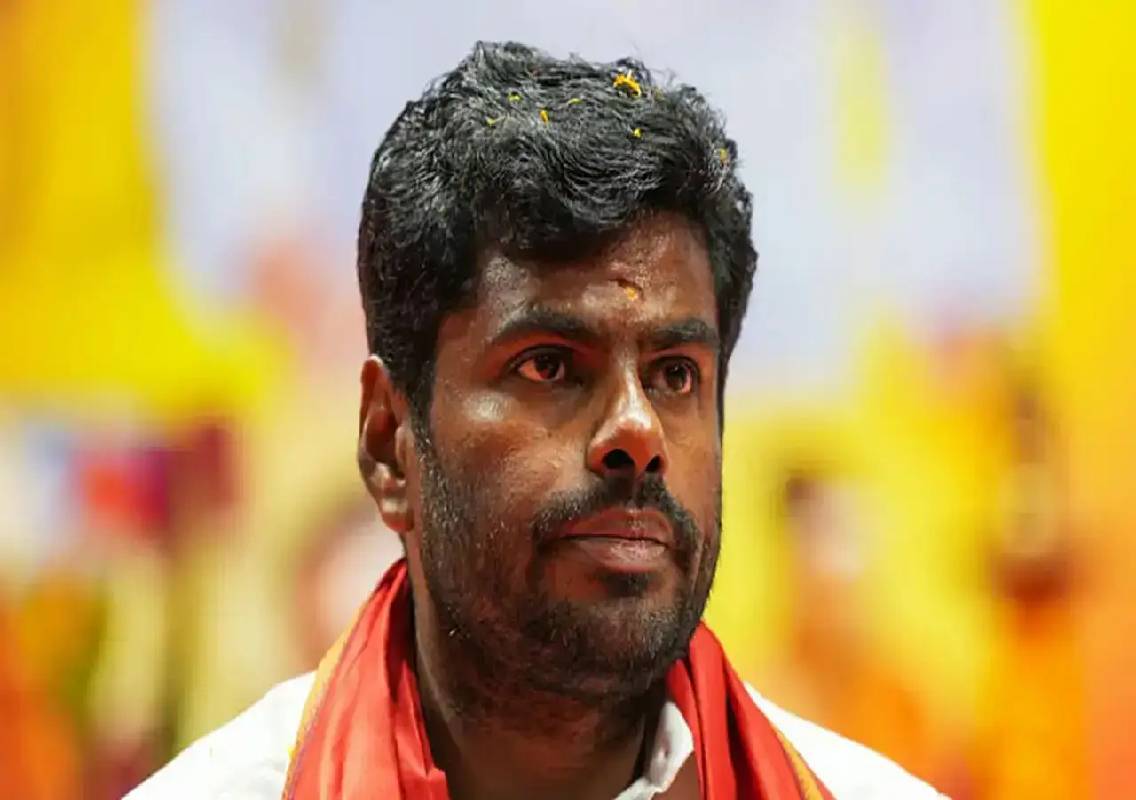
The BJP announced an alliance with the All India Anna Dravida Munnetra Kazhagam for the 2026 Tamil Nadu assembly elections. Personal animosity between Annamalai and AIADMK general secretary Edappadi K. Palaniswami poisoned the arrangement from the start. Palaniswami reportedly demanded Annamalai’s removal as a condition for joining the coalition. The BJP complied, replacing him with Nainar Nagendran as state president in April 2025. Annamalai was sidelined, the alliance was sealed, and both parties were annihilated at the polls. Thalapathy Vijay’s TVK swept to power while the BJP-AIADMK combine was reduced to a single seat.
The resignation letter placed the failure precisely. Annamalai argued that national parties had consistently failed to communicate with Tamil Nadu’s people “in culturally relevant ways” and that the state was “fatigued by the general political discourse for many decades.” He described his original reason for joining the BJP as wanting “to change the notion that politics is a path only for the elite and a select few.” That mission, he concluded, could no longer be pursued from inside the party.
The three-language policy was the final provocation. In the weeks before his resignation, the Central Board of Secondary Education moved up the implementation of a compulsory third language for Class 9 students to the current academic year from the original 2029-30 timeline. Annamalai publicly demanded a total rollback. In Tamil Nadu, where the anti-Hindi agitation of the 1960s remains foundational to the state’s political identity, the demand positioned him as a Tamil cultural defender against his own party’s central government. It also guaranteed that his departure would be understood as principled rather than opportunistic.
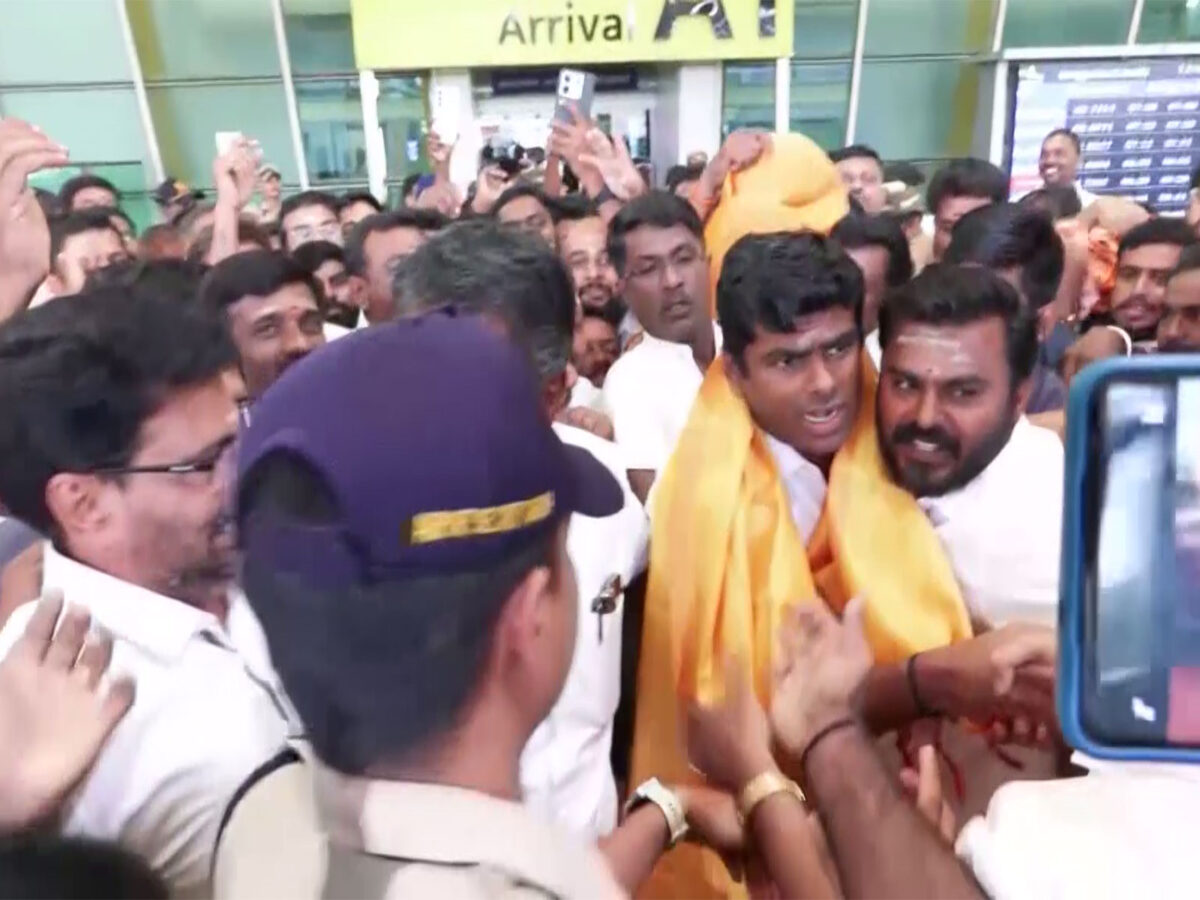
“We The Leaders” is structured as a movement rather than a registered party, a model Annamalai appears to have borrowed from other recent political startups that have operated outside the Election Commission’s formal framework. He has announced an APJ Abdul Kalam Centre for Ethics and Politics in Coimbatore to train future candidates and has said the movement will contest local body elections before transforming into a registered party ahead of the 2031 Tamil Nadu assembly elections. When he flew into Coimbatore after the announcement, hundreds of supporters met him at the airport chanting the movement’s name.
Tamil Nadu’s political ground has shifted so thoroughly in the past year that Annamalai’s departure is not merely a loss for the BJP but a symptom of a broader rearrangement. TVK governs from Chennai. The DMK has walked away from the INDIA opposition alliance after Congress joined the TVK government. The AIADMK remains diminished. Into this landscape steps a former police officer with a personal following, a database of 1.7 million registrants, and the particular credibility of having warned his party exactly how things would go wrong.
The BJP spent six years treating Annamalai as its southern project. He built the organization, raised the vote share, and personified the party’s claim that it could transcend its Hindi heartland base. When the investment began producing results, the party chose to subordinate it to the kind of coalition arithmetic that has delivered seats in other states but proved catastrophic in one where regional identity overrides national party loyalty. Whether Annamalai can convert his movement into electoral power remains years away from being tested. What is already clear is that the BJP has lost its most viable path into South India and given Tamil Nadu its most interesting new political variable.