
NEW DELHI – The Bharatiya Janata Party spent years building one of the world’s most effective political social media operations, accumulating millions of followers across platforms through a machinery that combined government resources, celebrity endorsements, and relentless content production. In May 2026, a 30-year-old political communications strategist with a Boston University degree and a grudge built a bigger one in five days.
Abhijeet Dipke founded the Cockroach Janta Party on May 16, the day after Chief Justice of India Surya Kant compared unemployed youth to “cockroaches” and “parasites of society” during a Supreme Court contempt hearing. “There are youngsters like cockroaches; they don’t get any employment,” Kant said from the bench, according to Al Jazeera. He later clarified he was referring to individuals with fake law degrees. By then it was too late. Dipke, who had spent three years managing social media campaigns for the Aam Aadmi Party before leaving in 2023, registered the Instagram account, launched a website, and watched the numbers climb past anything Indian politics had seen before.
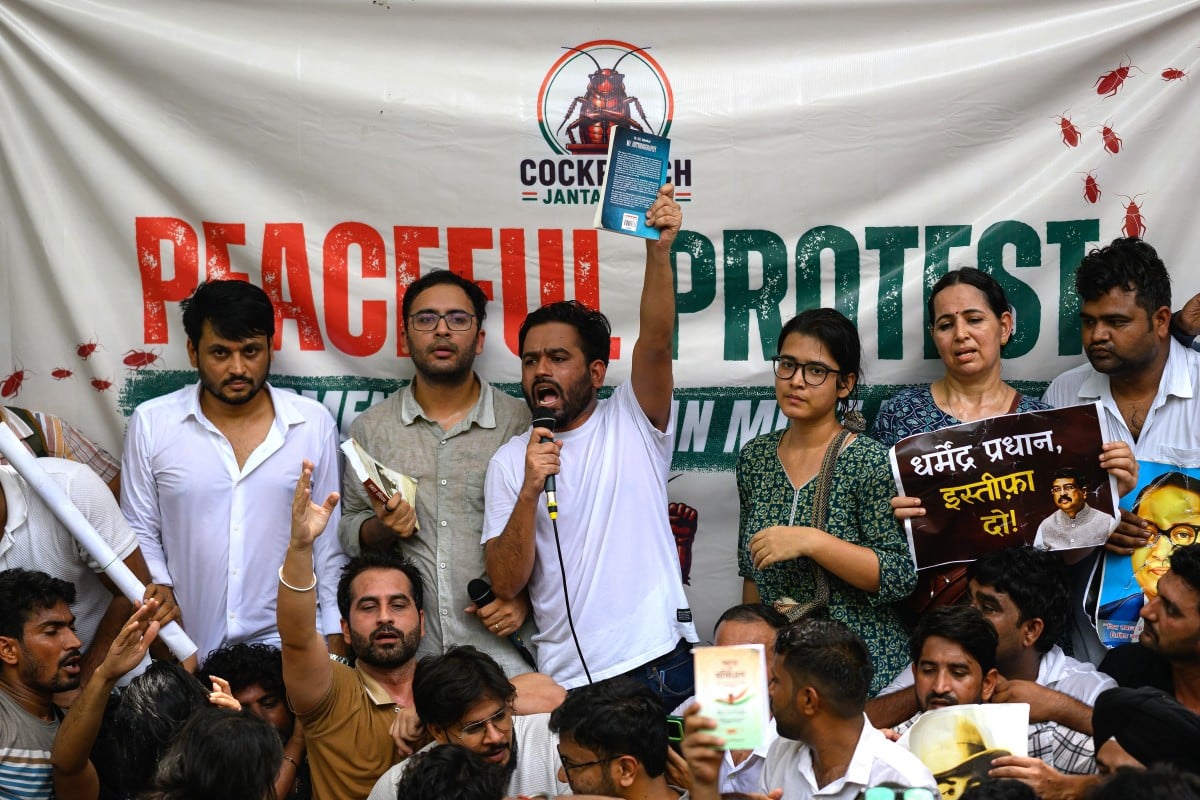
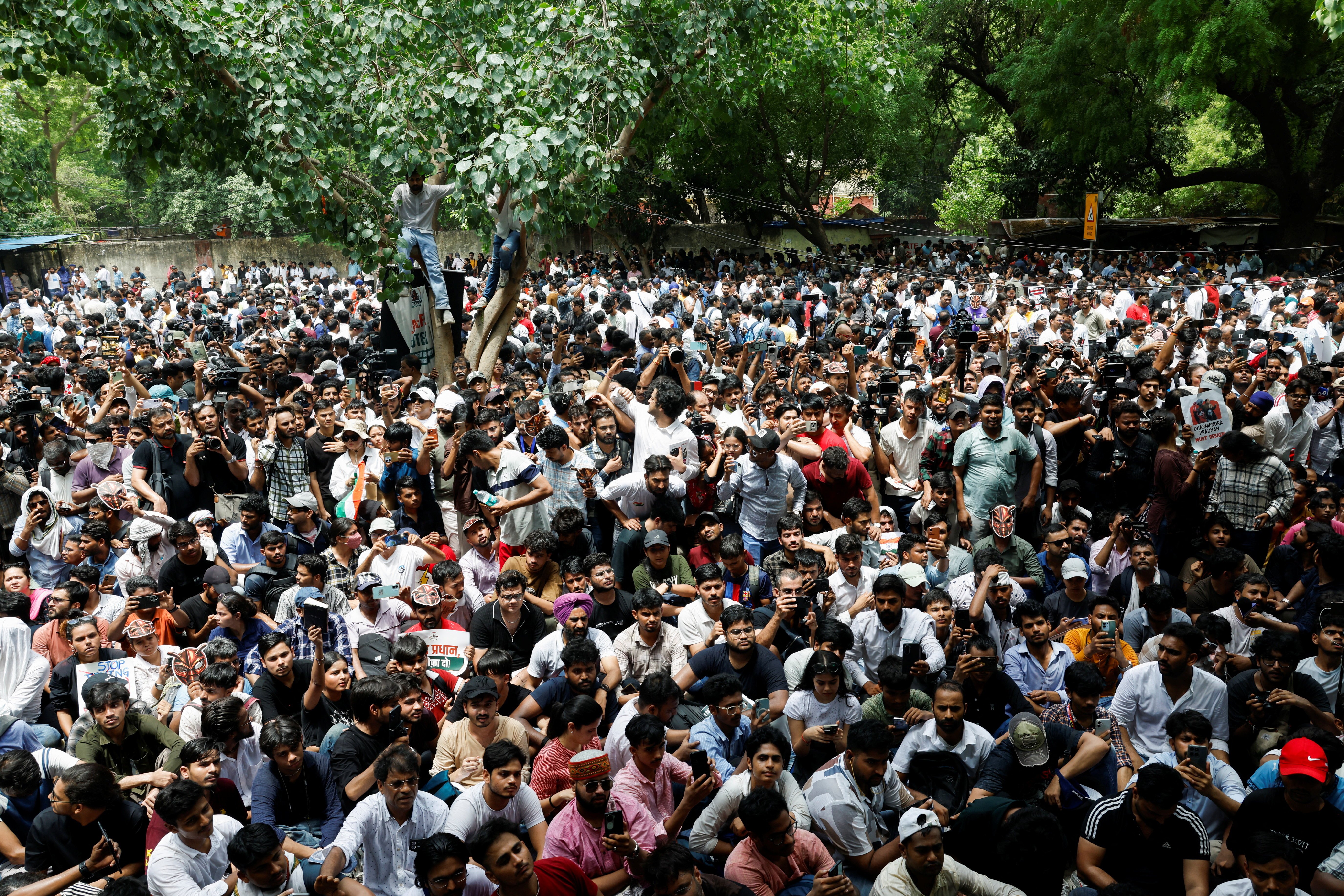
Within five days, the CJP’s Instagram page had more followers than the BJP’s. By June 6, when hundreds of supporters gathered at Jantar Mantar near Parliament wearing cockroach masks and chanting “Cockroaches are coming, Dharmendra Pradhan is going,” the count had reached 22.2 million. The movement had also collected more than 350,000 sign-ups, though it is not registered as a political party with the Election Commission of India.
The movement’s demands are specific enough to be taken seriously and broad enough to absorb the frustrations of a generation. Its five-point manifesto calls for a ban on Chief Justices receiving Rajya Sabha seats after retirement, the arrest of any Chief Election Commissioner found to have deleted legitimate votes, fifty percent women’s reservation in Parliament and Cabinet, the cancellation of media licenses for what it calls “Godi media” houses tied to Adani and Reliance, and a twenty-year ban on politicians who switch parties from contesting elections.
The immediate trigger, beyond the CJI’s insult, was an exam irregularity controversy in May that brought attention back to India’s NEET university entrance examination system, which has been plagued for years by paper leaks and technical failures. CJP organizers channeled that frustration into a demand for Education Minister Dharmendra Pradhan’s resignation, giving the movement a concrete political target rather than a diffuse expression of anger.
The government’s response followed a pattern that has, in recent years, become predictable. On May 21, the CJP’s X account was withheld in India on national security grounds. Two days later, its website was taken down. On May 24, its Instagram account was hacked. Each action generated more attention than the content it was meant to suppress. The website was restored by May 25. The Instagram following kept growing. Multiple Public Interest Litigation petitions were filed against the movement and dismissed. The legal system that gave the CJP its founding insult declined to give the government a mechanism to shut it down.
The CJP operates as a satirical movement rather than a registered party, a status that places it outside the Election Commission’s regulatory authority while allowing it to function as a political force. It has not fielded candidates, does not collect membership dues through the Election Commission, and frames its existence as commentary rather than partisan organization. Whether that distinction holds as the movement grows is a question its organizers have so far declined to answer directly.
The protests spread. After the June 6 rally at Jantar Mantar, demonstrations followed at Savitribai Phule Pune University on June 11 and Lucknow’s Eco Garden on June 12. The movement’s support base expanded beyond social media when prominent figures began endorsing it publicly. Trinamool Congress MPs Mahua Moitra and Kirti Azad, activist Prashant Bhushan, social reformer Anna Hazare, Ladakh climate activist Sonam Wangchuk, filmmaker Anurag Kashyap, and Congress MP Shashi Tharoor all expressed public support.
What makes the CJP significant is not its follower count but what the follower count reveals about the gap between India’s political establishment and its youngest voters. The country has one of the world’s largest youth populations, with a median age under 29, and official unemployment among 15-to-29-year-olds consistently running above 15 percent. The NEET examination system, which determines access to medical education, has become a symbol of a broken compact between the state and the generation that is supposed to inherit it.
The fracturing of India’s opposition alliance has left the INDIA bloc incapable of channeling youth anger through conventional party structures. The CJP fills that vacuum not by offering an electoral alternative but by demonstrating that the anger exists at a scale that the country’s existing parties have failed to address. Dipke, who studied journalism in Pune and public relations in Boston, appears to understand that the movement’s power lies in remaining ungovernable by the systems it criticizes.
The Chief Justice’s remark was not the first time an Indian official has expressed contempt for the country’s unemployed young people. It was the first time the young people responded by building something larger than the official’s own political party in less time than it takes to process a NEET application.
Related Posts