
NEW DELHI – India’s largest opposition alliance lost its second-biggest constituent this month when the Dravida Munnetra Kazhagam declared on June 8 that it no longer belongs to the INDIA bloc, a departure that leaves the grouping weaker, smaller, and less capable of presenting a national challenge to the Bharatiya Janata Party than at any point since its formation three years ago.
The break was not quiet. DMK leader R.S. Bharathi compared the Congress party to an unfaithful spouse. “No one lives with a wife who runs away,” he told reporters, ruling out any future alliance with the party that had been the DMK’s electoral partner for twenty years. The party’s general secretary, Udhayanidhi Stalin, called the Congress’s actions “betrayal and backstabbing at a critical moment.”
What triggered the rupture was Tamil Nadu. In the May 2026 assembly elections, the Congress abandoned its two-decade alliance with the DMK and instead joined forces with actor-turned-politician Vijay’s Tamilaga Vettri Kazhagam to form the state government. The DMK, which had governed Tamil Nadu since 2021, lost power. Three of its allies within the INDIA bloc, the Congress, the Indian Union Muslim League, and the Viduthalai Chiruthaigal Katchi, joined the TVK government. DMK spokesperson T.K.S. Elangovan confirmed the exit, noting that the defection of three alliance partners to a rival government made the DMK’s continued presence in the bloc untenable.
The DMK was not the first to leave. Nitish Kumar, who chaired the INDIA bloc’s founding meeting in Patna in June 2023, walked out of the alliance before the 2024 Lok Sabha elections and rejoined the BJP-led National Democratic Alliance. His departure stripped the bloc of its Bihar anchor. The DMK’s exit now strips it of its Tamil Nadu anchor. Together, those two states account for 79 Lok Sabha seats, a loss of geographic reach the alliance cannot easily absorb.
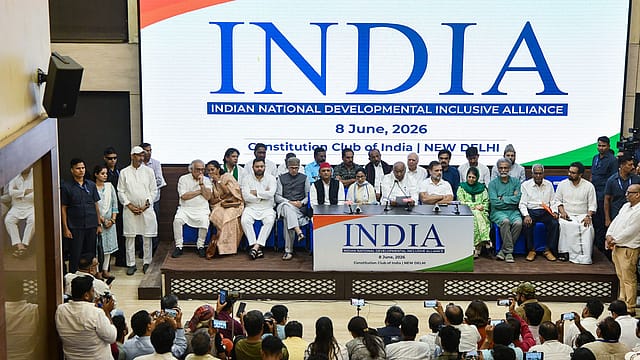
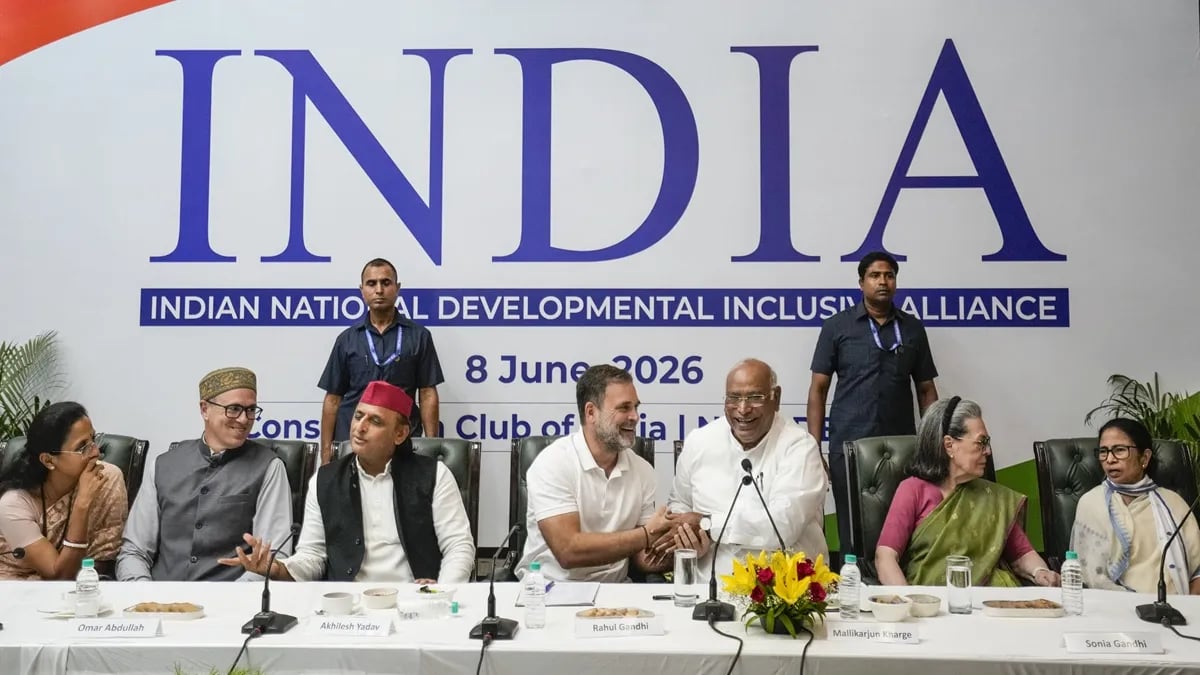
At the INDIA bloc meeting in Delhi on June 8, which the DMK boycotted, the fractures among remaining members were visible. Rahul Gandhi, the Leader of the Opposition in the Lok Sabha, posed a question that sources told Open Magazine lingered in the room without a response: “Am I responsible for Nitish leaving the INDIA bloc?” It was not a query expecting an answer. Both Samajwadi Party president Akhilesh Yadav and Rashtriya Janata Dal leader Tejashwi Yadav pressed for an internal review of why parties keep leaving, with Yadav cautioning that “to arrest such exits, the constituents must dig deep and figure out why all this is happening.”
Gandhi’s own assessment of his allies was less conciliatory than the question about Nitish might suggest. He told the meeting that the opposition’s problem was confusion. “The confusion is that you, the SP, the TMC, the RJD, believe that the political instruments you have used so far will still work,” he said, according to a report by IndiaTV News. Those instruments, he argued, depended on the Indian state providing a fair operating environment, which he said the BJP has dismantled by extending control over the legal system, the bureaucracy, intelligence agencies, and the Election Commission. He framed the Congress not as one more opposition party but as a resistance movement against the BJP’s institutional capture.
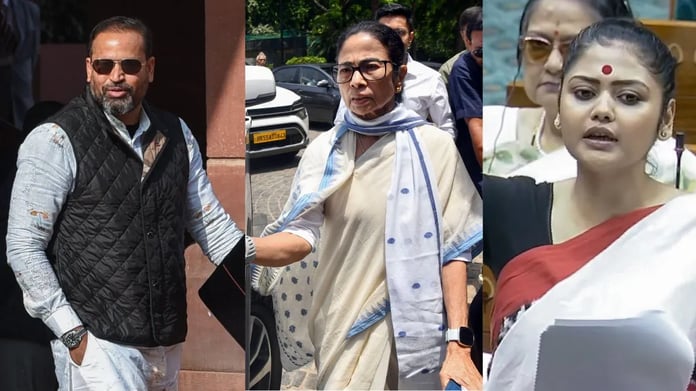
The meeting lasted nearly three hours. Mamata Banerjee, diminished by her defeat in Bengal’s assembly elections and the subsequent splitting of her Trinamool Congress, made what The Tribune described as the strongest push for unity, urging allies to stop criticizing each other. Omar Abdullah called the Congress the “anchor” of the alliance. Tejashwi Yadav called for systematic preparation toward the 2029 general elections rather than fixating on immediate contests.
What went unsaid was as revealing as what was spoken. No party addressed the structural reason the alliance keeps shrinking: Congress is simultaneously the largest opposition party nationally and a competitor to regional allies in their own states. In Tamil Nadu, the Congress chose power with Vijay’s TVK over loyalty to the DMK. In Bihar, the party’s ambition for seats clashed with Nitish Kumar’s expectations. The alliance that was built to challenge the BJP’s national dominance keeps breaking apart because its anchor and its regional constituents want the same voters.
The DMK has not ruled out future opposition cooperation entirely. Elangovan suggested a “strong, secular, and anti-BJP alliance may form in the future,” though the party intends to operate independently for now, monitoring opposition decisions in Delhi rather than participating in them. The language suggested a door left open but no hand reaching through it.
For the BJP, the opposition’s disintegration is strategically convenient. The party is pursuing a two-thirds parliamentary majority to pass constitutional amendments on delimitation and women’s reservation, and every defection from the INDIA bloc, whether by exit or by the poaching of individual MPs from parties like the TMC, moves that threshold closer. The opposition’s inability to hold itself together makes the BJP’s legislative ambitions more achievable without requiring it to spend additional political capital.
The INDIA bloc was conceived in the summer of 2023 as the answer to a question Indian politics had struggled with for a decade: how to build a coalition large enough to challenge the BJP’s electoral machinery. Three years later, the answer appears to be that you cannot, at least not without resolving whether the Congress is a partner or a rival. The DMK’s exit suggests the answer, for now, is both.
Related Posts